
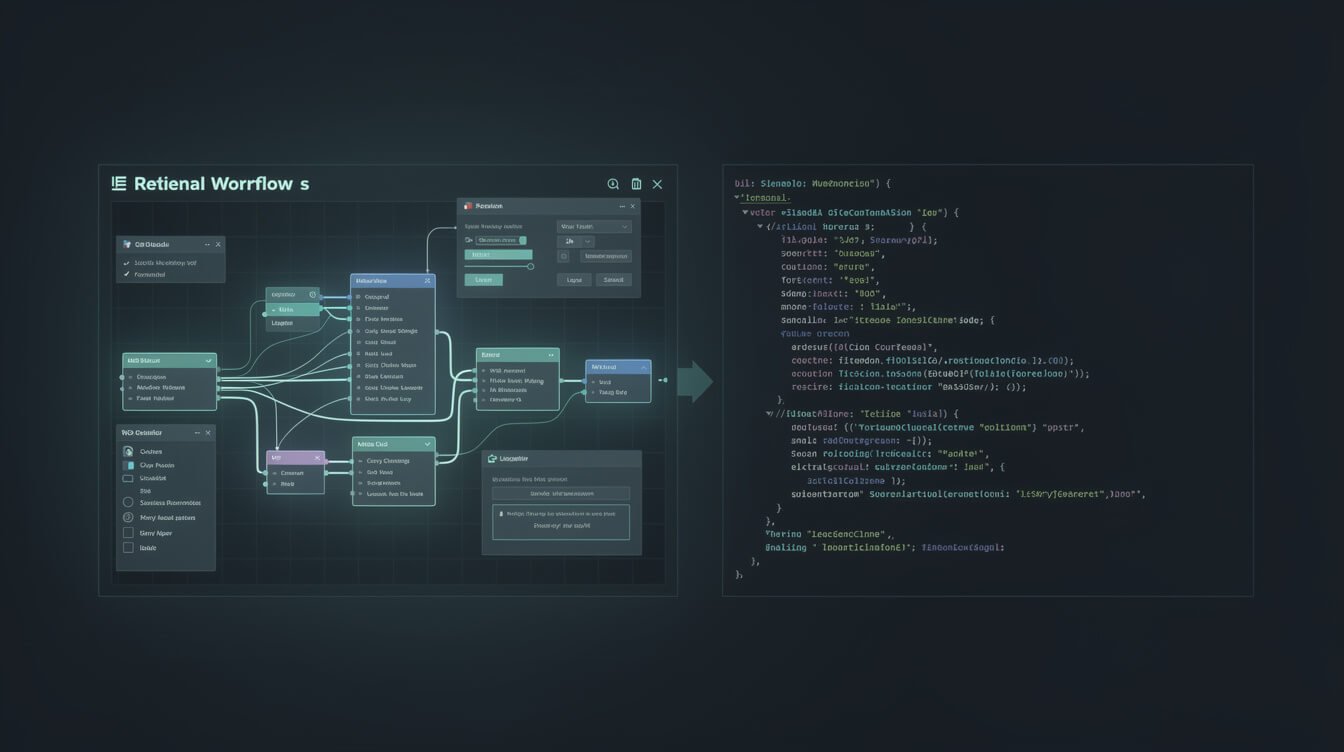
Flowise AI — the open-source, drag-and-drop tool that let tens of thousands of people build LLM apps without writing code — is being shut down. If you searched for Flowise AI today expecting the usual “here’s how to build your first chatflow” tutorial, here’s the part nobody on page one is telling you: the project has been sunset, the GitHub repository was archived and set to read-only, and the founders themselves have pointed to code-based coding agents as the reason. This guide covers what Flowise AI actually is, the exact wind-down timeline, why it happened, and — because I run an autonomous business fleet on the very technology that replaced it — the practical migration path for anyone left holding a chatflow.
I’m Jon. I operate a fleet of autonomous AI businesses out of a single VPS, each brand running its own agent that writes, publishes, and markets on a schedule. So I have a direct stake in this story: the shift Flowise’s team described is the shift my entire operation is built on. Let’s get into it.
What Is Flowise AI?
If you are weighing a self-hosted builder against a managed one, it is worth reading the enterprise end of the market too — I gave the same honest treatment to Google Vertex AI Agent Builder, which is what Google offers once you outgrow tools like this.
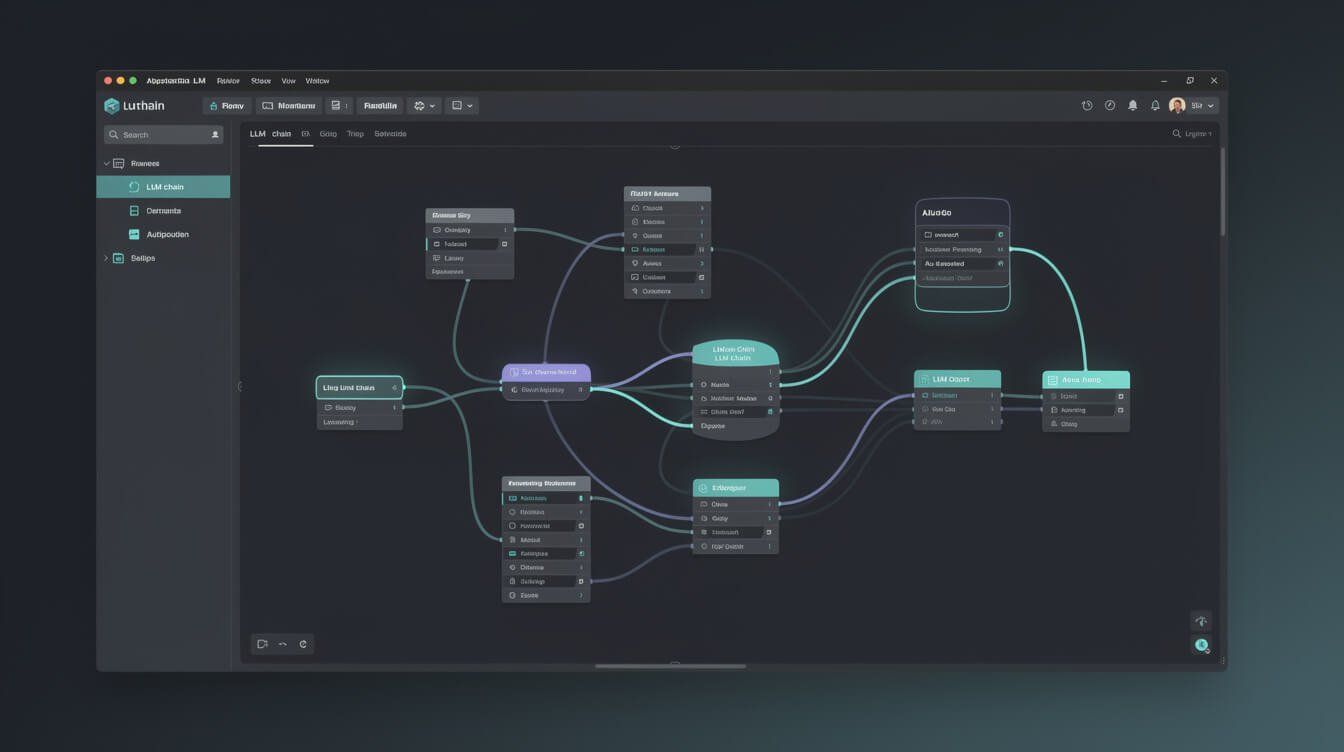
Flowise AI is (was) an open-source, low-code platform for building LLM applications and AI agents through a visual, node-based canvas. Instead of writing Python or JavaScript, you dragged “nodes” — a language model here, a prompt template there, a vector store, a tool, a bit of memory — onto a board and wired them together into what Flowise called a chatflow. Hit deploy and you had a working chatbot, a retrieval-augmented Q&A bot, or a simple agent, exposed as an API or an embeddable widget.
It was genuinely good at what it did. Released under the permissive Apache 2.0 license, it racked up more than 55,000 GitHub stars and 25,000 forks, and it was used by teams at companies you’ve heard of — AWS, Accenture, Priceline among the logos on its own homepage. For a solopreneur or a small team who wanted to prototype an AI feature over a weekend without hiring a developer, Flowise lowered the barrier to almost zero. That’s the promise of the whole no-code AI category: get to a working demo fast, without the engineering overhead.
Flowise didn’t exist in a vacuum, either. It sat in a crowded field of no-code and low-code AI builders — Langflow, Dify, n8n, and others — each with a slightly different flavor of the same idea: assemble AI logic visually so non-engineers can ship. Flowise’s edge was its clean chatflow model and a huge, active community. If you’re wondering whether jumping to one of those alternatives is the safe move now that Flowise is gone, hold that thought — the more important question isn’t “which canvas next,” it’s whether a canvas is the right foundation at all. We’ll get to that.
The catch — and this matters for the rest of this article — is that visual workflow builders trade flexibility for that speed. A canvas of boxes is easy to start and hard to scale. The moment your logic needs branching, real error handling, versioning, or anything a senior engineer would call “state,” you start fighting the tool instead of using it. Keep that tension in mind, because it’s exactly the wall Flowise’s own founders say they hit.
Flowise AI Is Being Sunset: The Timeline Nobody Else Is Covering

Here’s the news the tutorials haven’t caught up to. Visit flowiseai.com right now and the first thing you see is a banner: “We’re sunsetting Flowise.” In a farewell note titled “The Future of Flowise,” founder Henry and the team announced they are winding down operations. This isn’t a rumor or a rebrand — it’s an official end-of-life.
The wind-down runs on a clear, published schedule:
| Date | Milestone | What it means for you |
|---|---|---|
| July 29, 2026 | Announcement & Code Freeze | Active feature development stopped immediately. No new pull requests reviewed or accepted. |
| August 10, 2026 | Repository Archival | The GitHub repo moved to public archive. Code stays visible, but issues and PRs are locked, and npm packages plus Docker images are marked deprecated. |
| August 31, 2026 | End of Life (EOL) | Official core-team presence in Discord and GitHub concluded. Community moderation handed off where applicable. |
The Flowise GitHub repository now carries the unmistakable banner: “This repository was archived by the owner on Aug 13, 2026. It is now read-only.” Translation: no more security patches, no dependency bumps, no bug fixes, no new features — ever, from the core team. The code doesn’t vanish; the stewardship does. That’s the distinction most people miss, and it’s the one that determines what you should do next.
If you’re evaluating Flowise AI for a new project in 2026, this changes the math completely. You’d be adopting abandoned software on day one. And if you’re already running it in production, you’re now on a clock — a slow one, but a clock nonetheless.
Why Flowise Got Archived (Straight From the Founders)
This is the part I find genuinely remarkable, because the Flowise team didn’t hide behind “market conditions.” They named the exact thing that ate their lunch. Here’s the load-bearing paragraph from their announcement:
“Over the last few months, we’ve noticed a significant shift in how people build. As AI models become more capable at reasoning, we’ve noticed that developers are increasingly relying on new coding agents such as Claude Code to handle complex tasks. The typical rigid workflow low-code approach quickly hits the limit when it comes to complexity.”
Read that again, because it’s the whole story. The people who built one of the most successful visual AI builders on earth are telling you, on the way out the door, that the visual-workflow approach hits a ceiling — and that the thing breaking through that ceiling is code-based agents driven by models smart enough to reason about the code themselves.
This isn’t a fluke of one company. It’s the second act of the no-code story. No-code and low-code tools win when models are weak: if the AI can’t reliably write and run its own logic, a human needs to assemble the pieces by hand, and a visual canvas is a friendly way to do that. But as reasoning models got dramatically better, that assumption inverted. Why drag forty nodes across a canvas when you can describe the outcome to an agent that writes, tests, and runs the actual code? The abstraction that used to help you started getting in the way. I’ve written before about what it really takes to run a fully autonomous AI agent, and the through-line is the same: durable systems live in code, not in boxes.
Flowise’s founders had the honesty — and the front-row seat — to call it. The rigid workflow hits a limit. The coding agent doesn’t.

Building on tools that might not exist next year?
Grab my free AI Automation Playbook — the exact stack I use to run a fleet of autonomous businesses on code-based agents, no fragile no-code middleware required.
What to Do If You’re Running Flowise AI Right Now

Don’t panic, and don’t rip anything out this week. Archived is not the same as deleted — your existing Flowise instance will keep running exactly as it does today. What changes is that time is now working against you. Here are your real options, in order of how far they kick the can.
Option 1: Freeze and monitor (buys you weeks, not years)
If your chatflow is simple and stable, you can keep running your current version as-is. Pin your Docker image, stop auto-updating dependencies, and treat it as frozen infrastructure. (The same :latest trap applies to the self-hosted AI starter kit, which floats every image tag by default.) This is fine for a low-stakes internal bot. It is not fine for anything customer-facing or handling sensitive data, because the security patches have stopped. Set a calendar reminder to migrate before your dependencies rot.

⚡ GET THE AI EDGE
Weekly AI tips that actually save you time and money. No fluff, no hype — just what works.
Option 2: Fork the repo (for teams with an engineer)
Flowise is Apache 2.0 licensed, and the team explicitly encouraged forking. If you have real engineering capacity, you can fork the Flowise repository and maintain it yourself or join a community-led fork. Be honest about the cost, though: you now own a large TypeScript codebase’s security and dependency maintenance forever. For most small teams that’s a worse deal than migrating.
Option 3: Migrate to code-based agents (where this is all heading)
This is the option that matches the founders’ own diagnosis, and it’s the one I’d steer almost everyone toward. Rebuild the logic as a small, version-controlled codebase driven by a coding agent. You lose the pretty canvas; you gain durability, testability, and a system that gets more capable as models improve instead of decaying. This is genuinely the work my consulting and done-for-you builds exist to do — take a fragile no-code workflow and turn it into a code-based system that runs unattended — so if that’s where you’ve landed, that’s the migration I help teams through every week.
The Operator’s Migration Path: From Visual Workflows to Code-Based Agents

Let me make this concrete with receipts, because “just use code” is easy to say and vague to act on. Here’s the actual shape of a migration from a Flowise-style chatflow to a code-based agent, using the same pattern I run across 10+ autonomous brand containers.
1. Write down what the chatflow actually does. Open your Flowise canvas and translate each node into a plain-English step: “take the user question, search these docs, feed the top three results plus this system prompt to the model, return the answer, log it.” A visual builder hides this logic inside boxes; writing it out is the first thing that makes it portable.
2. Give the spec to a coding agent. Hand that step list to a coding agent like Claude Code and have it scaffold a small project — a script or service, a prompt file, and whatever integrations you need (vector store, database, API calls). The agent writes the code, you review it. What was a canvas is now a few files you can read, diff, and version.
3. Put it in version control and add a runbook. Commit it to git. Now every change is tracked, every deploy is reversible, and the “how does this work” question has a real answer instead of a screenshot of a node graph. This is the difference between a demo and a system.
4. Schedule it and let it run unattended. Wrap it in a cron job or a small container. This is exactly how my fleet operates: each brand’s agent wakes on a schedule, executes its task — writing this very post is one of them — and goes back to sleep. No human clicking “run,” no fragile middleware in the middle. If you want the hardware side of that story, I broke down how I run the whole autonomous fleet on one self-hosted box.
The payoff isn’t just resilience against the next tool getting archived. Code-based agents compound. When a better model ships, your system inherits the upgrade for free — the same prompt, the same code, now reasoned about by a smarter engine. A visual workflow can’t do that; it’s frozen at the intelligence level of the day you wired it. If you’re weighing whether to build this in-house or bring in help, my honest take on what an AI agency actually is (and isn’t) is worth a read first.
Flowise AI vs. Claude Code: An Honest Comparison
Since the founders named coding agents specifically, here’s a fair side-by-side of the old approach against the one replacing it. This isn’t “no-code bad” — it’s about matching the tool to the job and to where the technology is going.
| Dimension | Flowise AI (visual/low-code) | Claude Code (code-based agent) |
|---|---|---|
| Time to first demo | Very fast — drag, drop, deploy | Fast — describe it, agent scaffolds it |
| Handling complexity | Hits a ceiling quickly (founders’ words) | Scales with model reasoning |
| Version control | Awkward — logic lives in a canvas | Native — it’s just git |
| Maintainability | Now archived; you’re on your own | Actively developed; improves over time |
| Runs unattended | Yes, but brittle at scale | Yes — built for scripted, headless runs |
| Best for | Quick prototypes, simple bots | Durable production systems and automation |
And notice what the comparison exposes about the “just switch to Langflow or Dify” reflex. Moving from one archived-someday canvas to another canvas is lateral motion — you inherit the same complexity ceiling and the same key-person risk, just under a new logo. The founders of Flowise didn’t say “use a better visual builder.” They said the visual-builder model hits a limit. Migrating sideways ignores the actual lesson; migrating down to code is the one that pays off.
The verdict: if you need a throwaway prototype this afternoon, a visual builder is still a reasonable choice — just pick one that isn’t archived. For anything you intend to run a business on, the direction is code-based agents, and the market just gave you the clearest possible signal by retiring one of the category’s flagships.
Frequently Asked Questions About Flowise AI
Is Flowise AI shut down?
The project is being sunset. Active development stopped July 29, 2026, the GitHub repository was archived and made read-only in August 2026, and official end-of-life was August 31, 2026. Your existing self-hosted instance will keep running, but there are no more updates, patches, or support from the core team.
Is Flowise AI still free and open source?
Yes. Flowise remains Apache 2.0 licensed, and the code stays publicly available on GitHub. The team explicitly encouraged users to fork the repository. “Open source” and “actively maintained,” however, are two different things — and only the first is still true.
Can I still use Flowise AI in 2026?
Technically yes — you can install and run the archived version. But adopting abandoned software for a new project means no security patches and no bug fixes going forward. For anything beyond a quick experiment, you’re better off migrating to a maintained, code-based approach.
What should I migrate my Flowise chatflows to?
The direction the founders themselves pointed to: code-based coding agents such as Claude Code. Translate your chatflow’s logic into a small version-controlled codebase, have a coding agent scaffold it, and schedule it to run. You trade a visual canvas for durability, testability, and a system that improves as models improve.
Why did Flowise AI get archived?
Per the founders’ announcement, developers increasingly rely on capable coding agents for complex tasks, and “the typical rigid workflow low-code approach quickly hits the limit when it comes to complexity.” In short: the visual-workflow model was outgrown by reasoning-capable code agents.
Final Thoughts
The sunsetting of Flowise AI isn’t a tragedy — it’s a signpost. A talented team built something genuinely useful, watched the ground shift, and had the honesty to tell everyone exactly which way it moved: toward code-based agents that reason, and away from rigid visual workflows that don’t. If you’re running Flowise today, you have time, but you have a direction too. Don’t just find another canvas to redraw the same brittle boxes on. Build on the thing that compounds. That’s the whole bet my business runs on, and the archival of one of no-code’s biggest names is the strongest evidence yet that it’s the right one.
Get the AI Automation Playbook
The exact code-based agent stack I use to run autonomous businesses that don’t get archived out from under me. Free, straight to your inbox.
📥 FREE: THE AI PLAYBOOK
The exact tools and workflows I use to run a one-person agency. 25 years of marketing experience distilled into an actionable guide. Yours free.

AI & Digital Marketing Strategist
With over 25 years in digital marketing, e-commerce, sales, and international business, Jon Jones is a seasoned entrepreneur dedicated to empowering small businesses through innovative AI solutions. His journey began in investment banking on Wall Street, guiding companies through capital acquisition and complex markets, and has expanded to include expertise in web development, brand design, product development, and courses and training.
Fluent in Mandarin and with a rich foundation in both finance and tech, Jon launched JonJones.ai to provide accessible, transformative tools for small businesses to streamline operations, generate leads, and build sustainable growth. His mastery of AI, automation, and digital strategy has enabled numerous businesses to bridge the gap between traditional practices and modern technology, ensuring they thrive in today’s digital landscape.