

If you’ve been following the MCP server wave, you already know this: Claude’s toolbox is expanding fast. But here’s the one most solopreneurs sleep on — playwright mcp server. It gives your AI agent a real, live browser it can actually operate. Not screenshots. Not HTML dumps. A browser. Clicking, typing, navigating, scraping — everything you do manually on the web, your agent does on autopilot.
This is the guide I wish existed when I wired Playwright MCP into my own JonOps container stack. No QA jargon. No software engineering degree required. Just what it is, how to install it in five minutes, and the exact use cases that are saving me hours every week.
What Is Playwright MCP Server? (The Plain-English Version)

Playwright MCP server is Microsoft’s official bridge between Claude (or any AI agent) and a real web browser. It’s part of the Model Context Protocol ecosystem — the open standard Anthropic created so AI agents can connect to external tools through a single, consistent interface.
Here’s the simple version:
- Playwright = a browser automation library that can control Chrome, Firefox, or Safari programmatically
- MCP server = a plug-in that exposes tools to your AI agent in a standardized way
- Playwright MCP server = the combination: Claude now has browser hands
What makes this different from other approaches? Most AI browser tools use screenshots — they take a picture of the screen, the model “sees” it, and responds. That’s slow, expensive (vision models cost more), and error-prone. Playwright MCP is smarter: it works through the browser’s accessibility tree — a structured representation of every element on the page. Claude reads the page like a map, not a photograph. Faster, cheaper, more reliable.
The result: an AI agent that can navigate, click, type, fill forms, take screenshots, monitor page changes, and extract data from any website — using the same technology that powers enterprise test automation, adapted for the one-operator model.
JonOps receipt: I added Playwright MCP to my agent stack and now have it running weekly competitor pricing checks, automated form-submission tests on jonjones.ai, and fresh lead research without any manual browser work. The whole thing runs headlessly in a Docker container while I’m asleep in Taipei.
Why Browser Automation Is a Solopreneur Superpower

Think about everything you do on the web every week. Checking competitor prices. Researching prospects. Testing whether your own contact form still works. Looking up lead info. Reviewing site analytics. Filling out onboarding forms for new tools. This is all manual browser work — and it is the biggest hidden time drain in a one-person operation.
Agency owners hire VAs to do this. Enterprise teams build dedicated QA pipelines. Solopreneurs… just do it themselves, manually, repeatedly, forever.
Playwright MCP server breaks that loop. When you wire it into Claude, your agent can:
- Navigate to any URL and extract specific data
- Click through multi-step workflows (login → navigate → scrape → export)
- Fill and submit forms, then verify the result
- Take screenshots for visual verification or reporting
- Monitor pages for changes and alert you when something shifts
- Download PDFs and files from behind paywalled pages (if you authenticate first)
The compounding effect is what makes this powerful. When your AI agent can browse the web, every research task, every monitoring job, every data-collection workflow goes from “manual hour” to “automated background task.” You’re operating like a ten-person team because your agent is doing the browser work while you’re focused on high-leverage work.
This is the autonomous AI agent model in action — not just text generation, but actual task completion in the real-world web environment.
How to Install Playwright MCP Server in 5 Minutes
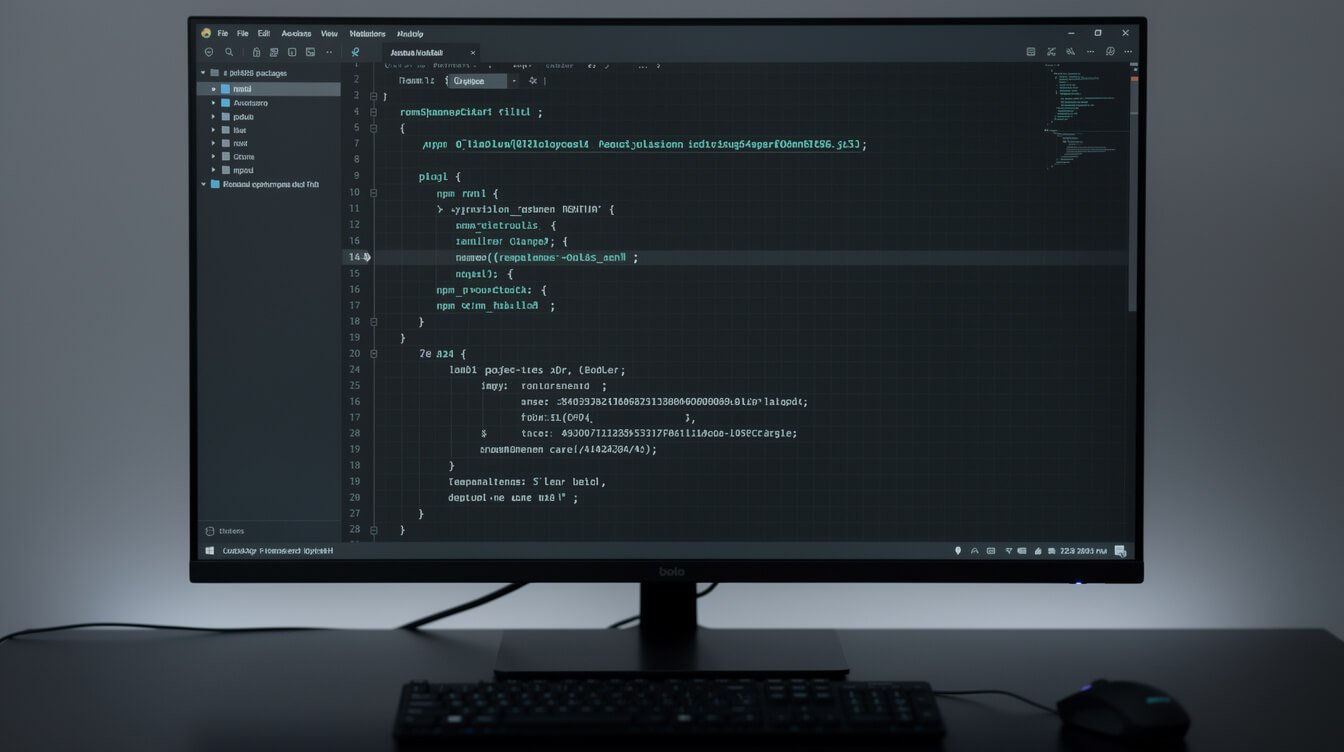
The setup is surprisingly simple. You need Node.js 18 or newer installed on your machine (check with node --version), then one command depending on which AI tool you’re using.
Claude Code (Recommended for Builders)
Claude Code is the fastest path. Open your terminal in your project directory and run:
claude mcp add playwright npx @playwright/mcp@latestThat’s the entire installation. This command adds the Playwright MCP server to your Claude Code configuration for that directory. It persists — so next time you run claude in that folder, Playwright is already available.
To confirm it’s connected, inside a Claude Code session run /mcp and look for “playwright” in the list. You’ll see all 25 browser tools listed there.
Claude Desktop
For Claude Desktop, open your MCP configuration file (usually at ~/.claude/claude_desktop_config.json on Mac) and add this to the mcpServers block:
{
  "mcpServers": {
    "playwright": {
      "command": "npx",
      "args": ["@playwright/mcp@latest"]
    }
  }
}
Save and restart Claude Desktop. Playwright MCP is now live.
VS Code, Cursor, or Windsurf
Each of these tools has a one-click install option in their MCP settings panel. Search for “playwright” in the MCP marketplace or add the server manually using the same JSON config above. The official Playwright MCP docs have deep-links that install directly to each editor.
First-time use tip
When you first use Playwright MCP, explicitly say “playwright mcp” in your prompt — for example: “Use playwright mcp to open a browser to google.com and search for jonjones.ai.” Otherwise Claude may try to use Bash to run Playwright manually. Once Claude understands the MCP is available, future requests handle routing automatically.
For authentication: Playwright opens a visible browser window. If a site requires login, have Claude navigate to the login page, then you log in manually. Cookies persist for the session — Claude takes over from there. Zero code needed.
The Playwright MCP Browser Tools: What Your Agent Can Actually Do

Playwright MCP gives Claude 25 browser tools. Here are the ones that matter most for solopreneurs — described the way a builder actually thinks about them, not the way a QA engineer documents them:
Navigation Tools
- browser_navigate — Go to any URL. The foundation of everything.
- browser_navigate_back / forward — Move through browser history, useful for multi-step flows.
- browser_tab_new — Open a new tab. Good for parallel research or comparison tasks.
- browser_tab_select — Switch between open tabs.
Interaction Tools
- browser_click — Click any element on the page. Buttons, links, dropdowns, checkboxes.
- browser_type — Type into any text field. Search boxes, forms, email inputs.
- browser_select_option — Choose from dropdown menus.
- browser_file_upload — Upload a file through a browser file picker.
- browser_press_key — Press keyboard keys (Enter, Tab, Escape, etc.).
- browser_drag — Drag-and-drop interactions.
Data Capture Tools
- browser_snapshot — Read the full accessibility tree of the current page. This is how Claude “reads” a page without vision.
- browser_take_screenshot — Capture a PNG screenshot for visual verification or reporting.
- browser_pdf_save — Save the current page as a PDF.
- browser_console_messages — Read browser console output. Useful for debugging web apps.
- browser_network_requests — Monitor network requests from the page. API calls, data fetches.
Utility Tools
- browser_wait_for — Wait for a specific element or condition before proceeding. Critical for dynamic pages that load content via JavaScript.
- browser_handle_dialog — Dismiss or accept JavaScript alerts and confirmation dialogs.
- browser_generate_playwright_test — Generate a reusable Playwright test script from what Claude just did. Useful if you want to save a workflow as a script.
- browser_install — Install browser binaries if needed.
- browser_resize — Resize the browser window for responsive testing.
You never have to reference these tools by name. Claude picks the right tool based on your natural language request. Say “click the Sign Up button” and it calls browser_click automatically.
This is the same tool layer that powers Claude Code’s MCP ecosystem — the same principle that makes MCP servers the de-facto standard for AI agent tool integration in 2026.
5 Real Ways Solopreneurs Are Using Playwright MCP Server

Let me get specific. These aren’t theoretical — these are actual workflows I’ve tested in the JonOps container stack or seen builders implement directly.
1. Competitor Price Monitoring (Weekly Automated)
If you sell services or products, your competitors’ pricing is strategic intelligence. Playwright MCP lets you build a weekly monitoring loop: Claude navigates to each competitor’s pricing page, snapshots the accessibility tree, extracts the current plan prices and feature tiers, and logs any changes to Airtable. No scraping scripts. No API keys. Just Claude + Playwright doing what any VA would do — except it never sleeps.

⚡ GET THE AI EDGE
Weekly AI tips that actually save you time and money. No fluff, no hype — just what works.
Prompt pattern: “Use playwright mcp to navigate to [competitor URL]/pricing and extract all plan names and prices. Compare to last week’s snapshot in Airtable. Alert me if anything changed.”
2. Form Submission Testing on Your Own Site
One of the most painful things about running an autonomous content site: your contact form breaks, your newsletter signup stops working, your lead magnet delivery fails — and you don’t find out for a week because you weren’t manually testing it. Playwright MCP closes this gap.
Wire it into a weekly test: Claude navigates to your site, submits each form with test data, verifies the confirmation message appears, checks that the lead hit your CRM, and sends you a Telegram alert if anything fails. This is site reliability automation for a one-person shop. No engineering team needed.
3. Lead Research Automation
Outreach without research is spam. Research without automation is a full-time job. Playwright MCP is the bridge: give Claude a list of prospect URLs, and it navigates each site, reads the About page, the Services page, the Contact page — extracts the key signals (size, tech stack, active social platforms, email addresses in the footer) — and formats everything into your Airtable outreach database.
This pairs perfectly with the GitHub MCP server if your prospects are technical — Claude can check their repos, see what they’re building, and craft hyper-personalized outreach based on real code signals.
4. Screenshot + Report Pipelines
Clients and stakeholders want proof. Playwright MCP automates the “here’s what I built / found / changed” reporting loop. After any deployment, publishing event, or SEO change, Claude navigates to the relevant pages, takes clean screenshots at specified viewport sizes, and drops them into a formatted report. The Google Lighthouse-style audit done automatically, without you sitting there pressing Cmd+Shift+4 twelve times.
5. Scraping Data Behind Login Walls
Many of the most valuable data sources require authentication: your ad platform analytics, your CRM dashboards, your newsletter analytics. APIs don’t always cover everything. Playwright MCP handles the authenticated session problem elegantly — you log in manually once per session (visible browser, your credentials), then Claude takes over to navigate, extract, and process the data. No credential sharing in code. No API workarounds.
Combined with n8n MCP for workflow orchestration, this becomes a full automated data pipeline — Claude browsing and extracting, n8n routing and processing, Airtable storing.
Playwright MCP vs Browser Use vs Selenium: Which One Actually Wins?
If you’ve looked into AI browser automation before, you’ve probably run into a few options. Here’s the honest breakdown:
Playwright MCP Server
Best for: Claude Code users, solopreneurs building agent workflows, anyone who wants the fastest setup with the most reliable AI integration. Uses accessibility trees (no vision model required). Maintained by Microsoft. Free. Works natively with Claude Code, Claude Desktop, Cursor, VS Code, Windsurf. Install time: one command. Winner for most solopreneur use cases.
Browser Use
Best for: Python-first builders who want a standalone library with more visual AI control. Browser Use is a Python library that integrates with multiple AI providers, uses vision + DOM parsing, and gives more control over the automation loop. Higher setup complexity, but more flexibility if you’re building a custom Python agent from scratch. Good option if you’re not in the Claude Code ecosystem.
Selenium / Raw Playwright (Without MCP)
Best for: Developers who need precise, repeatable automated test scripts. These are code-first frameworks — you write Python, JavaScript, or Java scripts that run deterministic automation paths. Zero AI involvement. Excellent for QA testing pipelines. NOT the right choice for solopreneurs who want to describe tasks in plain English and have an agent execute them. These require coding skill and maintenance overhead.
Bottom line
If you’re running Claude Code or Claude Desktop and want to give your agent browser capabilities in the next five minutes, Playwright MCP server is the answer. Full stop. The other options are more complex, require more code, and don’t have the same native integration with Claude’s MCP ecosystem that’s now the industry standard.
The whole point of agentic AI is task completion, not tool configuration. Playwright MCP gets you to task completion faster than anything else on the market right now.
Playwright MCP Server: Frequently Asked Questions
Does Playwright MCP require Node.js?
Yes. Node.js 18 or newer must be installed on your machine. Check with node --version in your terminal. If you don’t have it, nodejs.org has one-click installers for Mac, Windows, and Linux. This is a one-time setup.
Is Playwright MCP free?
Yes. The Playwright MCP server itself is free and open source (MIT license, maintained by Microsoft). The only cost is the AI model calls — Claude’s standard token usage for whatever task your agent is performing. No additional subscription or API fee.
Does it work headlessly (in the background, no visible browser)?
Yes, with a flag. By default it opens a visible Chrome window, which is useful for tasks requiring authentication. For fully headless operation (useful in server/container environments like JonOps), configure the MCP with headless mode enabled. The Playwright MCP documentation covers the flag options.
Can it handle JavaScript-heavy sites (SPAs, React apps)?
Yes — this is one of Playwright’s core strengths over older scraping tools like BeautifulSoup. Playwright MCP renders the full JavaScript before taking a snapshot, so React apps, Vue dashboards, and dynamic content all load correctly. The browser_wait_for tool lets Claude wait for specific elements to appear before proceeding.
Is it safe to use with my login credentials?
Yes — because YOU log in via the visible browser window, not Claude. Your credentials are never passed through the AI or stored in any prompt. Once you’re authenticated, cookies persist for the session. This is the same security model as any browser session you’d open manually.
Can I run multiple browser sessions at once?
Yes. Playwright MCP supports multiple tabs via browser_tab_new and browser_tab_select. Running multiple simultaneous browser instances from one Claude session requires separate MCP server instances, but parallel tab usage within one session is fully supported.
Does it work with Claude Desktop as well as Claude Code?
Yes. Playwright MCP is client-agnostic — it works with Claude Code, Claude Desktop, VS Code Copilot, Cursor, Windsurf, and any other MCP-compatible client. The configuration differs slightly per client but the same MCP server and toolset run identically across all of them.
Your AI Agent Just Got Eyes — Here’s What to Build First
Playwright MCP server is one of those tools where the moment you wire it up, your backlog of “I should automate that” items becomes a list of things you can actually build this week. Competitor checks. Site testing. Lead research. Data extraction. Reports. All of it automated, running in the background, no code required — just Claude + a browser.
The MCP ecosystem is evolving fast. Playwright is the browser layer. MCP servers are the plug-in standard. What you’re building is an agent stack where Claude can see, navigate, and act on the entire web — not just the APIs that happen to have an SDK. That’s a fundamentally different level of automation capability.
Install it. Give Claude a URL. Ask it to do something. You’ll understand immediately why this is the browser automation tool for the solopreneur era.

Get the AI Automation Playbook
Real MCP setups, agent workflows, and JonOps receipts delivered weekly. No theory — just the systems that actually run.
📥 FREE: THE AI PLAYBOOK
The exact tools and workflows I use to run a one-person agency. 25 years of marketing experience distilled into an actionable guide. Yours free.

AI & Digital Marketing Strategist
With over 25 years in digital marketing, e-commerce, sales, and international business, Jon Jones is a seasoned entrepreneur dedicated to empowering small businesses through innovative AI solutions. His journey began in investment banking on Wall Street, guiding companies through capital acquisition and complex markets, and has expanded to include expertise in web development, brand design, product development, and courses and training.
Fluent in Mandarin and with a rich foundation in both finance and tech, Jon launched JonJones.ai to provide accessible, transformative tools for small businesses to streamline operations, generate leads, and build sustainable growth. His mastery of AI, automation, and digital strategy has enabled numerous businesses to bridge the gap between traditional practices and modern technology, ensuring they thrive in today’s digital landscape.