

Search claude code free trial and Google will hand you a wall of confident answers. Seven-day guest passes. “11 proven ways.” Invite links from accounts you’ve never heard of. Medium posts promising no subscription, no credit card, no catch.
Here’s what almost none of them tell you: Anthropic does not offer a free trial of Claude Code. Not a seven-day one, not a fourteen-day one, not a hidden one. Google’s own AI Overview for this exact query says it out loud — “an official free trial for Claude Code is not currently available from Anthropic” — and then, a few results down, the page fills up with sites selling you one anyway.
But “there’s no free trial” is not the same as “there’s no way to use it free.” There are four legitimate paths, straight from Anthropic, and one of them is worth $1,200. Most articles about a Claude Code free trial don’t mention a single one of them, because the real answers don’t convert as well as an invite link.
So let me give it to you the way an operator needs to hear it. I run a fleet of autonomous businesses on Claude every single day — this post you’re reading was refreshed by one of those agents. Below is what’s genuinely free, which free paths are real, which ones are a resale racket wearing a trial costume, what the paid tiers actually cost in 2026, and the billing trap that quietly turns “I’m just testing it” into a real invoice.
No sleight of hand. No affiliate links. Just the numbers.
Is There a Claude Code Free Trial? The 30-Second Answer

No. There is no time-limited Claude Code free trial from Anthropic. You cannot sign up, get fourteen days of Claude Code, and decide at the end.
What exists instead is a set of doors, and knowing which one you fit through is the whole game:
- The free Claude plan — real, permanent, $0, and it explicitly does not include Claude Code. More on why that trips everyone up in a second.
- Claude for Open Source — six months of Claude Max 20x, free, if you maintain or meaningfully contribute to open source. This is the closest thing to a long trial that exists, and it’s the most under-reported.
- A gifted subscription — Pro or Max, bought by someone else, in 1/3/6/12-month blocks.
- Startup credits — API credits for venture-funded companies under four years old.
- Pay-as-you-go API — no subscription, no monthly fee, pay per token. The de facto “try it cheaply” route, and the one most people should actually use.
The tool itself is free to install. Always has been. On macOS, Linux, or WSL it’s one line:
curl -fsSL https://claude.ai/install.sh | bashHomebrew (brew install --cask claude-code) and WinGet (winget install Anthropic.ClaudeCode) work too. Installing costs nothing. It’s the intelligence behind it you pay for — and that distinction is the source of roughly ninety percent of the confusion on this topic.
So the honest reframe: stop hunting for a trial that doesn’t exist, and start asking which of the five doors above you actually qualify for. That question has a real answer, and for a surprising number of people it’s “the free six-month one.”
Is Claude Code Free? What Anthropic’s Pricing Page Actually Says

Let’s settle this with the source instead of the rumour mill. Anthropic publishes a feature comparison table on its pricing page. The row is labelled “Claude Code.” The column is labelled “Free.” The value is No.
That’s it. That’s the whole argument. The free Claude plan does not include Claude Code, and Anthropic states it plainly in a table anyone can read.
Which matters, because the free plan is otherwise genuinely generous in 2026 — far more than the “limited chat” people assume:
- Chat on web, iOS, Android and desktop
- Generate code and visualise data
- Web search
- Memory across conversations
- Create files and execute code
- Artifacts, Skills, voice mode, incognito chats
- Connectors — including remote MCP — and desktop extensions
- Extended thinking
- A 200k context window, same as Pro
Read that list and you can see exactly how the confusion starts. The free plan writes code. It executes code. It creates files. Someone uses it, thinks “this is Claude coding for free,” writes a blog post titled “How I Use Claude Code For Free,” and the myth compounds.
But writing code in a chat window is not Claude Code. Claude Code is the agentic tool that reads your actual repository, edits files across it, runs commands in your terminal, and keeps working through a multi-step task without you babysitting each step. That’s a different product with a different cost structure, and the free plan doesn’t include it.
Two more limits worth knowing on the free plan: you get Sonnet and Haiku, but not Opus, and not the Fable model. And you don’t get Projects or Research. If you want the full picture of how the chat product and the coding product differ in practice, I broke that down in my guide to Claude vs Claude Code and which one actually runs your business.
One nuance the “free” crowd never mentions: Anthropic doesn’t publish a fixed free-tier message count. There’s no official “you get 40 messages a day” number to quote, because the allowance flexes with overall demand. Anyone giving you a precise free-tier limit is guessing and presenting it as fact.
The Four Legitimate Ways to Get Claude Code Free (No Trial Required)

This is the section the “claude code free trial” articles skip, and it’s the only one with real money in it. All four of these come from Anthropic directly. No invite links, no resellers.
1. Claude for Open Source — six months of Max 20x, free
This is the big one. Anthropic runs a program that gives qualifying open-source contributors six months of Claude Max 20x at no cost. Max 20x lists at $200/month. Six months of it is a $1,200 grant, and Claude Code is included in full.
It is not a vague “apply and hope.” Anthropic publishes the eligibility bars, and you qualify if you hit any one of them:
- Maintainers and library authors — you maintain packages with 500+ dependent repos, 100+ dependent packages, or 200,000+ combined monthly downloads across any registry (npm, PyPI, crates.io, RubyGems, or similar).
- Core contributors — you’re a listed committer or maintainer on a recognised foundation or language project: CPython, the Rust team, Node.js TSC, an Apache PMC, CNCF, Kubernetes, the Linux kernel, Django, Rails, or similar.
- Active contributors — you’ve authored 100 or more pull requests merged into repos you don’t own in the last 12 months.
- Community builders — one of your repos has had 20 or more unique external contributors with merged pull requests in the last 12 months.
- Critical infrastructure — any repo you maintain has an OpenSSF criticality score of 0.4 or above.
Anthropic also explicitly invites the edge cases: if you maintain something the ecosystem quietly depends on but you don’t tick a box, apply anyway and explain it.
Read those bars honestly. “100 merged PRs into other people’s repos in a year” is a real bar, but it is not a superhuman one — a genuinely active contributor clears it. If you’ve been grinding on open source and paying $20 or $200 a month for Claude on top, you may have been leaving $1,200 on the table.
What happens at the end matters too, and Anthropic is upfront about it: the complimentary subscription ends after six months, they email you before it does, and if you had a paid plan before, it resumes at your prior plan and rate unless you cancel. If you didn’t, your account returns to the free plan. No silent auto-upgrade to $200/month — but do diarise the end date.
2. A gifted subscription
Anthropic supports gifting outright. Pro and Max — including Max 5x and Max 20x — can be gifted in blocks of 1, 3, 6, or 12 months, and the recipient gets full access to all features of the selected plan.
Two rules worth knowing before you build a plan around it. The gift expires 365 days after the purchase date, so an unredeemed code doesn’t sit around forever. And recipients cannot redeem multiple gifts at once or stack redemptions — so the “get twelve friends to each gift me a month” scheme doesn’t work the way people hope.
This is also, quietly, the legitimate kernel of truth that the “guest pass” myth grew out of. Someone can put Claude Code in your hands for free. It’s just a purchase, made by a person who likes you, not a trial Anthropic hands to strangers.
3. Startup credits
If you’re an early-stage founder, Anthropic’s startup program offers free API credits plus priority rate limits — acceptance moves you to their highest rate limits so you can ship to production without throttling while you’re on credits.
The gate is specific: to qualify for credits your company must have received equity funding from an institutional investor, been founded within the last four years, and not previously received Anthropic startup credits. You’ll need a Console account and a company email. Anthropic doesn’t publish the credit amount, so don’t trust any blog that quotes you a figure.
The program itself is open to founders with or without VC backing — but the credits specifically require the institutional funding. And when the program ends, standard API pricing kicks in automatically, with no migration step. Which is convenient right up until it’s a surprise, so set a spend cap on day one.
4. Pay-as-you-go API — the real “trial” everyone is actually looking for
Here’s the honest recommendation for most people reading this. If what you want is “let me try real Claude Code without committing $20/month,” the answer isn’t a trial. It’s the API.
You connect Claude Code to an Anthropic API key and pay per token with no monthly fee at all. Load a small amount of credit, point Claude Code at a real project, and find out in an afternoon whether it earns its keep. Five dollars of tokens will teach you more about whether this tool fits your work than a month of Pro you forgot to cancel.
That is the closest thing to a Claude Code free trial that exists: not free, but small, honest, and capped. Which brings us to the section nobody writes.

Want the free AI Playbook?
The exact stack and workflows I use to run autonomous businesses on Claude — no fluff, just the playbook. Grab it free.
Why Most “Claude Code Free Trial” Results Are Selling You Something

Run the search and look at who’s ranking. Not the domains — the business models. This is the single most useful habit I can give you for evaluating any “free AI tool” claim, and it takes about fifteen seconds per result.
A large share of the page-one results for this query are subscription-resale and account-sharing sites. Their product is discounted or shared access to paid software. When one of those sites publishes “11 proven ways to get Claude Pro for free” and lists a seven-day guest pass, you are not reading journalism. You are reading the top of a funnel, and the funnel ends at a shared login.
Here’s the tell. I went looking for the “7-day guest pass” and the “official 30-day free trial” that these pages describe with such confidence. I searched Anthropic’s own help centre and their own site. Neither exists in Anthropic’s documentation. Not on the pricing page, not in the support articles, not in the Claude Code docs. The only official mechanism that puts a paid plan in someone else’s hands for free is the gift subscription described above — a real product, with real terms, that someone pays for.
And the giveaway is even funnier than that: Google’s AI Overview for “claude code free trial” correctly states there’s no official trial, and then cites a subscription-resale blog as a source for Anthropic’s official pricing. The machine summarising the internet for you is quoting a company that profits from the confusion.
So here’s the test. Before you trust any number about a tool’s pricing, ask one question: who benefits from this number being true?
- A vendor’s blog is authoritative for what that vendor charges, and for nothing else.
- A resale site quoting a competitor’s “official trial” is quoting a sales pitch, not a fact.
- A YouTube thumbnail that says “FREE FOREVER” with a link to a paid community in the description is an ad.
- If the claim is about Anthropic’s pricing, it should be checkable on Anthropic’s pricing page in under a minute. If it isn’t there, it isn’t policy.
There’s also a practical risk beyond wasted time. Shared and resold accounts sit on the wrong side of most terms of service. You do not want your production coding environment — with access to your repositories — running through a login you don’t control, that a stranger can revoke, and that can be banned without notice. “Free” is a bad trade for that.
None of this means the people writing these posts are stupid. Some of the mechanics they describe genuinely work. It means the incentives are pointed away from you, and a claim nobody has an incentive to check is a claim worth checking yourself. I apply the same standard to my own numbers, which is why every figure in the receipts section below came out of a log file this morning rather than my memory.
The “Free by Routing to Another Model” Hack — Why It’s Not Really Claude Code

This is where the rest of the “free” guides earn their traffic, and it deserves a fair hearing rather than a sneer — because unlike the guest-pass fiction, this one actually works.
The trick: Claude Code lets you swap out the backend model. So people point it at a free or cheap endpoint — Gemini’s free tier, an open-weights model, a free API proxy — usually through something like LiteLLM or a custom router. Then they publish “How I Use Claude Code 100% Free Forever.”
And it’s not even a hack in the unsanctioned sense anymore. Anthropic’s own documentation states that the Terminal CLI, VS Code and JetBrains surfaces support third-party providers. It’s a supported capability. I’ve written about the machinery in my Claude Code Router guide, and running Claude Code on an arbitrary model is genuinely useful.
But here’s the part they bury under the setup instructions: the second you route Claude Code to Gemini, you are no longer using Claude. You kept the wrapper and swapped the engine. The thing that makes Claude Code worth the fuss — Claude’s reasoning, its restraint, the way it grinds through a long agentic task without going off the rails at step nine — is precisely the thing you just removed.
Calling that “Claude Code for free” is like calling a car a free Ferrari after you drop a different engine in the chassis. You saved money. You also don’t have the thing you came for.
Where it genuinely makes sense: you want a capable coding agent in your terminal, the specific model matters less than the workflow, and your budget is zero. That’s a legitimate position. If that’s you, the honest comparison isn’t “free Claude Code vs paid Claude Code” — it’s “which free agent is best,” and I’ve put Claude Code head to head with the obvious candidates in my breakdowns of Gemini CLI vs Claude Code and Claude Code vs GitHub Copilot.
Just decide which product you actually want before you follow a tutorial down that road. Searching for a Claude Code free trial and ending up on a Gemini-powered terminal agent is not a win. It’s a bait-and-switch you performed on yourself.

⚡ GET THE AI EDGE
Weekly AI tips that actually save you time and money. No fluff, no hype — just what works.
The Trap That Turns Your “Free Trial” Into a Real Bill

This is the most expensive thing in this article, and I’ve never seen it mentioned in a single “is Claude Code free” post. It bites exactly the people this article is written for: someone who tries Claude Code on API credits, likes it, subscribes to Pro — and then keeps getting billed for API usage on top of the subscription they just bought.
The cause is one environment variable. Anthropic’s own support documentation is blunt about it:
If you have an
ANTHROPIC_API_KEYenvironment variable set on your system, Claude Code will use this API key for authentication instead of your Claude subscription (Pro, Max, Team, or Enterprise plans), resulting in API usage charges rather than using your subscription’s included usage.
Read that again if you skimmed it. The API key silently wins. You bought Pro. Claude Code ignores it. Every token you burn goes on the metered bill, and nothing in the interface shouts at you about it.
This is the single most likely way a “let me just try it” experiment becomes a surprise invoice — because the natural path is exactly the wrong one: test on API credits, set the key in your shell profile so you don’t have to keep pasting it, forget it’s there, subscribe, and carry on.
The fix takes thirty seconds. If you’ve moved from API credits to a subscription:
- Check your shell profile (
~/.zshrc,~/.bashrc, or your environment manager) forANTHROPIC_API_KEYand remove or comment it out. - Open a fresh terminal so the old environment is actually gone.
- Run
/logoutinside Claude Code to end the active session completely. - Run
claude update, then restart your terminal. - Run
claudeand select the correct account.
If you’re already logged in via Console pay-as-you-go and want to switch to your subscription, Anthropic’s documented shortcut is to run /login from inside Claude Code and pick the subscription account.
Two more billing facts worth internalising while we’re here. Your Pro or Max plan covers Claude Code in supported IDEs too — VS Code, Cursor and other VS Code forks, and JetBrains IDEs like IntelliJ and PyCharm — and IDE usage counts toward the same shared limits as the terminal and the chat apps. It’s one pool, not three. And the desktop app requires a paid subscription outright; there’s no API-key path there.
My standing rule, and it has saved me more than once: never run Claude Code on the API without a hard monthly spend cap set in the Console. It takes half a minute and it’s the entire difference between a controlled experiment and an invoice you have to explain to yourself.
Pro vs Max vs API Pay-As-You-Go: The Real 2026 Cost Comparison
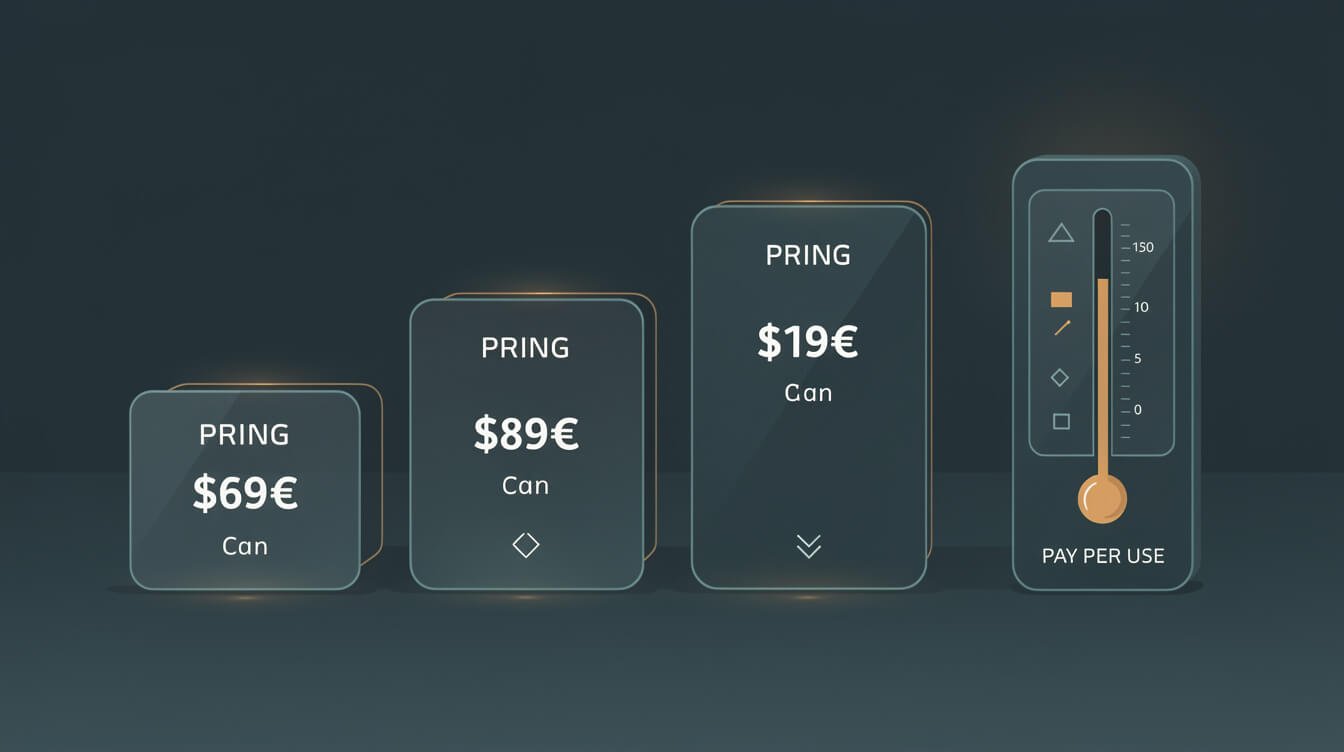
Once you accept that real Claude Code costs money, the smart question becomes: which way of paying is cheapest for the work you actually do? There are two fundamentally different billing models, and choosing wrong is how people overpay by hundreds a month.
The subscription path — predictable and flat
One monthly fee; Claude Code draws from that plan’s usage pool. As of today, the individual tiers are:
- Claude Pro — $20/month billed monthly, or $17/month billed annually (that’s $200 charged up front). The entry point, and the cheapest plan that includes Claude Code at all. Pro now also bundles Claude Cowork, Claude Design and Claude Science, plus Projects, Research and Opus access.
- Claude Max — from $100/month. You choose 5x or 20x more usage than Pro. Max also brings higher output limits on all tasks, early access to advanced features, and priority access at high-traffic times.
- Claude Team — $20 per seat/month billed annually ($25 monthly) for a standard seat, or $100 per seat/month for a premium seat with 5x the usage of a standard one.
The appeal of a subscription is predictability. You know the bill on the first of the month and you can hammer the tool without watching a meter tick. Worth noting: Pro’s annual option is a genuine discount — $17 against $20 is about 15% off — but it’s $200 charged up front, so it’s only a saving if you’d have stayed twelve months anyway.
The API path — pay only for what you burn
No subscription, no monthly fee. You connect an API key and pay per token. If you use Claude Code twice a week for an hour, this is dramatically cheaper than even the $20 Pro plan.
It also unlocks cost levers subscriptions don’t expose. Prompt caching is the big one — if you reload the same context every run, caching it instead of re-sending it cuts the per-run cost substantially. The Batch API gives you discounted throughput for jobs that aren’t urgent.
The catch is variance. One afternoon of a chatty agent chewing through a large codebase can cost more than you’d guess, and there’s no ceiling unless you set one. API is cheapest for light or bursty use, and most dangerous for heavy use without a spend limit in place.
The hybrid nobody mentions
There’s a third answer, and it’s the one I actually run: subscription for your hands-on work, API for anything automated. Flat, worry-free cost where a human is driving; metered, capped cost where a script is driving. It consistently comes out cheaper than forcing everything through one model. If you’re weighing Claude Code against other agentic tools entirely, my Claude Code vs Codex breakdown walks through which one earns its keep for a business.
Which Tier Fits Your Usage — From Weekend Experiments to Running a Business

Forget the marketing tiers for a second and match the plan to the human. Here’s how I actually advise people:
- Just curious, weekend experiments: Start on the free Claude plan to learn and plan, then move to API pay-as-you-go when you want real Claude Code. A few dollars of tokens teaches you more than a month of Pro you barely touch.
- You contribute to open source: Stop here and go check the Claude for Open Source criteria before you pay for anything. Six months of Max 20x is worth more than any plan on this list.
- A few times a week for real work: Pro, at $20 monthly or $17 annually. Predictable, cheap, and the allowance is plenty for focused sessions.
- You build with it daily: Max 5x at $100. The moment you’re hitting Pro’s limits mid-task twice a week, the upgrade pays for itself in recovered momentum alone.
- You’re running agents as infrastructure: Max 20x, or a blend of Max plus API for the automated workloads. When the tool is doing revenue-generating work, the subscription is a rounding error against the output.
- You’re a team: Team seats at $20–25 each, with premium seats for the two or three people who live in the terminal.
The mistake I see most often isn’t overspending — it’s underspending and blaming the tool. Someone runs into free-tier throttling or a stingy allowance, concludes “Claude Code isn’t that good,” and quits. They never used the thing at full power. If the work matters, buy enough headroom to see what it can really do, then decide.
A gut check that settles most of these arguments: if Claude Code saves you two hours of work a month, the $20 plan has already paid for itself several times over. The math almost never favours staying free.
What It Actually Costs Me to Run Agents All Day (JonOps Receipts)
Enough theory. Here’s the part the “claude code free trial” crowd never shows you: real numbers from a real operation, pulled from log files this morning rather than remembered.
I run JonOps — a fleet of autonomous brand containers, each with its own Claude agent that writes posts, drafts newsletters, mines social conversations, and answers email on a cron schedule. This post you’re reading was refreshed by one of them.
What one of those containers logged in the last 30 days:
- 407 scheduled runs. 292 finished successfully. 79 looked at the work, decided there was nothing to do, and logged the reason. 10 failed outright. 2 finished degraded. 24 more ended without writing a status line at all.
- 1,281 runs lifetime since the container came online in June.
- 59 posts published to this site in those 30 days, against 304 total.
I want to draw your attention to the 79 skips, because they’re the number no vendor demo will ever show you. An agent that examines the queue, concludes there’s nothing worth doing, and writes down why — that’s the artifact that tells you whether a system is actually working. Anyone can show you a success. The skips and the 10 failures are the receipts.
Here’s what paying for that at scale has taught me:
Subscriptions cover the humans; the API covers the robots. My interactive, sit-down-and-build sessions run on a Max subscription — flat cost, no meter anxiety. The scheduled autonomous workloads run on the API, because they’re bursty, and because I can bound them with spend limits and caching.
Prompt caching is the single biggest lever. Every one of my agents reloads a large context file — its brand playbook — on each run. Caching that context instead of re-sending it cut per-run token cost substantially. If you run repeatable jobs, this one change can halve your bill.
The pictures cost more than the words. On a typical automated post like this one, image generation runs about $0.08 per image on the premium model — more than the Claude tokens that wrote several thousand words. A 30-second vertical video for social runs about $0.33 all-in. That surprised me when I first measured it, and it completely reframes where to hunt for savings. Everyone optimises the LLM bill. The LLM bill often isn’t the problem.
The expensive plan is the cheap plan. When an agent does work that would have cost a freelancer’s day rate, arguing about a $200 subscription is missing the point. The bill is trivial next to the output.
That’s the operator’s answer to “is there a Claude Code free trial.” There isn’t one — and once the tool is doing real work, you’ll stop wanting one. Free is what you optimise for when the tool isn’t earning. The whole game is getting it to earn. If you want to see what that looks like end to end, I documented the architecture in Claude Code agents in production, and the tool itself in my Claude Code CLI operator’s guide.
One genuinely free resource that makes any plan go further: the community configs, commands and agent templates on GitHub. They cost nothing and they stretch every dollar you do spend. I sorted the signal from the noise in my breakdown of the “Everything Claude Code” mega-repo.
FAQ: Claude Code Free Trial Questions, Answered
Is there a Claude Code free trial?
No. Anthropic does not offer a time-limited free trial of Claude Code. The free Claude plan explicitly excludes Claude Code — it’s marked “No” in Anthropic’s own feature comparison table. The closest legitimate equivalents are the Claude for Open Source program (six months of Max 20x free, if you qualify), a gifted subscription, startup credits, or simply loading a few dollars of pay-as-you-go API credit.
Is there a 7-day free trial for Claude Pro or a guest pass?
Not one that appears anywhere in Anthropic’s official documentation. I checked the pricing page, the help centre and the Claude Code docs. The sites promoting seven-day guest passes are overwhelmingly subscription-resale and account-sharing operations, and shared logins carry real terms-of-service and security risk. The one official way someone else can put a paid plan in your hands is a gift subscription, which is a purchase, not a trial.
How do I get Claude Code for free, legitimately?
Qualify for Claude for Open Source — it’s six months of Claude Max 20x at no cost, which is the most valuable free path by a wide margin. Failing that: have someone gift you a subscription, apply for startup credits if you’re a funded early-stage company, or accept that “cheap” beats “free” and run pay-as-you-go API with a spend cap.
Can you use Claude to code for free?
Yes — but not with Claude Code. The free plan will write code, execute code and create files in the chat interface. What it won’t do is work agentically across your actual repository from your terminal. That’s the distinction that fuels most of the “Claude Code is free” content on the internet.
Is it possible to get Claude Max free for 6 months?
Yes, through the Claude for Open Source program — six months of Max 20x, a $1,200 value. You need to clear one of Anthropic’s published bars: 500+ dependent repos or 200,000+ monthly downloads on a package you maintain; listed committer status on a major project; 100+ merged PRs into repos you don’t own in the last 12 months; 20+ unique external contributors to one of your repos; or an OpenSSF criticality score of 0.4 or higher.
Is Claude Code included in Claude Pro?
Yes. Claude Code is bundled into Pro, Max, Team and Enterprise, sharing that plan’s usage pool. There’s no separate Claude Code fee. Your plan also covers Claude Code inside VS Code, Cursor and JetBrains IDEs — and that IDE usage draws from the same shared limit as the terminal and the chat apps.
What are the free plan’s limits?
Anthropic doesn’t publish a fixed message count — the allowance flexes with demand, which is why any article quoting you an exact number is guessing. What is published: the free plan gets Sonnet and Haiku but not Opus, a 200k context window, and no Projects, Research or Claude Code.
Is there a student discount or student free trial?
There’s no student-specific Claude Code trial in Anthropic’s consumer pricing. If you’re a student who contributes to open source, the OSS program is your best route — it’s judged on contribution, not enrolment.
What’s the cheapest reliable setup?
For light or irregular use: pay-as-you-go API with prompt caching and a hard spend limit. For steady daily use: Pro at $20 monthly, then Max 5x when you outgrow it. Cheapest reliable never means free — it means the lowest bill for the work you genuinely do.
Does annual billing actually save money?
Yes. Pro drops from $20/month to $17/month on the annual plan — roughly 15% off — but it’s $200 billed up front. Only a saving if you were staying the full year.
Final Thoughts: Stop Hunting the Trial, Start Testing the Tool
The search that brought you here has a disappointing literal answer and a much better real one.
Literal answer: there is no Claude Code free trial. Anthropic doesn’t offer one, the free plan explicitly excludes Claude Code, and most of the pages promising you a seven-day pass make money when you believe them.
Better answer: you almost certainly don’t need a trial. If you contribute to open source, go read the Claude for Open Source criteria right now — six months of Max 20x is sitting there and it costs you an application. If you don’t, put five dollars of API credit on an account, set a spend cap, point Claude Code at a real project, and watch what happens for an afternoon. That’s a more honest evaluation than any trial period would give you, because you’ll be testing it on your actual work instead of a demo.
And before you do either, check your shell for a stray ANTHROPIC_API_KEY. That one line is the difference between a $20 month and a surprise.
The operators I know didn’t arrive here by finding the cheapest way to touch the tool. They arrived by finding out fast whether it earns, then buying enough of it to get out of their own way. This kind of build is what I set up for clients through done-for-you automation — but honestly, the fastest way to internalise it is to grab the playbook below and run one agent yourself.
Open a terminal. Install it. You have ten minutes. Let’s build.
Run your own agent this week
The exact stack and workflows I use to run autonomous businesses on Claude — what I pay for, what I don’t, and how it’s wired. Grab the playbook free.
📥 FREE: THE AI PLAYBOOK
The exact tools and workflows I use to run a one-person agency. 25 years of marketing experience distilled into an actionable guide. Yours free.

AI & Digital Marketing Strategist
With over 25 years in digital marketing, e-commerce, sales, and international business, Jon Jones is a seasoned entrepreneur dedicated to empowering small businesses through innovative AI solutions. His journey began in investment banking on Wall Street, guiding companies through capital acquisition and complex markets, and has expanded to include expertise in web development, brand design, product development, and courses and training.
Fluent in Mandarin and with a rich foundation in both finance and tech, Jon launched JonJones.ai to provide accessible, transformative tools for small businesses to streamline operations, generate leads, and build sustainable growth. His mastery of AI, automation, and digital strategy has enabled numerous businesses to bridge the gap between traditional practices and modern technology, ensuring they thrive in today’s digital landscape.