
Claude Code is already one of the most powerful AI coding tools ever built. But here’s what most solopreneurs miss: Claude Code MCP turns it into a fully connected operations center that can reach into GitHub, Slack, Notion, Google Drive, and dozens of other tools — without a single line of glue code.
MCP (Model Context Protocol) is the open standard that lets your Claude Code sessions talk to external services directly. Instead of copy-pasting data between tabs, writing API wrappers, or building fragile automations for simple lookups — you configure one MCP server and Claude just knows how to use the tool.
In this guide, I’m breaking down exactly what claude code mcp is, how to set it up in under five minutes, which MCP servers are worth your time as a solopreneur, and how I use them inside JonOps to run an autonomous content and outreach operation from a single terminal session.
What Is Claude Code MCP? (The Plain-English Version)

Before we get into setup, let’s be clear on what MCP actually is — because the docs make it more confusing than it needs to be.
MCP stands for Model Context Protocol. Anthropic published it as an open standard in late 2024, and it’s already been adopted by practically every major AI toolchain. The idea is simple: instead of each AI tool needing a custom integration for every service it wants to talk to, you build one server that speaks MCP, and any MCP-compatible client (like Claude Code) can connect to it.
Think of it like USB-C. Before USB-C, every device had its own cable standard. Now there’s one universal connector that just works. MCP does the same thing for AI + tools. Developers build an MCP server for GitHub (or Slack or Notion) once, and every AI agent that supports MCP can immediately use it — including Claude Code.
What this means practically for you:
- Claude Code can read and write to your GitHub repos without custom OAuth wiring
- Claude Code can search your Slack channels and send messages
- Claude Code can create Notion pages, read your database, and update records
- Claude Code can browse files on your local machine through a secure filesystem MCP
- Claude Code can trigger Make.com scenarios and n8n workflows via their respective MCP servers
All of this happens through a clean, standardized protocol. You’re not duct-taping together API calls — you’re connecting Claude’s brain directly to the tools it needs to get work done.
The short version: Claude Code MCP = Claude Code with superpowers. It’s the difference between Claude being a smart assistant you chat with and Claude being an operator that can actually touch your systems.
If you want the full MCP primer before diving into Claude Code specifically, I’ve got a plain-English MCP explainer that covers the protocol from scratch.
Why Claude Code MCP Changes Everything for Solopreneurs

Here’s the problem every solopreneur hits when they start using AI seriously: context switching kills productivity.
You ask Claude to help debug a function. Claude gives you the fix. Now you need to go to GitHub to push it, open Slack to notify your collaborator, update the Notion doc with the change log, and check the task tracker for the related ticket. That’s four context switches for one task — and each one burns 2-3 minutes of mental overhead and restarts your focus.
Claude Code MCP eliminates this entirely. Instead of switching tabs, you tell Claude: “Push this fix to the feature branch, open a PR, post a Slack message in #updates, and mark the Notion task complete.” Claude does all of it in one session, using the MCP servers you’ve configured.
This isn’t hypothetical. I do this every day inside JonOps. My Claude Code sessions have access to:
- My entire project filesystem (via filesystem MCP)
- GitHub repos for all 10+ brand containers (via GitHub MCP)
- My Airtable bases for content queues and lead databases (via custom HTTP MCP)
- The WordPress REST API for publishing content
The result: what used to be a 45-minute content pipeline is now a single Claude Code session that researches, writes, generates images, and publishes — without me opening a browser tab.
That’s the solopreneur superpower. You’re not replacing yourself with AI. You’re removing the connective tissue friction that eats your day. One operator + Claude Code MCP = a ten-person team’s output.
The other advantage that’s easy to miss: once Claude can see your real project state — actual files, open issues, current Slack thread — it gives dramatically better answers. No more copy-pasting context. Claude Code MCP means Claude is always working from ground truth.
How to Set Up MCP in Claude Code (Step-by-Step)
The official docs make MCP setup look more complicated than it is. Here’s the actual process, simplified for non-developers.
Prerequisites
- Claude Code installed (if you haven’t — here’s the beginner tutorial)
- Node.js installed (most MCP servers are Node-based —
node --versionto check) - Any paid Claude subscription
Method 1: Add an MCP Server via the CLI (Fastest)
Open your terminal and run:
claude mcp add <server-name> <command> [args...]For example, to add the filesystem MCP server (which gives Claude access to your local files):
claude mcp add filesystem npx -y @modelcontextprotocol/server-filesystem /Users/you/projectsThis registers the MCP server globally so Claude Code knows to launch it whenever you start a session. The filesystem server here gives Claude read/write access to your /projects folder specifically — not your entire machine.
To add the GitHub MCP server:
claude mcp add github npx -y @modelcontextprotocol/server-githubYou’ll be prompted to authenticate with GitHub the first time Claude tries to use it.
Method 2: HTTP Transport (For Remote MCP Servers)
Some MCP servers run as remote HTTP endpoints rather than local processes. The syntax is slightly different:
claude mcp add --transport http <server-name> <url>Example for Make.com’s MCP server:
claude mcp add --transport http make https://mcp.make.comVerify Your MCP Servers Are Connected
After adding servers, verify they’re working:
claude mcp listThis shows all registered MCP servers and their status. A server showing “connected” is live and available in your next Claude Code session.
The .mcp.json Config File (For Project-Scoped Setups)
If you want MCP servers scoped to a specific project rather than your global Claude setup, define them in a .mcp.json file at the root of your project:
{
  "mcpServers": {
    "filesystem": {
      "command": "npx",
      "args": ["-y", "@modelcontextprotocol/server-filesystem", "."]
    },
    "github": {
      "command": "npx",
      "args": ["-y", "@modelcontextprotocol/server-github"]
    }
  }
}
Commit this file to your repo. Any team member who pulls the repo gets the same MCP configuration automatically — no manual setup required.

Get the Free AI Playbook
Join solopreneurs building autonomous AI systems. Weekly build logs, tutorials, and JonOps receipts delivered to your inbox.
The Best MCP Servers for Claude Code (Solopreneur Edition)

There are hundreds of MCP servers in the ecosystem now. Here are the ones that actually move the needle for solopreneurs and small operators — with installation commands for each.
1. GitHub MCP Server
The most powerful MCP for developers and builders. Gives Claude Code authenticated access to your repos — reading files, creating PRs, managing issues, pushing commits, and reviewing diffs.

⚡ GET THE AI EDGE
Weekly AI tips that actually save you time and money. No fluff, no hype — just what works.
claude mcp add github npx -y @modelcontextprotocol/server-githubWe did a full solopreneur breakdown in our GitHub MCP Server guide. If you only add one MCP server today, make it this one.
2. Filesystem MCP Server
Gives Claude Code read/write access to your local machine’s files. Scope it to a specific directory to keep it safe. Essential for any project-based work — Claude can read your entire codebase, project notes, and config files without you pasting anything.
claude mcp add filesystem npx -y @modelcontextprotocol/server-filesystem /path/to/your/projects3. Slack MCP Server
Let Claude Code read channels, search messages, and post updates. Huge for async team communication — ask Claude to summarize yesterday’s #marketing thread, draft a standup message, or search for a decision made in #strategy three weeks ago.
claude mcp add slack npx -y @modelcontextprotocol/server-slack4. Google Drive MCP Server
Access your Google Drive files, Docs, and Sheets from Claude Code. Ideal for reading SOPs, pulling data from spreadsheets, or updating shared planning documents without leaving your terminal.
claude mcp add gdrive npx -y @modelcontextprotocol/server-gdrive5. Notion MCP Server
Connect Claude Code to your Notion workspace. Create pages, query databases, update records, and search your entire knowledge base. If you run your SOPs, CRM, or project management in Notion, this is a game-changer.
claude mcp add notion npx -y @modelcontextprotocol/server-notion6. Playwright MCP Server (Browser Automation)
Gives Claude Code a real browser it can control — navigate pages, extract data, fill forms, take screenshots, and interact with web UIs that don’t have APIs. Replaces many scraping and QA workflows entirely.
claude mcp add playwright npx -y @playwright/mcp@latest7. Brave Search MCP Server
Real-time web search from inside your Claude Code session. Instead of Claude relying solely on training data, it can search the live web and pull current information to inform its answers.
claude mcp add brave-search npx -y @modelcontextprotocol/server-brave-searchYou’ll need a free Brave Search API key — the free tier covers most solopreneur use cases.
8. Make.com MCP Server
Connect Claude Code directly to your Make.com workflows. Claude can trigger automations, pass data into scenarios, and check run statuses from your terminal session.
claude mcp add --transport http make https://mcp.make.comAnd yes, if you’re running n8n, there’s an MCP server for that too — we covered it in depth in the n8n MCP guide.
Real JonOps Workflows: Claude Code MCP in Action

Theory is fine. Receipts are better. Here’s exactly how I use Claude Code MCP inside JonOps to run content and outreach pipelines at scale — without a team.
Workflow 1: The Autonomous Blog Publishing Pipeline
Every morning at 00:00, a Claude Code session wakes up inside my JonOps container with two MCP servers active: filesystem (for local project files) and a custom HTTP MCP that connects to Airtable and WordPress.
Claude reads the keyword queue from Airtable via MCP, picks the top-priority keyword, pulls SERP data, writes a 2,500–3,500 word post, generates AI images via Replicate, and publishes to WordPress — all through MCP tool calls. No human touchpoints until the final review. What used to be a 4–6 hour manual process runs autonomously in under an hour.
This is what agentic AI looks like in production — not a demo, not a one-off test, but a live pipeline that runs every day.
Workflow 2: GitHub Branch + PR Management
When I’m adding a new skill to the JonOps system, I open Claude Code with GitHub MCP active. I describe what I want to build. Claude reads the existing codebase through the filesystem MCP, creates a new branch via GitHub MCP, writes the skill file, commits it, and opens a PR with a full summary — all without me touching git directly. I review in five minutes, approve, and it’s live.
This pattern — Claude as an operator with real system access — is what separates JonOps from a simple chatbot setup. The Claude Agent SDK takes this further for production-grade deployments.
Workflow 3: Outreach Lead Research Pipeline
With Playwright MCP, Claude Code can browse target websites, extract contact information, and push verified leads directly to my Airtable outreach queue — all from one session. What used to require a VA half a day now runs autonomously in under 20 minutes. The Playwright MCP handles the browser navigation, filesystem MCP handles local temp files, and a custom Airtable MCP handles the database writes.
The Compounding Advantage
Here’s the thing about MCP that most people miss: it compounds. Each new MCP server you add multiplies Claude Code’s capabilities. GitHub + filesystem + Slack together unlock workflows that none of them could enable independently. You’re not just adding tools — you’re adding dimensions to what Claude can perceive and affect in your business.
Claude Code MCP vs. Other Integration Tools (FAQ)

Common questions I get when solopreneurs first encounter MCP:
Q: Is Claude Code MCP better than n8n for automations?
Different tools for different jobs. n8n is a workflow orchestrator — it runs scheduled automations, handles triggers, retries, and error recovery without human oversight. Claude Code MCP is a real-time tool connection for your active Claude sessions. The best setups use both: n8n handles scheduled background pipelines, MCP handles Claude’s work sessions that need live tool access. I’ve written a full comparison in the n8n MCP integration guide.
Q: Do I need to code to use Claude Code MCP?
Not for the basic setup. The claude mcp add commands are one-liners you copy and paste from documentation (or from this article). You don’t write any code — you configure which servers Claude should have access to. More advanced setups (custom MCP servers for your own APIs) do require development, but you can get serious value from the existing open-source server ecosystem without writing a line.
Q: Can I use MCP with Claude Desktop, not just Claude Code?
Yes — Claude Desktop also supports MCP servers. The configuration lives in a JSON file instead of CLI commands, but the MCP servers are the same. Claude Code and Claude Desktop share the same MCP ecosystem — a server that works in one works in both.
Q: Is MCP secure? Am I giving Claude access to everything?
You control exactly what Claude can access. The filesystem MCP only touches the directories you specify in the add command. GitHub MCP uses your credentials but Claude can only perform actions your GitHub account is authorized for. Treat MCP like any other credential: configure servers with the minimum permissions needed, review what’s connected with claude mcp list, and revoke servers you’re not actively using.
Q: What’s the difference between Claude Code MCP and the Claude Agent SDK?
The Claude Agent SDK is for building managed AI agents that run in Anthropic’s cloud infrastructure with full observability, retry logic, and deployment tooling. MCP is the protocol those agents (and Claude Code) use to connect to external tools. They’re complementary: you use the Agent SDK to build production agents, and those agents use MCP to reach external services.
Q: How many MCP servers can I add to Claude Code?
There’s no hard cap, but there’s a practical limit. Adding dozens of servers will slow down Claude Code’s startup as it initializes all the connections. The pragmatic approach: add the 3–5 servers you use in every session globally, and use project-level .mcp.json files for project-specific tools that you only need sometimes.
Q: Claude Code already has web access and file tools built-in — why do I need MCP?
The built-in tools are read-only anonymous web access and basic file operations. MCP opens authenticated, bidirectional connections to specific services. The difference: Claude’s built-in web tool can read public pages, but GitHub MCP can push code to your private repos. Filesystem MCP gives Claude precise, persistent, scoped access to your project directory. MCP is authenticated access with full permissions; built-in tools are anonymous, read-only reach.
Getting Started Today: Your 5-Minute Claude Code MCP Action Plan
You don’t need to configure 10 MCP servers on day one. Here’s the minimal setup that unlocks the most value for most solopreneurs:
- Install Claude Code if you haven’t yet — start with the beginner tutorial. It takes about 10 minutes.
- Add filesystem MCP first — it’s the most universally useful and the safest starting point:
claude mcp add filesystem npx -y @modelcontextprotocol/server-filesystem ~/projects - Add GitHub MCP if you use Git:
claude mcp add github npx -y @modelcontextprotocol/server-github - Verify: Run
claude mcp listand confirm both servers show as connected. - Open a Claude Code session and give it a task that touches your connected tools. “List the files in my projects directory” or “What are the open PRs in my [repo]?” — the moment you see Claude touching real systems, it clicks.
Once Claude is touching real systems rather than just generating text, the use cases multiply fast. You’ll start seeing friction points in your workflow that MCP can dissolve — and you’ll add servers organically as those needs surface.
The whole ecosystem is maturing rapidly. New MCP servers ship weekly. The MCP landscape is expanding into every category of business tool — CRMs, databases, analytics platforms, communication tools. Getting comfortable with the protocol now means you can plug Claude into anything the moment a new server drops.
And as a one-person operator, that gives you a compounding advantage over every competitor who’s still switching tabs manually. The operator who automates well wins. Start with one server. Build the habit. Then expand.
Want More Automation Receipts?
Get the free AI Playbook — real build logs, tool teardowns, and operator systems from JonOps. No filler. Just what’s working right now.
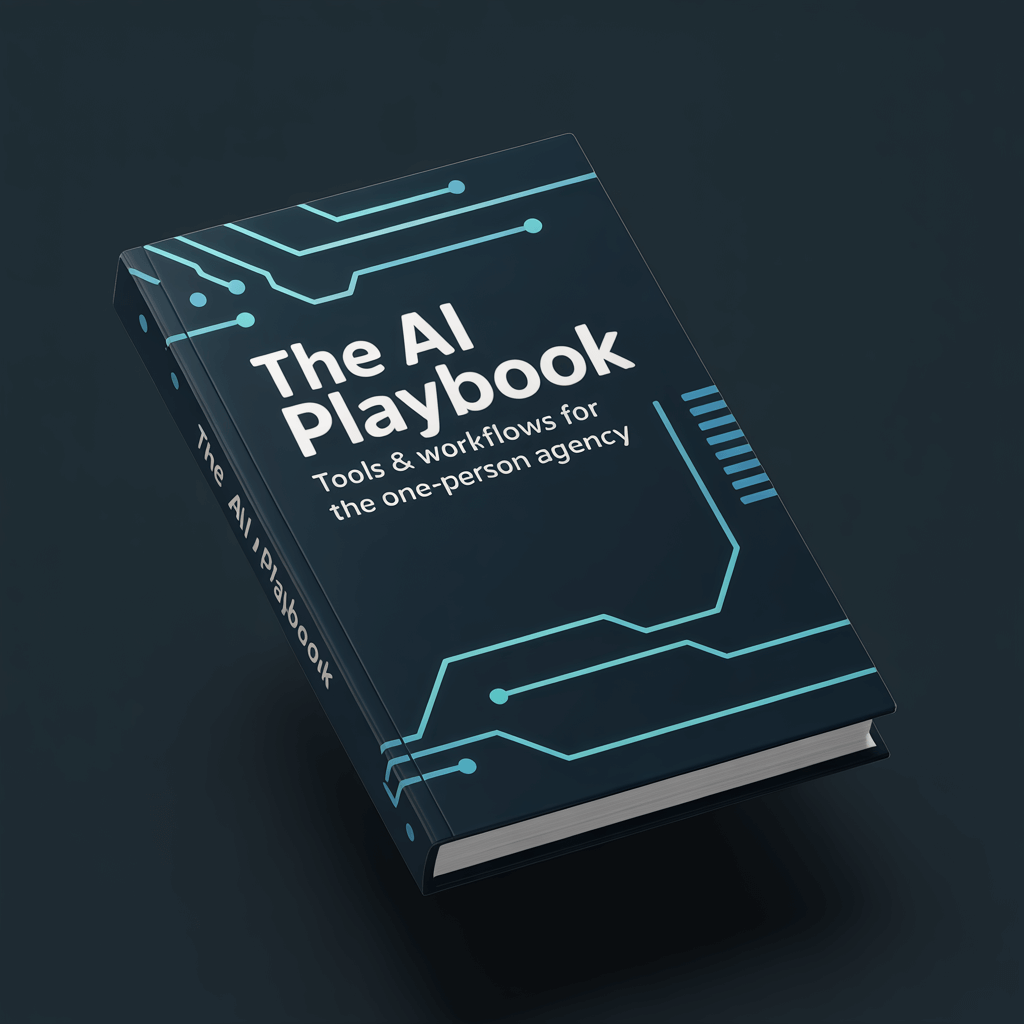
📥 FREE: THE AI PLAYBOOK
The exact tools and workflows I use to run a one-person agency. 25 years of marketing experience distilled into an actionable guide. Yours free.

AI & Digital Marketing Strategist
With over 25 years in digital marketing, e-commerce, sales, and international business, Jon Jones is a seasoned entrepreneur dedicated to empowering small businesses through innovative AI solutions. His journey began in investment banking on Wall Street, guiding companies through capital acquisition and complex markets, and has expanded to include expertise in web development, brand design, product development, and courses and training.
Fluent in Mandarin and with a rich foundation in both finance and tech, Jon launched JonJones.ai to provide accessible, transformative tools for small businesses to streamline operations, generate leads, and build sustainable growth. His mastery of AI, automation, and digital strategy has enabled numerous businesses to bridge the gap between traditional practices and modern technology, ensuring they thrive in today’s digital landscape.