
Every founder I talk to has the same question about the AI SDR gold rush: is this the thing that finally replaces a $70k-a-year sales rep for $500 a month, or is it another shiny tool that quietly torches your email domain and your budget? The honest answer is “it depends” — and the vendors selling you an AI SDR have a strong financial incentive to skip the parts where it goes wrong.
So let’s do the thing the SERP won’t: lay out the real economics, the deliverability tax nobody prices in, and exactly when you should build your own lean pipeline instead of renting one. I run outbound for my own businesses — a live Instantly campaign, a verification waterfall, a reply rate I actually track — so this comes with receipts, not vendor slides.
By the end you’ll know what an AI SDR actually does, what it truly costs, where it wins, where it face-plants, and how to roll one out in 30 days without burning your sender reputation to the ground.
What an AI SDR Actually Is (and What the Vendors Won’t Tell You)

An AI SDR — AI Sales Development Representative — is software that automates the top of the sales funnel: it researches prospects, writes personalized outreach, sends it across email (and sometimes LinkedIn), and handles the first few rounds of replies before a human ever steps in. Think of it as an autonomous version of the entry-level rep whose whole job was “book meetings, don’t bother the closers until it’s real.”
The good ones do three things well: they pull context on a lead (company, role, recent triggers), they draft copy that reads like a person wrote it, and they manage sequencing and follow-ups so nothing falls through the cracks. That’s genuinely useful. Outreach is repetitive, and repetition is exactly what agents are good at. If you want the broader picture of what autonomous software can and can’t own, my guide to autonomous AI agents maps the same logic across every function, not just sales.
Here’s what the product pages skip: an AI SDR is a distribution tool, not a strategy tool. It amplifies whatever you point it at. Point it at a sharp offer and a clean list, and it multiplies your reach. Point it at a vague offer and a scraped list, and it multiplies your spam complaints. The software is the easy 20%. The list quality, the offer, and the deliverability discipline are the 80% that decides whether it works — and that 80% is entirely on you.
It also helps to know the flavors on the market, because “AI SDR” is a marketing umbrella covering three pretty different things:
- Full-agent platforms that promise an end-to-end “digital rep” — research, write, send, and reply, all in one subscription. These are the priciest and the ones that most tempt you to hand over judgment you shouldn’t.
- Copilots that sit inside your existing sales tool and draft or personalize messages a human approves. Lower risk, lower autonomy.
- Composable stacks where you wire the intelligence, the sender, and the verification yourself. More setup, radically more control — this is the route I take, and the one most operators underrate.
None of these is “the best.” They’re trade-offs between control and convenience, and the right pick depends entirely on how much you value owning your own deliverability.
The Real Cost: Per-Seat vs Outcome Pricing, and the Hidden Deliverability Tax

Sticker price first. Most AI SDR vendors land in one of two pricing models, and both are more expensive than the homepage implies.
- Per-seat / per-agent: Roughly $1,000–$3,000 per month for a single “AI rep,” often with contact-credit caps that push you into higher tiers the moment you scale volume.
- Outcome / per-meeting pricing: You pay per booked meeting — sounds fair, until you realize you’re paying premium rates for meetings you could have booked with a $30/month sending tool and a decent list.
But the sticker price isn’t the real cost. The real cost is the deliverability tax — the damage a volume-first AI SDR does to your sending domain. These tools are built to blast. More sends, more “activity,” more dashboard green. What they rarely enforce is the boring stuff that keeps you out of spam: domain warmup, list verification, and volume discipline.
Send 2,000 unverified emails from a cold domain in week one and you don’t get 2,000 conversations — you get a spam-folder reputation that can take months to repair, or a burned domain you have to abandon entirely. I’ve watched teams pay $2k/month for an AI SDR and lose the deliverability of their primary domain. That’s the tax: the AI SDR is cheap compared to re-establishing sender trust after you’ve trashed it.
Let’s make the math concrete. Say a vendor charges $2,000/month for one AI SDR “seat.” Over a year that’s $24,000 — before you factor in the contact credits you’ll blow through, the dedicated domains you still have to buy, and the warmup tooling. Now compare a composable stack: a Claude Code agent doing the thinking for tens of dollars in API usage, a sender like Instantly in the low hundreds per month, and a verification pass measured in pennies per contact. You can run the whole thing for a fraction of a single vendor seat and keep every dollar of control. The vendor’s premium isn’t buying you better outreach — it’s buying you convenience and a dashboard.
For a full breakdown of how tool costs sneak up on you across the automation stack, I compared the usual suspects in n8n vs Zapier — same principle, different category: the subscription is never the whole bill.
Where AI SDRs Win — and Where They Fail

An AI SDR is a tool, not a miracle. It has a real zone of competence and a real failure mode, and knowing the difference saves you thousands.
Where they win
- Coverage gaps: You have more leads than a human can touch. An AI SDR keeps every lead warm with timely, personalized follow-ups no tired rep would manage.
- Inbound triage: Forms, demo requests, and replies get an instant, context-aware first response instead of sitting for six hours. Speed-to-lead is a real edge, and this is where AI shines.
- Research-heavy personalization at scale: Pulling a relevant hook for each prospect is tedious for humans and trivial for an agent.
Where they fail
- A broken offer: This is the big one. An AI SDR won’t fix a broken offer. If your message doesn’t convert when you send it by hand, automating it just means you get ignored faster and at scale.
- No warmup or verification: Skip the plumbing and the smartest copy in the world lands in spam.
- Complex, high-trust deals: For nuanced, relationship-driven sales, the AI SDR opens the door — a human still has to walk through it.
That r/SaaS thread everyone links — “Has anyone found an AI SDR that actually works?” — isn’t proof the tools are bad. It’s proof most buyers point them at a broken offer and a cold domain, then blame the robot. Fix the inputs first. If you’re still figuring out which agent even fits your business, start with my rundown of real AI agent examples and the best AI agent for small business.

Steal My AI Playbook (Free)
The exact prompts, stacks, and pipelines I use to run autonomous businesses solo. No fluff, no filler — just the systems, with receipts.
Build vs Buy: A Lean DIY SDR Stack With Claude Code + Instantly
Here’s the part vendors will never write: you can assemble a leaner, cheaper, more controllable AI SDR yourself — and you’ll understand exactly what it’s doing to your domain, because you built the plumbing.
The “build vs buy” decision usually gets framed as engineering effort, but the real axis is who owns the failure modes. When you buy, the vendor owns the black box and you own the consequences — including a torched domain you didn’t know was at risk. When you build, you own everything, which sounds scary until you realize it means you can actually fix everything. That’s the trade I make every time for anything touching my sender reputation.

⚡ GET THE AI EDGE
Weekly AI tips that actually save you time and money. No fluff, no hype — just what works.
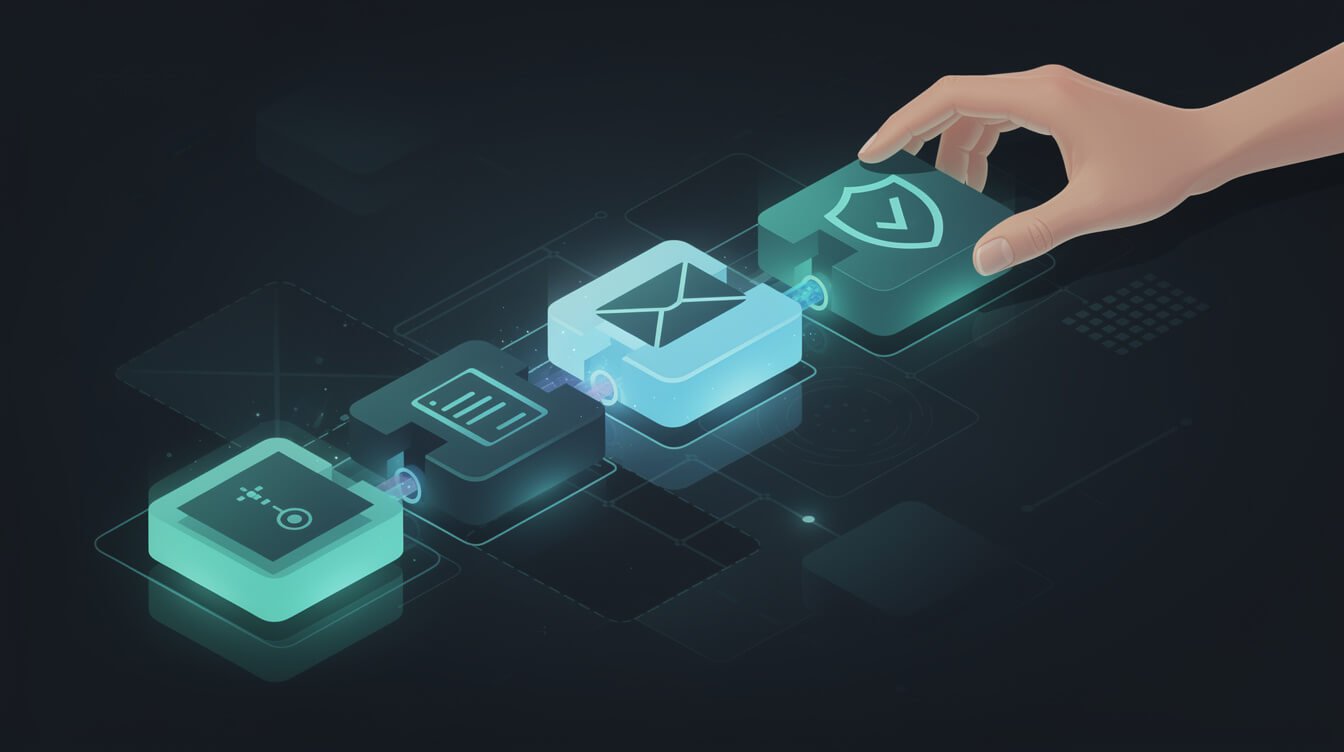
My own stack has three layers:
- The brain — Claude Code agents. Research prospects, draft genuinely personalized copy, classify replies, and trigger follow-ups. This is the “SDR” intelligence, and it costs a fraction of a per-seat license.
- The sender — Instantly. Handles sequencing, inbox rotation, and domain warmup. I run a live campaign here, so the numbers I quote are mine, not a case study I read.
- The gatekeeper — a verification waterfall. Every address runs through MillionVerifier → BounceBan before it ever gets sent to. This is the step vendors quietly skip, and it’s the single biggest lever on deliverability.
The receipts: my pipeline currently runs around a 5.6% reply rate with a bounce rate near 18% that I’m actively tightening (that bounce number is too high — I’m fixing it by pushing more of the list through verification earlier). I’m telling you the ugly metric on purpose. A vendor would show you the 5.6% and hide the 18%. Building it yourself means you see both, so you can actually fix the weak link.
Build if you want control, lower cost, and the ability to fix your own deliverability. Buy if you have zero technical bandwidth and genuinely need a turnkey answer this week — just go in knowing the price and the tax. And if you want the DIY route without the two-month learning curve, that’s exactly the kind of build I do for clients — you can book an automation strategy session and we’ll scope it together. If you’re weighing whether to run this in-house or hand it off, my take on the AI automation agency model spells out the trade-offs.
The Deliverability Playbook: Warmup, Verification, and Volume Discipline

If you take one thing from this post, take this section. Deliverability is the whole game. The best AI SDR copy is worthless in a spam folder. Here’s the discipline that keeps you in the inbox.
1. Warm up every sending domain
Never blast from a fresh domain. Use dedicated sending domains (not your primary), warm them for 2–4 weeks with gradually increasing volume, and let tools like Instantly ramp automatically. A domain that goes from zero to 500 sends overnight looks exactly like a spammer — because that’s what spammers do.
2. Run a verification waterfall
One verifier isn’t enough. Chain them: a first pass to catch the obvious invalids, then a second (I use MillionVerifier then BounceBan) to catch the risky “catch-all” addresses the first one waved through. Every bounce you prevent is reputation you keep. This one step is the difference between an 18% bounce rate and a 3% one.
3. Practice volume discipline
More sends is not more meetings. Keep per-inbox daily volume conservative (think dozens, not hundreds), rotate across multiple warmed inboxes, and watch your reply and bounce rates like a hawk. If bounces climb, slow down — don’t push through it. The AI SDR wants to go faster; your job is to hold the line.
Do these three things and a modest DIY stack will out-deliver a $3k/month tool that skips them every single time.
A Realistic 30-Day AI SDR Rollout

Don’t boil the ocean. Here’s the rollout I’d actually run — start narrow, measure, then scale only what works.
- Days 1–7 — Plumbing. Buy and configure dedicated sending domains. Start warmup. Set up your verification waterfall. Write and sharpen ONE offer for ONE tight segment. Send nothing cold yet.
- Days 8–14 — Small live test. Send to a small, fully verified list (50–100 contacts). Measure reply rate and bounce rate. You’re testing the offer, not the volume.
- Days 15–21 — Fix the weak link. Reply rate low? The offer or copy is the problem — rewrite. Bounce rate high? Tighten verification. Change one variable at a time.
- Days 22–30 — Scale what works. Only now do you increase volume, and only on the segment and offer that proved out. Add inboxes, not recklessness.
Notice there’s no “spend $3k on a tool” step. The tool is the last thing you add, not the first. Nail the offer and the deliverability, and the AI SDR — bought or built — becomes an amplifier instead of a liability. This is the same start-narrow discipline I apply to every automation, including the AI marketing agent playbook.
Want the Pipeline Built For You?
I build lean, deliverability-first outbound systems — Claude Code agents, verification waterfall, warmed domains — then hand you the keys. If you’d rather skip the trial-and-error, let’s talk.
AI SDR FAQ
Do AI SDRs replace human sales reps?
No — not the good ones. An AI SDR replaces the repetitive top-of-funnel work: research, first-touch outreach, follow-ups, and reply triage. It frees your humans to do what humans do best — build trust and close. Teams that try to fully replace people usually discover the AI books meetings the humans then have to un-embarrass.
What’s the best AI SDR for a small business?
Honestly, for most small businesses the best “AI SDR” is a lean DIY stack: Claude Code for the intelligence, Instantly for sending and warmup, and a verification waterfall for deliverability. It’s cheaper than a per-seat vendor and you keep full control of your domain. If you have zero technical bandwidth, a turnkey vendor can work — just budget for the deliverability discipline they won’t enforce for you.
What’s a realistic ROI timeline?
Expect 30–60 days before you have trustworthy numbers. The first 30 days are warmup, offer-testing, and fixing deliverability — not revenue. Anyone promising booked meetings in week one is selling volume, and volume without warmup is how you burn a domain. Patience in month one is what makes month three profitable.
Will an AI SDR fix my low reply rate?
Only if the problem was reach, not message. If your offer doesn’t convert by hand, automation just scales the silence. Fix the offer first; automate second.
Final Thoughts: Buy the Outcome, Not the Hype
An AI SDR is a genuinely useful amplifier and a genuinely expensive way to torch your reputation — and which one you get depends almost entirely on the inputs you feed it. The vendors sell you the software because the software is the easy part. The hard, unglamorous 80% — a sharp offer, a verified list, a warmed domain, and the discipline to go slow — is what actually books meetings.
Whether you build your own lean stack or buy a turnkey tool, start narrow, watch your bounce rate as closely as your reply rate, and never let a robot outrun your deliverability. Do that, and you’ll have an outbound engine that compounds instead of one that quietly costs you customers.
Steal My AI Playbook (Free)
The exact prompts, stacks, and pipelines I use to run autonomous businesses solo. No fluff, no filler — just the systems, with receipts.
📥 FREE: THE AI PLAYBOOK
The exact tools and workflows I use to run a one-person agency. 25 years of marketing experience distilled into an actionable guide. Yours free.

AI & Digital Marketing Strategist
With over 25 years in digital marketing, e-commerce, sales, and international business, Jon Jones is a seasoned entrepreneur dedicated to empowering small businesses through innovative AI solutions. His journey began in investment banking on Wall Street, guiding companies through capital acquisition and complex markets, and has expanded to include expertise in web development, brand design, product development, and courses and training.
Fluent in Mandarin and with a rich foundation in both finance and tech, Jon launched JonJones.ai to provide accessible, transformative tools for small businesses to streamline operations, generate leads, and build sustainable growth. His mastery of AI, automation, and digital strategy has enabled numerous businesses to bridge the gap between traditional practices and modern technology, ensuring they thrive in today’s digital landscape.