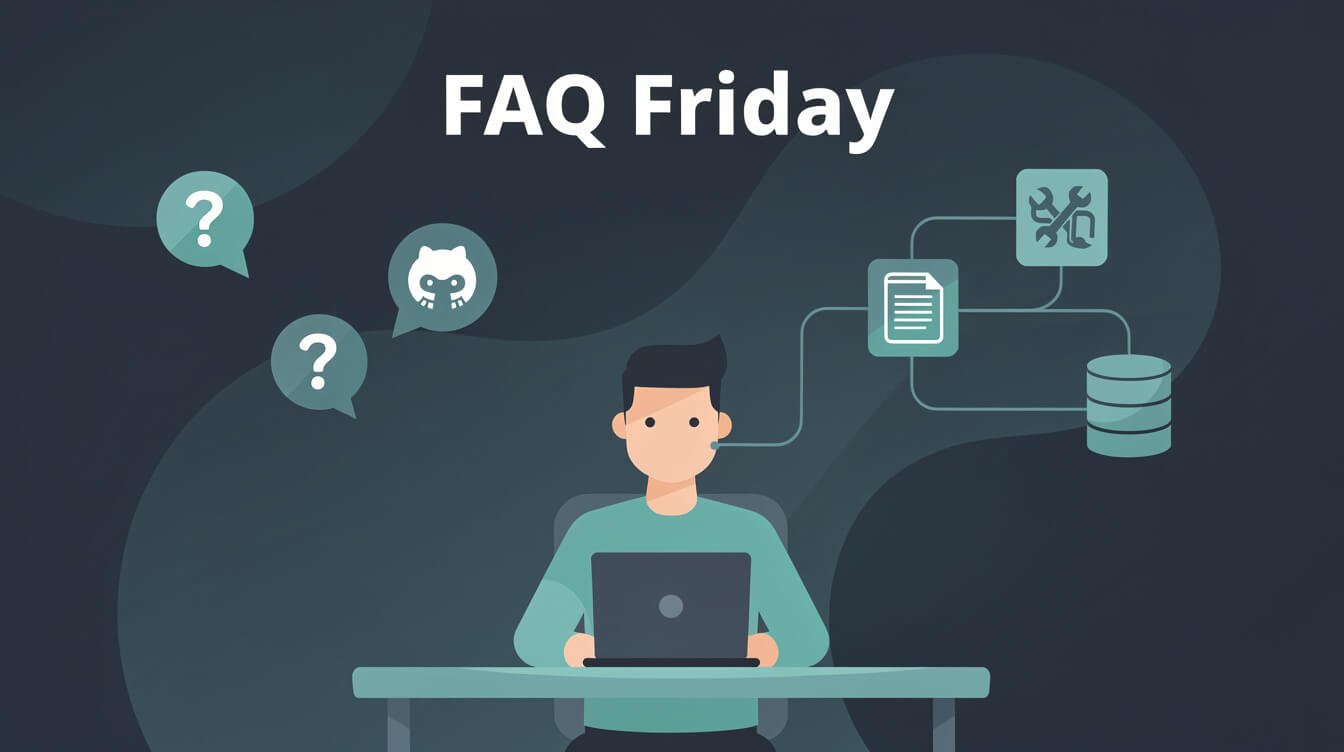
Every Friday I answer the questions flooding my DMs, inbox, and comments. This week: MCP servers. After publishing three deep-dive guides on the topic, these five questions keep coming back. Here they are, answered straight.
1. What even is an MCP server — do I actually need one?
MCP (Model Context Protocol) is an open standard that lets your AI agent access external tools without custom code glue. Instead of hard-coding integrations, you plug in an MCP server and your AI can read GitHub repos, query databases, send Slack messages — whatever the server supports.
Do you need one? If you are still copy-pasting data into Claude’s chat window, yes. Start with one server that solves a real friction point for you — GitHub, Notion, or your database are good first picks.
Read more: What Is an MCP Server? The Plain-English Guide
2. Which MCP server should I set up first?
For most solopreneurs: GitHub MCP Server if you have a codebase, or n8n MCP if you already run automations in n8n. Those two cover the widest ground with the lowest setup friction.
Not a developer? Start with Notion or Google Drive MCP — they connect to tools you use daily, so you feel the value immediately instead of after a two-hour setup.
Read more: GitHub MCP Server: Give Your AI Agents Real GitHub Access | n8n MCP: Connect Claude AI Agents to Your n8n Workflows
3. Do I need to know how to code to use MCP servers?
For most popular MCP servers: no. Setup is typically one config file — you add the server name, a command to run it, and your credentials. If you can edit a JSON file, you are good.

⚡ GET THE AI EDGE
Weekly AI tips that actually save you time and money. No fluff, no hype — just what works.
Where it gets technical: building a custom MCP server from scratch. That requires Python or TypeScript. But consuming an existing one? Non-developers handle it every day.

Lead Magnet AI Playbook
4. Can I run multiple MCP servers at once?
Yes — and this is where it gets powerful. Claude Code’s MCP config lets you list as many servers as you want. Each one adds a new set of tools your agent can call. I am currently running five simultaneously: filesystem, GitHub, n8n, Airtable, and a custom one I built for JonOps.
Keep the toolset focused though. Do not add servers you will not use — a confused agent with too many tools is slower and less reliable than a focused one with four.
5. What’s the difference between an MCP server and an AI agent?
An MCP server is a tool provider. An AI agent is the decision-maker that uses those tools. The agent calls the MCP server when it needs to take an action.
Think of it like this: the agent is the operator running the business. The MCP servers are the software tools on their desk. One uses the other — they are not the same thing.
Read more: What Is the Claude Agent SDK? Build Your First Managed AI Agent
Got a question that did not make the list? Drop it in the comments — I will fold the best ones into next Friday’s edition.
The Bottom Line
MCP servers are infrastructure, not magic. Set up the right one for your actual workflow and you will wonder how you managed without it. Start with one, feel the friction disappear, then add the next. Compound from there.
Lead Magnet AI Playbook
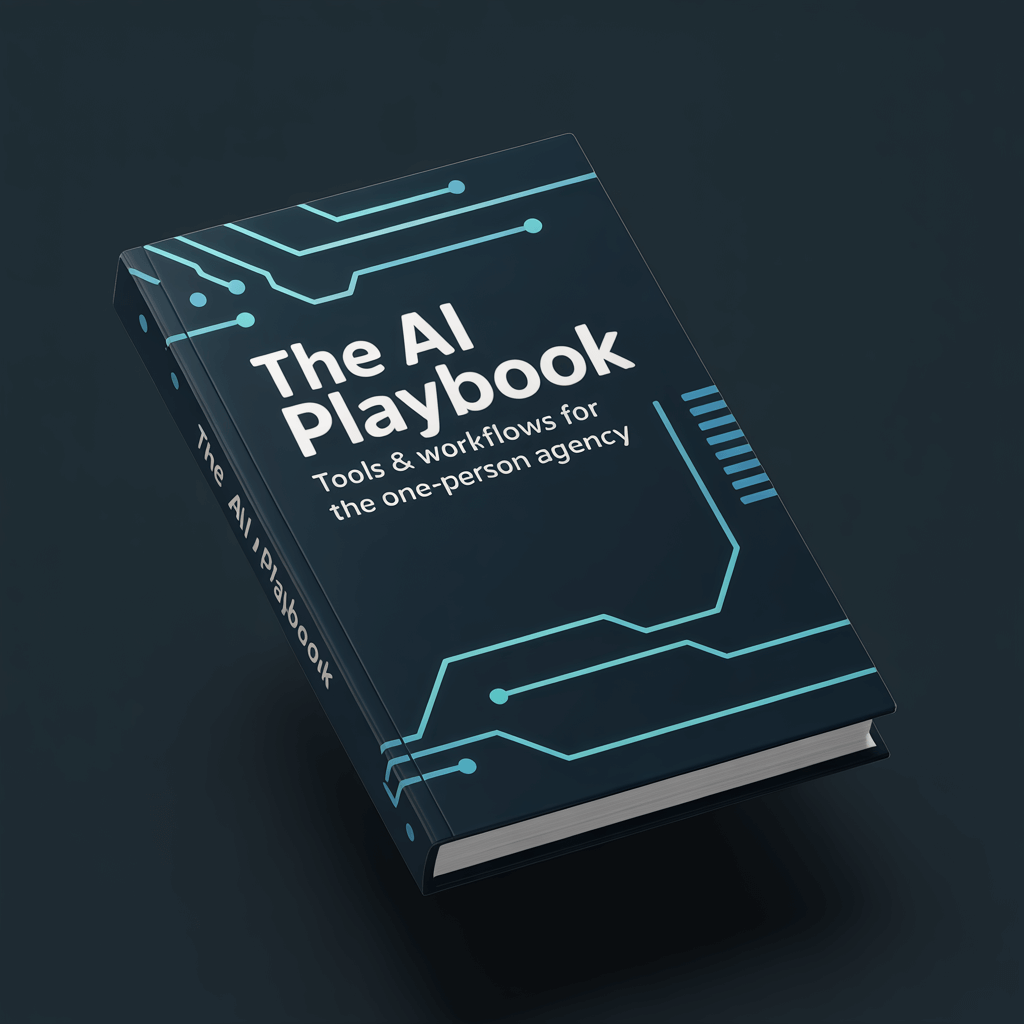
📥 FREE: THE AI PLAYBOOK
The exact tools and workflows I use to run a one-person agency. 25 years of marketing experience distilled into an actionable guide. Yours free.

AI & Digital Marketing Strategist
With over 25 years in digital marketing, e-commerce, sales, and international business, Jon Jones is a seasoned entrepreneur dedicated to empowering small businesses through innovative AI solutions. His journey began in investment banking on Wall Street, guiding companies through capital acquisition and complex markets, and has expanded to include expertise in web development, brand design, product development, and courses and training.
Fluent in Mandarin and with a rich foundation in both finance and tech, Jon launched JonJones.ai to provide accessible, transformative tools for small businesses to streamline operations, generate leads, and build sustainable growth. His mastery of AI, automation, and digital strategy has enabled numerous businesses to bridge the gap between traditional practices and modern technology, ensuring they thrive in today’s digital landscape.