
Search for an ai automation consultant and Google will hand you a Reddit thread written by people who want to become one, two job boards quoting hourly pay, and a row of agency pages that all describe the same four step process. That is a strange answer for a query with buyer intent behind it. Nobody typing this phrase is looking for a career path. They have a business that is drowning in repeat work and they want to know who to pay to make it stop.
So here is the buyer side version, written by someone who does this work rather than sells a course about it. I run ten autonomous brand containers in production. The words below are not a capability grid. They are what the job looks like from inside, what the engagement should cost you, and the specific questions that separate an operator who ships running systems from a marketing agency that added an AI slide to its deck last quarter.
If you want the wider role first, the general primer on what an artificial intelligence consultant does covers the category as a whole. This page is about the automation specialism inside it: the person whose deliverable is a system that keeps running after they leave.
What an ai automation consultant actually does on a Tuesday

Every agency page answers this with a grid of capabilities. Workflow automation. Process mining. Custom AI agents. Integration architecture. None of that tells you what the person does with their hands, so let me describe an ordinary Tuesday instead.
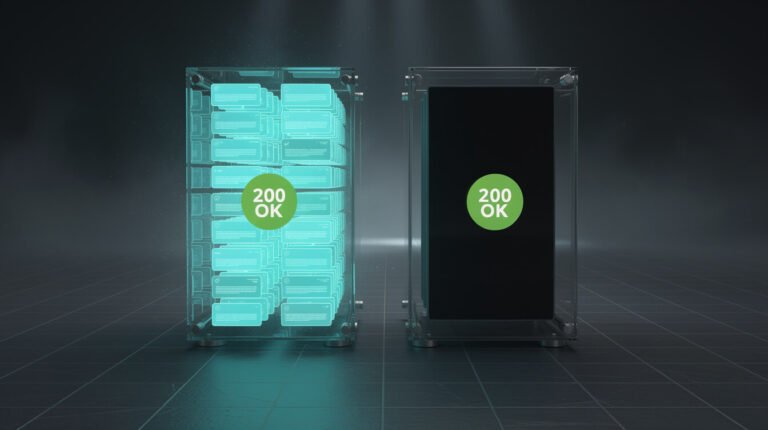
Most of the day is not spent building anything. It is spent reading what already ran. A working automation estate produces a stream of evidence: job logs, queue depths, error traces, records written to a database. The first job of the morning is going through that evidence and deciding which of three categories each anomaly belongs to. Something genuinely broke. Something was skipped correctly and the skip is being misread as a break. Or something reported success while quietly doing nothing, which is the expensive one.
The rest splits roughly three ways. There is scoping, which means sitting with a bottleneck and working out whether it is actually automatable or just annoying. There is building, which is far less glamorous than it sounds: wiring an API, handling the failure case, writing the thing that tells you when it breaks. And there is the unglamorous majority, maintenance. Vendors change their APIs. Credentials expire. A field gets renamed and a write that ran for four months starts failing silently.
That last category is the one buyers systematically underprice. Automation is not a project with an end date. It is an estate with a maintenance tax, and anybody who quotes you a build without quoting the tax is either inexperienced or hoping you do not ask. I wrote about this specific failure pattern in the context of why I stopped selling retainers, because the retainer model tends to hide the maintenance cost rather than price it honestly.
The short version of the job: a consultant in this lane spends more time keeping systems honest than writing new ones. If that sounds less exciting than the sales pages, that is precisely the point.
Automation consultant, AI consultant, or agency: three genuinely different purchases
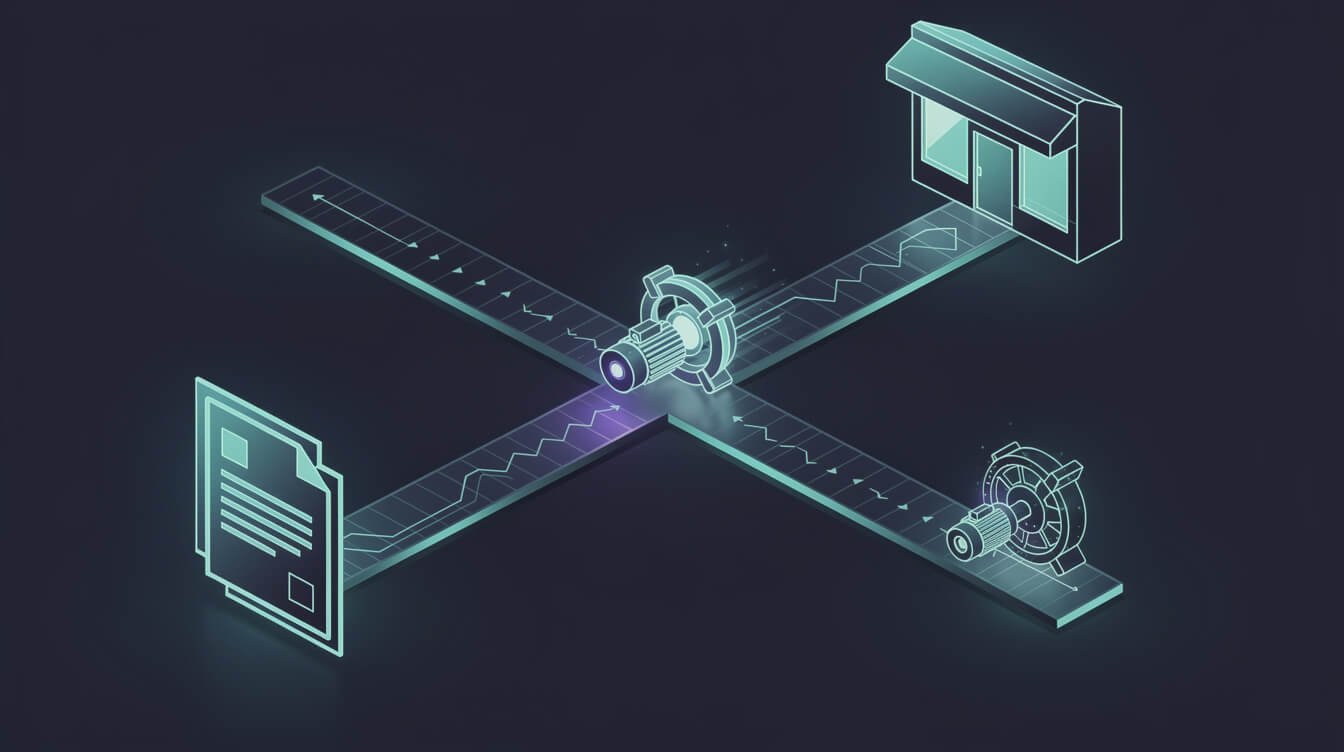
These three get used interchangeably and they are not interchangeable. You are buying different objects, with different risk profiles, and confusing them is the most common reason these engagements disappoint.
The AI consultant sells judgement. The deliverable is a decision: what to adopt, what to ignore, what the sequence should be, where the regulatory landmines are. At the enterprise end this is a strategy document and a roadmap. It is genuinely valuable when you have many possible directions and no basis for choosing. It is worthless when you already know what is broken and just need it fixed.
The ai automation consultant sells a running system. The deliverable is not advice about automation, it is the automation. It executes on a schedule after the invoice is paid. Success is measurable in a way advisory work is not: either the thing runs or it does not, either the hours came off the payroll or they did not.
The agency sells capacity. You are buying a team and a process. That is the right purchase at a certain scale, when the work is too large for one operator and needs project management around it. It is the wrong purchase for a five person company with three broken workflows, because you will pay for the coordination layer that a team requires and an individual does not.
The honest test is to ask what you would be angry about if it were missing at the end. If the answer is “a clear recommendation”, buy advisory. If the answer is “the thing still is not running”, buy the build. I broke down the agency side of this in detail in what an AI agency actually is, and the vetting checklist lives in the guide to choosing the best AI agency.
There is a fourth option people forget: hire nobody and do it yourself. For a genuinely small surface area, that is often correct, and I have argued the case for solo operators in AI and consulting for solopreneurs. The break point is usually integration count. One or two tools, do it yourself. Six tools that have to agree with each other, get help.
Inside one real build: the container, the schedule, and what actually breaks

Here is the part no page one result will give you, because it requires having something that runs. This is one container from my own fleet, the one that operates this website. I pulled these numbers from its logs while writing this paragraph.
It is a single Docker container on a VPS. Inside it, an agent wakes on a cron schedule, executes one defined job, and goes back to sleep. Twelve slots per day, plus weekly jobs on specific weekdays. Writing a blog post. Checking email twice. Mining social conversations. Finding outreach leads. Posting to social platforms morning and evening. Reconciling the task board. A watchdog at the end of the night that audits whether the other eleven did what they claimed.
Since this container came online on 12 June 2026, it has produced 1,377 run logs across 20 distinct job types. Of those runs, 1,037 reported success, 193 skipped deliberately because their queue was empty, 41 failed outright and 2 completed in a degraded state. A further 90 finished without emitting a result line at all, which is its own small category of untidiness I am not going to pretend does not exist.
Now the number that actually matters, and the reason I bother re-deriving these figures instead of quoting a dashboard. All 43 of the failed and degraded runs belong to just two of the 20 job types. The two that post to third party social platforms. The other 18 job types, including the ones doing the heaviest reasoning work, have never hard failed.
That is not a coincidence and it is not a statement about difficulty. Those two jobs are the ones holding credentials for somebody else’s API. Failure mass in an automation estate does not track complexity, it tracks integration surface. Jack Kilby made the same observation about circuits in 1958, when he worked out that the problem was not the components but the connections between them.
This is the single most useful thing I can tell a buyer. When you scope an automation project, count the external services it must touch, not the number of steps. A twelve step workflow inside one system is close to maintenance free. A three step workflow spanning three vendors will be the thing that pages you at midnight. Price accordingly, and be suspicious of any ai automation consultant whose estimate scales with step count rather than integration count.
The full anatomy of how these agents are structured is in Claude Code agents in production, and the hosting side, which is where the run cost actually lands, is in how I run the fleet on a self hosted server.

Get the AI Playbook
The same build notes I use on my own fleet: what to automate first, what it costs to run, and what breaks. Free, straight to your inbox.

⚡ GET THE AI EDGE
Weekly AI tips that actually save you time and money. No fluff, no hype — just what works.
What an ai automation consultant actually costs

Not one of the agency pages ranking for this term states a price. I am going to, with one caveat stated up front: the figures below are the market ranges I see quoted, not a quote from me. Your number depends on integration count, and you now know why.
There are three separate things being priced and conflating them is how people end up surprised.
1. The day rate
This is the advisory and diagnostic mode. You are buying attention on a specific problem. The public supply side data for this role sits low, ZipRecruiter lists automation consultant roles around the 45 to 65 dollar an hour band, but that is employment pay for a staff position, not what an independent operator charges a client. Independent day rates for people who actually ship run considerably above that, and they should, because the buyer is carrying none of the employment overhead. If you want the longer argument about why the good ones cost what they cost, I made it in what you are actually paying for with high consulting rates.
2. The scoped build
This is the one you want. Fixed scope, fixed price, defined acceptance criteria, a date. One workflow, named, with the failure behaviour specified before anyone starts. The critical detail is that the price should be quoted per integration boundary crossed, not per feature. A build that touches your CRM, your email platform and your billing system is three maintenance surfaces forever, regardless of how simple each hop looks in the diagram.
3. The run cost
The line almost nobody quotes. Every automation has a monthly bill after handover, and it is usually small but never zero. Concretely, from the container described above: the illustrations in this article cost about eight cents each to generate, and the short form video the evening job renders runs about thirty three cents. Add the model inference for the reasoning work, the VPS slice, and whatever the third party APIs charge. For a single container of this shape that lands in tens of dollars a month, not thousands. The reason to insist on this number in writing is not the amount, it is the honesty signal. Most ai automation consulting proposals omit it entirely, and somebody who has never run their own systems will not have thought about it and will guess.
If you want a straight read on which of the three you actually need, that is what a short automation strategy session is for. Bring the bottleneck and the integration list, not the technology you think you want.
The repackaged agency test: five questions that disqualify most of page one

The hard part of hiring here is not finding candidates, it is telling apart two groups who describe themselves identically. Both call themselves an ai automation consultant. One ships systems. The other is a marketing or web agency that relabelled its service page. These five questions separate them in about ten minutes, and I have ordered them by how quickly they work.
- What do you run your own business on? This is the disqualifier. Ask what is automated inside their operation, on what schedule, and what it cost last month. Somebody who does this work has an immediate, boring, specific answer. Somebody selling the category will pivot to client results. Note that every single page one result for this search would fail this question, because not one of them shows a system they operate.
- What broke most recently, and how did you find out? The answer you want is unflattering and precise. A named job, a named cause, and crucially a detection path that is not “the client told me”. If nothing has ever broken, nothing is running.
- How many external services does this touch? If they answer in features rather than integration boundaries, they have not maintained an estate. Follow up with what happens when one of those services returns an error at three in the morning.
- Show me the failure handling in something you built. Not a diagram. The actual behaviour: what retries, what alerts, what gets written down. This is where repackaged agencies run out of road fastest, because failure handling is the part that only exists if you have been burned.
- What will I own at the end? Covered in full in the next section, but ask it on the first call. The hesitation is the answer.
One caution on question one. A consultant who automates their own business is proving capability, not guaranteeing fit. Plenty of excellent operators run lean and automate little because their own workload does not justify it. Treat a weak answer as a prompt to dig, not an automatic no. Treat a confident answer with no specifics as a no.
What you should own the day the engagement ends
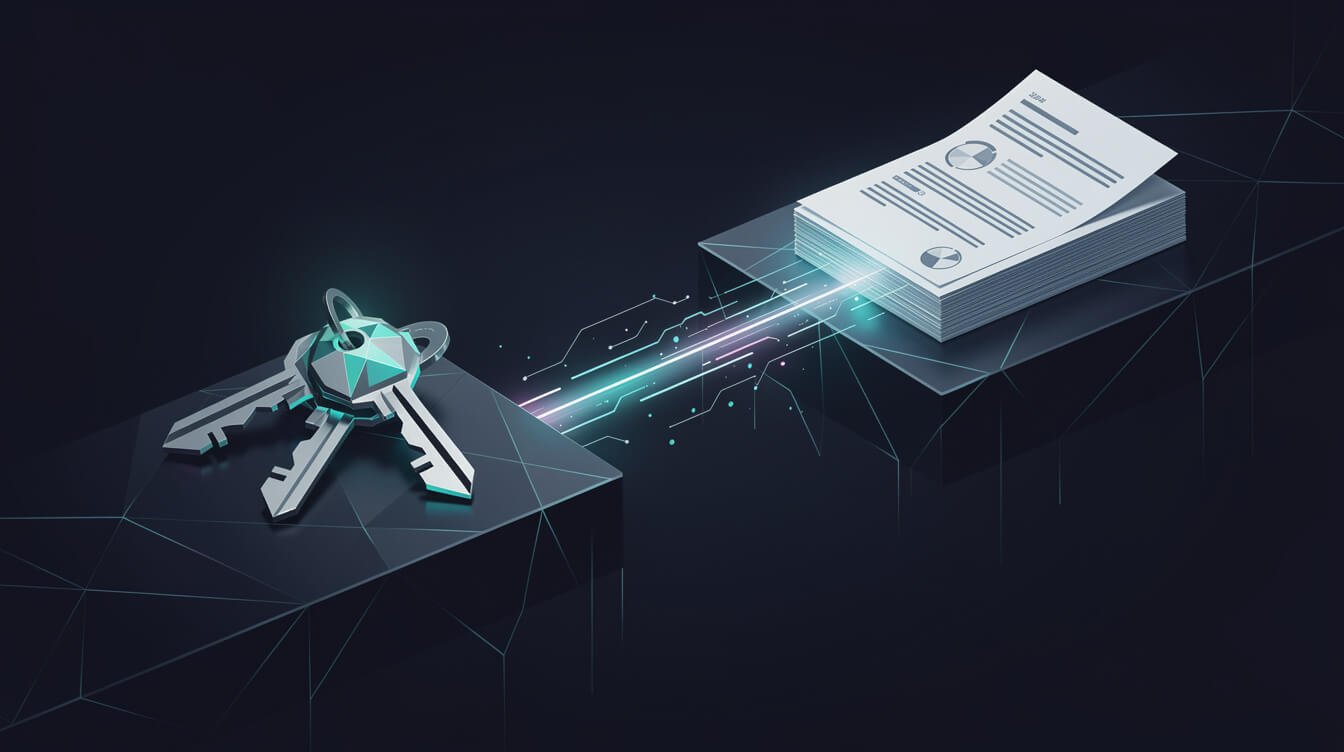
An automation you cannot modify, inspect or move is not an asset. It is a subscription with extra steps. Before any money changes hands, agree in writing that the following transfer to you.
- The code, in your repository. Not a zip file emailed at the end. A repository you own, that they push to during the build, so ownership is never a separate event that can be forgotten or leveraged.
- The credentials, in your vault. Every API key should be issued from accounts in your company name. If the consultant’s personal account is in the chain anywhere, you have a single point of failure who can also send invoices.
- The runbook. A plain document that says what each job does, when it runs, what it costs, how to tell it is healthy, and what to do when it is not. If it cannot be handed to a competent person who has never seen the system, it is not finished.
- The infrastructure account. The server, the container registry, the scheduler. In your name, billed to your card.
- The alerting. Pointed at an inbox you read. This is the one most often skipped, and it is the difference between finding out in a minute and finding out in a month.
Ask for these at the proposal stage rather than at handover. An ai automation consultant who intends to hand over clean systems will agree without friction because it costs them nothing. One whose model depends on you not being able to leave will negotiate, and the negotiation itself tells you everything you needed to know.
FAQ: hiring an ai automation consultant
Should I hire an AI consultant, or build the capability in house?
Hire for the first build, then take it in house. The first system is where the expensive mistakes live, in failure handling and integration design, and those mistakes are cheapest to avoid with someone who has made them already. Once one system is running and documented, the second is mostly pattern matching and your own team can carry it. Be wary of any structure that makes the second build depend on the consultant too.
Is ai agent consulting the same thing?
Broadly yes, with a narrower focus. Agent consulting usually means the system makes decisions rather than following a fixed path, which raises the testing burden and the cost of being wrong. Everything in this article still applies, but weight the failure handling questions harder. An agent that fails loudly is fine. An agent that quietly does the wrong thing for a month is the expensive case.
How long should the engagement be?
Short, scoped, and renewable. A first engagement should produce one running workflow in weeks, not a roadmap in months. Long open ended contracts tend to convert into the retainer trap, where the maintenance cost gets bundled into a monthly number nobody itemises. If you want ongoing support, price it separately and explicitly as maintenance.
Does it matter if they are local?
No, and searching by proximity actively narrows your field for no benefit. This work is done against systems that are themselves remote. The evidence trail, the code, the logs and the credentials are all accessible from anywhere. Timezone overlap for the scoping conversations matters. Physical distance does not.
What size business does this make sense for?
The trigger is not headcount, it is repetition across tool boundaries. If a person is moving the same data between two systems more than a few times a week, there is a case. Below that, the maintenance tax can exceed the saving. The smaller end of this question is covered in more depth in the guide to AI consulting for small businesses.
What is the single biggest mistake buyers make?
Scoping by wish list instead of by bottleneck. People arrive with ten things they would like automated, and the correct first engagement automates one thing that is genuinely painful and well understood. Ten shallow automations produce ten maintenance surfaces and no measurable relief. One good one pays for itself and teaches you what the second should be.
Final thoughts
The reason this search returns career advice and job listings instead of buyer guidance is that the buyer side of this market has not written much down. The people doing the work are busy doing it, and the people with time to publish are mostly selling the category rather than practising it.
So reduce it to one move. Ask any ai automation consultant you are considering what they run their own business on, and make them be specific: the schedule, the cost, the last thing that broke and how they found out. It is a cheap question, it takes thirty seconds, and it sorts the field faster than any proposal review. I gave you my own numbers above, including the untidy ones, because that is the standard the question should be held to.
If you would rather put those questions to someone directly, book an automation strategy session and start at question one. I would rather be tested than described.
Automate the bottleneck, not the wish list. Count integrations, not steps. Own the repository, the keys and the runbook. Do those four things and the title on the invoice matters a great deal less than the system that is still running six months later.
Steal the playbook before you hire anyone
Join the list for real build logs from ten autonomous brands: costs, failures, and the systems that actually held up in production.
📥 FREE: THE AI PLAYBOOK
The exact tools and workflows I use to run a one-person agency. 25 years of marketing experience distilled into an actionable guide. Yours free.

AI & Digital Marketing Strategist
With over 25 years in digital marketing, e-commerce, sales, and international business, Jon Jones is a seasoned entrepreneur dedicated to empowering small businesses through innovative AI solutions. His journey began in investment banking on Wall Street, guiding companies through capital acquisition and complex markets, and has expanded to include expertise in web development, brand design, product development, and courses and training.
Fluent in Mandarin and with a rich foundation in both finance and tech, Jon launched JonJones.ai to provide accessible, transformative tools for small businesses to streamline operations, generate leads, and build sustainable growth. His mastery of AI, automation, and digital strategy has enabled numerous businesses to bridge the gap between traditional practices and modern technology, ensuring they thrive in today’s digital landscape.