

Type ai automation agency into Google right now and here’s what you’ll actually find: a Reddit thread of people asking whether anyone is really running one, and a long, honest LinkedIn post explaining why a single person can’t. Budget chaos. Maintenance hell. Knowledge that walks out the door when a contractor ghosts you. Revenue that lurches from feast to famine. The entire first page frames the AI automation agency as a people-heavy services grind that quietly eats its founder alive.
I don’t recognize that business. Not because I’m smarter than those founders — they’re describing something real — but because I stopped selling retainers and rebuilt the whole model around software that runs itself. Today my operation, JonOps, runs 10+ autonomous brand containers in production. Not a room of humans copy-pasting into dashboards. Containers. On a schedule. While I sleep in Taipei.
This is the honest version of what an AI automation agency looks like in 2026 when the AI genuinely does the work — the economics, the stack, the failure modes nobody blogs about, and how you’d start your first autonomous client build this week. If you’ve been circling this business model, this is the map I wish I’d had.
What an AI automation agency actually is (and the model everyone gets wrong)
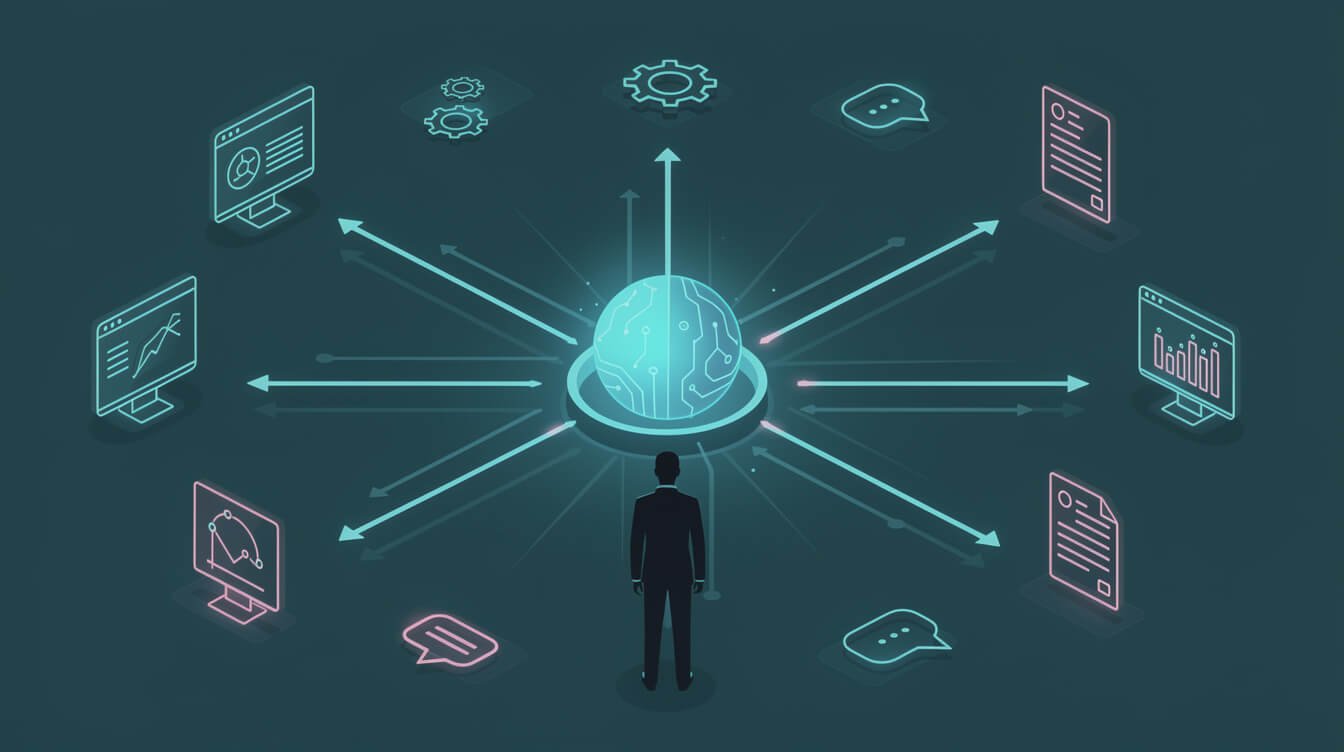
An ai automation agency builds and operates automated systems that do work a business used to pay people to do — lead follow-up, content production, reporting, data entry, customer replies, onboarding. That’s the neutral definition. The problem is that 90% of the market interprets “agency” the old way: a bunch of humans who configure automations for clients and then bill monthly to babysit them.
That’s the model everyone gets wrong. It’s not automation — it’s consulting with a Zapier tab open. You’re still the bottleneck. Every new client adds linear human cost: more calls, more debugging, more “can you just tweak this one thing.” The automation is the deliverable, but the delivery itself is painfully manual.
The model that actually works flips that. The agency’s product is an autonomous system, and the agency’s delivery mechanism is also autonomous. AI agents don’t just run the client’s workflow — they run yours. Research, drafting, publishing, QA, reporting: handled by the same kind of agents you’re selling. When your delivery scales without headcount, “agency” stops meaning “headcount for hire” and starts meaning “leverage for rent.” If the idea of software that acts on its own is new to you, my guide to autonomous AI agents breaks down the mechanics before you go further here.
The retainer trap: chaos-automation, maintenance hell, and knowledge leak

The retainer looks like the dream: predictable monthly recurring revenue, sticky clients, compounding relationships. In an AI automation agency, it’s usually a trap. Here’s the anatomy of how it breaks the operator, drawn straight from the failure modes the whole SERP is quietly screaming about.
Chaos-automation. You sold speed, so you build fast. Every client gets a slightly different bespoke contraption — different tools, different naming, different logic. Six clients in, you’re maintaining six one-off snowflakes with nothing shared between them. There’s no product, just a museum of exceptions.
Maintenance hell. Automations don’t rot politely. An API changes, a token expires, a webhook silently 401s, and the first you hear about it is an angry client whose leads stopped flowing three days ago. Retainer revenue quietly becomes on-call insurance. You’re not being paid to build — you’re being paid to not-let-things-break, which is the worst job in software.
Knowledge leak. The context lives in your head or in a contractor’s. When they leave, or when you take a week off, the system becomes unmaintainable because nobody remembers why the third node exists. This is the exact reason so many founders conclude “one person can’t run this.” They’re right — if the knowledge lives in people instead of in code.
Unpredictable revenue. Retainers churn the moment a client’s CFO asks “what are we actually paying for?” and the answer is “maintenance.” You end each month re-selling the value you already delivered. That’s not recurring revenue; it’s a treadmill with a subscription button.
None of this is a knock on the people running these shops. It’s a structural problem: when humans are the delivery layer, every failure mode routes back to a human. The fix isn’t working harder. It’s removing yourself from the delivery path entirely.
The autonomous alternative: done-for-you systems that run themselves

Here’s the shift that changed my business: I stopped selling access to me and started selling a system that doesn’t need me. Instead of a retainer to keep the lights on, you deliver a done-for-you build — a self-operating system the client owns — and you charge for the build, not for babysitting it.
What makes a system genuinely autonomous rather than “automated with an asterisk”? Three properties:
- It runs on its own schedule. Cron-driven agents wake up, do the job, log the result, and go back to sleep. No human presses go.
- It self-reports and self-heals where possible. When something breaks, the system tells you — a Telegram alert, a logged failure, a queued retry — instead of a client telling you.
- Its knowledge lives in code and config, not in a person’s memory. The “why” is written down where the agent reads it. Nobody’s head is a single point of failure.
Concretely: one of my brand containers wakes at midnight, picks the next keyword from an Airtable queue, researches the live SERP, writes a 3,000-word post, generates its own images, publishes to WordPress, sets the SEO metadata, and logs the whole thing to a task board — with zero human touches. That’s not a demo. That’s the post-production pipeline that likely produced the article you’re reading. When that is your delivery mechanism, adding a client is a config change, not a hiring decision. My guide to agentic AI for solopreneurs walks through how these self-directed agents actually make decisions if you want the deeper mechanics.

Get the AI Playbook I use to run my container fleet
The exact systems, prompts, and build patterns behind my autonomous brands — no fluff, no filler. Grab it free and start building.
Real economics: ten autonomous brands vs a five-person agency

Let’s do the math honestly, because this is where the autonomous model stops being philosophy and starts being a spreadsheet you’d actually want to own.
The five-person agency. Say you’ve got yourself plus four people — two builders, an account manager, a VA. Even lean and remote, you’re looking at a serious monthly payroll before a single client is delighted. Your capacity is bounded by human hours. Your margins compress every time you hire to grow. And your best people are your biggest risk — when they leave, delivery quality dips and the knowledge leaks. Revenue scales, but so does fragility.

⚡ GET THE AI EDGE
Weekly AI tips that actually save you time and money. No fluff, no hype — just what works.
The autonomous fleet. My cost base to run 10+ brand containers is dominated by API calls and infrastructure, not salaries. A container’s marginal monthly cost is model usage, a bit of compute, and a handful of SaaS subscriptions shared across the fleet. Generating a full illustrated blog post — research, writing, six or seven custom images, publishing — costs me a few dollars in API spend, not a day of a writer’s time. The eleventh brand costs almost nothing incremental because the pipeline already exists.
The difference isn’t just cost — it’s the shape of the curve. Human agencies have linear cost and capped capacity. An autonomous fleet has near-flat marginal cost and capacity bounded only by API limits and your own taste. That’s the whole game: you want a business where the tenth client costs less than the first, not more.
This is also why I lean toward done-for-you builds over open-ended retainers. If you want the fuller picture of how the high-ticket, low-headcount model works for a solo operator, I broke it down in how solopreneurs run a high-ticket consulting practice with AI. And if you’d rather have my team build the autonomous system for you than assemble it yourself, a done-for-you automation build is exactly the kind of engagement I take on — reach out and we’ll scope whether it fits.
The stack behind an AI-run agency

People assume an autonomous agency needs some exotic, expensive platform. It doesn’t. Mine runs on a small, boring, battle-tested stack — and boring is the point, because boring is what runs unattended at 3am. Here’s the shape of it.
- Claude Code agents — the brains and the hands. Each brand is a container with a set of skills: write a post, check email, mine social conversations, run outreach. The agent reads its instructions, executes the skill, logs the result, and exits. This is the layer that actually does the work.
- n8n — the connective tissue. For deterministic, multi-step wiring — “when this happens, call that, then update this” — a workflow engine beats asking an agent to reason through plumbing every time. Use agents for judgment, workflows for glue. I compared the two approaches in depth in my AI-first workflow automation guide.
- Airtable — the single source of truth. Every brand’s keywords, content calendar, leads, and logs live in one structured base. Agents read from it and write back to it. This is what kills the knowledge-leak problem: the context isn’t in anyone’s head, it’s in a table the agent queries.
- WordPress, Metricool, Sendy, and friends — the output surfaces. The publishing, scheduling, and email endpoints the agents push to. Interchangeable. The intelligence lives upstream.
The unlock isn’t any single tool — it’s the division of labor: agents for reasoning, workflows for deterministic steps, one database as the brain’s memory. Get that architecture right and the specific SaaS logos barely matter. If you want the full inventory of what I actually run, I keep a living list in the actual stack that runs my 10 autonomous brands.
How to start: your first autonomous client build, step by step
You don’t start an autonomous AI automation agency by signing ten clients. You start by building one system that runs itself, proving it with receipts, and then repeating. Here’s the sequence I’d run if I were starting today.
- Pick one painful, repetitive, high-frequency workflow. Not the client’s whole business — one process they hate doing weekly. Content production, lead follow-up, and reporting are the classic first builds because they’re frequent and the value is obvious.
- Map it as if you were the employee doing it. Write the exact steps, the decisions, the inputs, the outputs. If you can’t describe it in plain English, an agent can’t run it. This document becomes the agent’s instructions.
- Build it for yourself first. Run it on your own business or a demo brand for two weeks before you sell it. This is how you find the failure modes on your own dime instead of a client’s.
- Wire in a source of truth and a schedule. Put the inputs in a structured database, put the agent on a cron, and make it log every run. Now it’s autonomous, not just a script you run manually.
- Add self-reporting. A single alert on success and failure. This one habit is what lets you run many systems without watching any of them.
- Sell the build, not the babysitting. Charge a real price to build and hand over a system the client owns. Offer a small, optional maintenance tier if you must — but the business is the build.
Notice what’s missing: hiring. Your first ten builds should not require a single employee. If a build can’t run without a human in the loop every day, it isn’t done yet — it’s a retainer wearing an automation costume.
When a retainer still makes sense (and when to walk away)
I’m not religiously anti-retainer. There are cases where recurring revenue is honest and earned:
- The system genuinely evolves. If the client’s needs change often enough that the automation must be re-architected — not just repaired — ongoing work is real work worth billing.
- You’re selling outcomes, not uptime. A performance retainer tied to leads generated or hours saved is a different animal than “$X/month so nothing breaks.”
- The client wants a managed service and will pay for it knowingly. Some clients genuinely don’t want to own the system. Fine — price the management honestly and staff it with agents, not just people.
Walk away when the retainer is really just insurance against your own fragile builds, when you can’t articulate the monthly value without the word “maintenance,” or when a client wants unlimited tweaks for a flat fee. Those are the deals that turn a promising agency into a support desk with your name on it.
AI automation agency FAQ
Can one person really run an AI automation agency?
Yes — but only if the AI runs the delivery, not just the client’s workflow. If humans are your delivery layer, one person genuinely can’t scale it, which is exactly what most SERP results conclude. Make agents do the building, publishing, and reporting and the headcount ceiling disappears. I run 10+ autonomous brands solo on this exact principle.
How much does it cost to start an AI automation agency?
Far less than a staffed agency. The core costs are model API usage, a bit of compute, and a handful of shared SaaS subscriptions. You can build and validate your first autonomous system for the price of a few dollars in API calls per run — no payroll required until you deliberately choose to add it.
Do I need to know how to code?
You need to be able to describe a process precisely and wire tools together — that’s “beyond no-code” rather than traditional software engineering. Tools like Claude Code agents, n8n, and Airtable let you build serious autonomous systems without writing a large custom codebase, though comfort reading and editing config helps a lot.
What should my first client build be?
The most painful repetitive workflow your client does weekly — usually content production, lead follow-up, or reporting. Build it for yourself first, prove it with two weeks of unattended runs, then sell the build as a system the client owns.
Final thoughts: build the machine, not the treadmill
The reason the internet is so gloomy about the ai automation agency model is that almost everyone is running the human version of it — selling their time, babysitting fragile builds, and re-justifying a retainer every month. That business really is brutal, and I don’t blame anyone for warning you off it.
But there’s a different business hiding under the same name: one where you build autonomous systems, deliver them as owned assets, and let AI run both your clients’ work and your own. That version scales without headcount, costs less at the tenth client than the first, and doesn’t collapse when you take a week off. I know because I’m running it — 10+ containers, on a schedule, right now.
Stop selling retainers. Build the machine. Then let it run.
Get the AI Playbook I use to run my container fleet
The exact systems, prompts, and build patterns behind my autonomous brands — no fluff, no filler. Grab it free and start building.
📥 FREE: THE AI PLAYBOOK
The exact tools and workflows I use to run a one-person agency. 25 years of marketing experience distilled into an actionable guide. Yours free.

AI & Digital Marketing Strategist
With over 25 years in digital marketing, e-commerce, sales, and international business, Jon Jones is a seasoned entrepreneur dedicated to empowering small businesses through innovative AI solutions. His journey began in investment banking on Wall Street, guiding companies through capital acquisition and complex markets, and has expanded to include expertise in web development, brand design, product development, and courses and training.
Fluent in Mandarin and with a rich foundation in both finance and tech, Jon launched JonJones.ai to provide accessible, transformative tools for small businesses to streamline operations, generate leads, and build sustainable growth. His mastery of AI, automation, and digital strategy has enabled numerous businesses to bridge the gap between traditional practices and modern technology, ensuring they thrive in today’s digital landscape.