

Every Replit vs Lovable review I found tonight does the same thing. It builds one demo app in both tools, screenshots the result, and declares a winner based on how the first afternoon went. Two of the top results are written by companies selling a third app builder, and one is written by Replit itself. That’s fine as far as it goes. It just answers the wrong question.
The first afternoon is the easy part. Both tools will get you a working app from a prompt. The question that decides whether you’re happy in a month is a different one: who owns the code, what the bill looks like once real people use the thing, and what happens when you need it to do work nobody is watching.
So this comparison is built around day 30, not day 1. You’ll get the quick verdict, what each tool is actually built for, the honest day-1 picture, the day-30 picture (ownership, billing, maintenance), clear “pick this one” rules, and the signs that you’ve outgrown both. Every price below was read off Lovable’s and Replit’s own pricing and docs pages on 2026-10-16. I read them; I did not run a paid benchmark, and I’ll say so wherever it matters.
Replit vs Lovable: The Quick Verdict

If you only have two minutes, here’s the call.
- Pick Lovable if you’re a non-developer who wants a good-looking web app or site fast, you think in screens and flows rather than files, and you want one predictable credit balance that covers building and hosting.
- Pick Replit if you want a full workspace where the code, the database and the server are all in view, you might need something other than a web front end (a bot, a background worker, a scheduled script), or you expect a developer to touch the project later.
- Pick neither if what you actually need is a recurring piece of work done for your business, not an app for customers to visit. That’s a different tool category, and I’ll show you where the line is in the “outgrown both” section.
Entry price is not the tiebreaker. Lovable Pro is $25 a month and Replit Core is $20 a month ($18 billed yearly). Five dollars won’t matter. How each one bills you once the app is live will.
| Lovable | Replit | |
|---|---|---|
| Feels like | A design studio that writes the code | A cloud computer with an agent inside |
| Free plan | 5 build credits a day (up to 30 a month) | Starter: daily Agent credits, 1 published app that goes down after 30 days |
| First paid tier | Pro, $25/mo, 100 monthly credits | Core, $20/mo ($18 yearly), $20 of usage credit |
| Next tier | Business, $50/mo (SSO, internal publish) | Pro, $100/mo ($90 yearly), 10 parallel agents |
| Billing model | Credits per message, varying with task size | Effort-based, one charge per completed checkpoint |
| Code ownership | You own it; two-way GitHub sync on all plans | Git pane with GitHub connection |
| Scheduled work | Jobs (uses credits per run) | Scheduled Deployments (cron expression, pay per run) |
Sources: Lovable pricing, Replit pricing, and their docs, read 2026-10-16.
What Each One Is Built For

The fastest way to understand the Replit vs Lovable split is to look at what each company says it is.
Lovable: the screen comes first
Lovable describes itself as an AI software engineer that lets anyone build for the web by chatting. You describe what you want, it builds the interface and the logic behind it, and you refine by talking to it or by clicking on the page and editing directly. The thing you look at all day is your app, not your code.
Behind the screen, Lovable now runs a built-in backend it calls Cloud. It’s built on Supabase’s open-source foundation and gives you a database, sign-ups and logins, file storage, serverless functions, branded email from your own domain, and scheduled Jobs (Lovable Cloud docs). For a non-developer that’s the big change from a year ago: you no longer have to wire up a separate backend service to get a real app.
Replit: the computer comes first
Replit is a cloud workspace with an agent built in. Its own pitch is that you can create and deploy websites, automations, internal tools and data pipelines in any programming language. You still prompt an agent to do the building, but the files, the shell, the database and the deploy settings sit right there in the same window.
That matters most when your idea isn’t a website. Replit’s deploy options include a Reserved VM for bots and always-on background work, and Scheduled Deployments that run a command on a cron schedule and stop (Replit deployment types). Lovable is built around web apps; Replit is built around “a program that runs somewhere.”
Lovable hands you a beautiful storefront with the plumbing tucked behind the wall. Replit hands you the whole building with the walls off. Neither is wrong. Pick the one that matches how you think.
If you’re still fuzzy on the whole category, start with what vibe coding actually means for a solopreneur, then come back.
Day 1: Speed to a Working App

This is the part every other review covers, so I’ll keep it short and honest.
On day 1, both tools do the magic trick. You type a paragraph, you get a working app with pages, a database and a login. Reviewers in the current top results consistently give Lovable the edge on first-try visual polish and Replit the edge once things get complicated and need debugging. That matches how the products are designed, so I’d believe it, with the caveat that it’s a pattern from other people’s tests, not mine.
A few day-1 details that actually affect your wallet:
- Lovable shows you the price per message. Its own examples: “Make the button gray” costs 0.50 credits, “Remove the footer” 0.90, “Add authentication with sign up and login” 1.20, and “Build me a landing page, use images” 1.70. Plan Mode is a flat 1 credit per message. With 100 monthly credits on Pro plus 5 free daily build credits, that’s a lot of small edits.
- Replit has a Free Mode. Core and Pro subscribers get no-cost everyday Agent work within an allowance. Paid work is billed by effort, one checkpoint per request, and Replit asks you to confirm before a paid action starts (Replit AI billing).
- Replit’s free plan is a trial, not a home. Starter gives you one published app, and that link goes down after 30 days (Starter plan docs). Lovable’s free plan keeps up to 5 lovable.app sites live.
Here’s the trap. Day 1 feels so good that people choose the tool that won the demo. But the demo is the cheapest moment in the life of your app. Nothing is live, nobody is using it, and nothing has broken yet.

Get the AI Playbook
The operator notes behind my fleet: which jobs run unattended, what they cost, and what broke this week. Free, and you can leave whenever you like.
Day 30: Ownership, Billing and Maintenance (Replit vs Lovable After the Demo)

Now your app has users. This is where the Replit vs Lovable decision really gets made, and where almost no comparison goes. Four questions.
1. Who owns the code, and can you leave?
Lovable is explicit: you own your code, your customer data and the AI output you generate. You can two-way sync a project with GitHub on every plan, and paid plans can download the codebase directly (Lovable GitHub docs). Replit gives you a Git pane that connects your project to GitHub, plus the full file system in the workspace. Both pass the “can I take my code and walk” test.
The honest caveat: owning the code is not the same as being able to run it somewhere else. A Lovable app leans on Cloud for its database, auth and functions. A Replit app leans on Replit’s deploy and database services. Exporting the code is easy. Rehosting everything it depends on is a project. Connect GitHub on day 1 anyway. It’s free insurance.
2. What does it cost once people use it?
Both tools moved to a single credit pool that pays for building and running. That’s convenient. It also means your build budget and your hosting bill come out of the same pot.

⚡ GET THE AI EDGE
Weekly AI tips that actually save you time and money. No fluff, no hype — just what works.
- Lovable: one balance covers building, chat, hosting and backend usage, AI features inside your app, and some managed connectors. Lovable says most small and new apps are covered by the included hosting grant, and that apps with significant traffic or size start drawing from your credit balance. Monthly-plan credits roll over but expire two months after they’re issued, and credits aren’t refundable.
- Replit: your subscription credits cover Agent work, publishing, storage and databases. Autoscale deployments bill on compute units (Replit counts 1 CPU-second as 18 units and 1 RAM-second as 2), plus requests and outbound data, with 100 GiB of egress included on Core. Development databases are free; production databases are billed. Usage invoices once it crosses a threshold that starts at $50.
The practical move is the same on both: set a spending cap in week one. Lovable lets workspace owners set usage limits and alerts on all paid plans. Replit has budgets and usage limits in billing settings. Nobody regrets a cap. Plenty of people regret a surprise.
3. Who fixes it at 2am?
Both apps run on the vendor’s infrastructure, and both vendors run the servers. Your problem isn’t the server. It’s the logic. When a sign-up flow breaks or a payment webhook stops firing, you go back into the chat and ask the agent to fix it. That costs credits, and on a complex app it can take a few rounds. Replit tends to make this easier because you can see and inspect more of what’s going on. Lovable tends to make it friendlier because you never have to.
4. What about work nobody is watching?
The old knock on app builders was that they fall over the moment you need a scheduled job or an email. That was true a while ago. It isn’t now. Lovable has Jobs: ask for “a daily job at 7 AM that emails me a summary,” and it builds it, with a run history and failure alerts (Lovable Jobs docs). Replit has Scheduled Deployments: a cron expression, a timezone and an alert if a run fails.
So the day-30 difference isn’t “can it run on a schedule.” Both can. It’s what runs. In both tools, the scheduled thing is a piece of code the agent wrote once and now repeats exactly. That’s perfect for “send the digest” or “clean up expired sessions.” It’s not the same as a job that has to read, decide and adapt every time it runs. Hold that thought for the “outgrown both” section.
When to Pick Lovable, When to Pick Replit
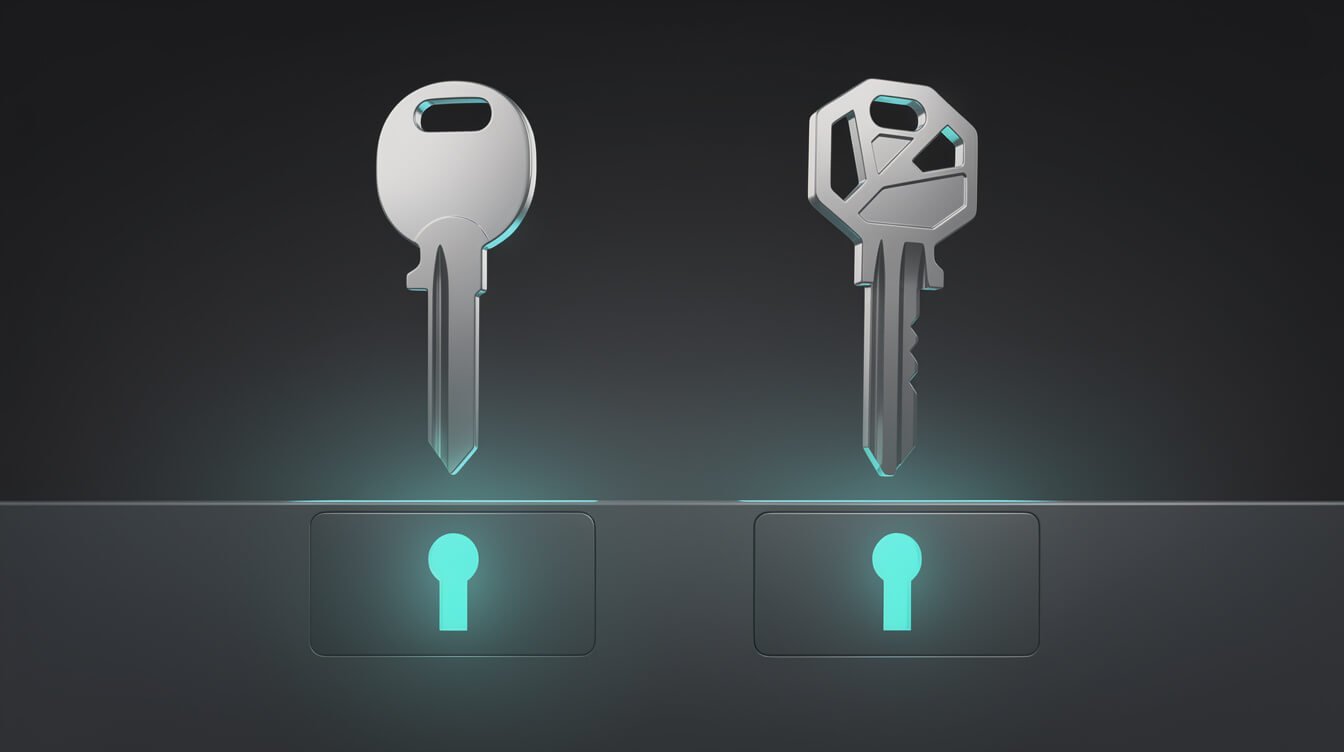
Here’s the decision as plainly as I can put it.
Pick Lovable when
- You are not a developer and don’t want to become one. You want to look at your app, not your files.
- The thing you’re building is a web app or site where how it looks drives whether it works: a client portal, a booking flow, a landing page with a sign-up, an MVP you’ll show investors.
- You want unlimited teammates without seat fees. Lovable prices plans by credits, not per user.
- You like knowing what an edit costs before you make it.
Pick Replit when
- Your idea isn’t purely a website: a Discord or Telegram bot, a data pipeline, an internal tool that runs scripts, a background worker.
- You’re comfortable glancing at code, or a developer will join the project later and wants a normal workspace.
- You want deploy choices: scale-to-zero for spiky traffic, a fixed-price always-on VM, or a cron-style scheduled run.
- You want to run several agent tasks in parallel. Replit Pro allows 10.
Stay put when
If you already have an app live on one of them and it’s making money, don’t migrate because a blog post (this one included) says the other tool is better. A working app with paying users is not a problem to solve. Fix the thing that hurts, and only move when you hit a wall the current tool genuinely can’t get past. For the wider field, my roundup of vibe coding tools and honest take on AI website builders cover the options beyond these two.
Signs You’ve Outgrown Both (and What Comes Next)

Here’s the part I’m qualified to write, because it’s where I live. This post was not written in an app builder. It was researched, written, illustrated and published by a Claude Code agent running on a cron schedule in a Docker container on a VPS, at 00:05 Bali time, while I was asleep.
That same fleet is the receipt. Tonight it holds 1,673 dated run logs going back to June 12, 2026. Last night’s watchdog check passed 13 out of 13 scheduled jobs with zero failures. The site it publishes to has 351 live posts. None of that is an app. It’s work.
That’s the line. App builders are excellent at making a thing people visit. You’ve outgrown them when the thing you actually need is work that gets done. The signs:
- Your “app” is mostly scheduled jobs. If most of the value is in what runs at 6am, not in the screens, you’re paying for a front end you barely use.
- The jobs need judgment, not repetition. “Email me a summary” is a script. “Read my inbox, sort it, draft replies in my voice, flag the invoices” is an agent. Builders schedule the first kind well. The second kind needs a model in the loop on every run.
- You’re stitching three tools together. An app builder for the portal, Zapier for the glue, a VA for the judgment calls. That’s usually one agent system wearing three costumes.
- You want the brain to be yours. Owning the code is good. Owning the memory, the prompts and the schedule that run your business is better. My fleet’s long-term memory is a plain markdown file on a server I control.
What comes next isn’t a third app builder. It’s an agent with a schedule and a server. I wrote up the head-to-head of Replit vs Claude Code for exactly this fork, and the full production setup that runs my brands if you want the nuts and bolts. If you’d rather have that system built for your business than learn to build it, that’s what I do. Book an automation strategy session and we’ll map which of your weekly jobs should stay in an app and which should become an agent.
And you don’t have to pick one world. A Lovable front end with an agent doing the back-office work behind it is a perfectly sane setup. The builder handles the customer. The agent handles the business.
Replit vs Lovable FAQ

Is Replit or Lovable better for beginners?
Lovable, for most non-developers. You work on the app itself, edits are visual, and you can see what each message costs. Replit is very approachable too, but it puts more of the machinery in front of you.
Is Lovable or Replit cheaper?
At entry, Replit Core is $20 a month ($18 yearly) and Lovable Pro is $25. After that, it depends on how you use them. Lovable bills per message by task size; Replit bills by effort per checkpoint, plus compute for a live app. Light builders will spend about the same. Set a cap on either.
Do I own the code I build in Lovable or Replit?
Yes. Lovable states you own your code, data and AI output, and offers two-way GitHub sync on every plan. Replit connects your project to GitHub through its Git pane. Exporting is easy on both; rehosting the services your app depends on is the real work.
Can I move a Lovable app to Replit?
Replit offers an “Import app from Lovable” path on its comparison page. Before you use it, sync your Lovable project to GitHub so you have a clean copy of the code either way.
Can Lovable or Replit run scheduled tasks?
Both can. Lovable has Jobs inside its Cloud backend, which use credits on each run. Replit has Scheduled Deployments driven by a cron expression, billed for each run’s duration.
Can I use Replit and Lovable together?
You can, through GitHub, but most solo builders shouldn’t. Two credit pools and two places to debug is overhead you don’t need. Pick one for the app. If you need more power next to it, add an agent rather than a second builder. My operator’s shortlist of Claude Code alternatives and notes on shipping real software with Cursor cover that step.
Final Thoughts: Pick for Day 30, Not Day 1
The Replit vs Lovable question looks like a beauty contest, and on day 1 it basically is. Lovable usually wins on looks. Replit usually wins on flexibility. Both get you live fast, and both now cover the backend basics that used to send non-developers running.
Choose on the questions that show up a month later. Are you building screens or programs? Do you want to look at your app or at your code? Can you live with building and hosting coming out of one credit pool? Pick the tool whose answers match yours, connect GitHub on the first day, set a spending cap in the first week, and you’ll be fine with either.
Then watch for the moment the most valuable thing your “app” does is work that happens when nobody’s looking. That’s not a sign you picked the wrong builder. It’s a sign you’re ready for an agent.
Want the Day-30 Playbook?
Get the AI Playbook: the systems, costs and failure notes from a real autonomous fleet, written for solo operators. No fluff, no filler.

📥 FREE: THE AI PLAYBOOK
The exact tools and workflows I use to run a one-person agency. 25 years of marketing experience distilled into an actionable guide. Yours free.

AI & Digital Marketing Strategist
With over 25 years in digital marketing, e-commerce, sales, and international business, Jon Jones is a seasoned entrepreneur dedicated to empowering small businesses through innovative AI solutions. His journey began in investment banking on Wall Street, guiding companies through capital acquisition and complex markets, and has expanded to include expertise in web development, brand design, product development, and courses and training.
Fluent in Mandarin and with a rich foundation in both finance and tech, Jon launched JonJones.ai to provide accessible, transformative tools for small businesses to streamline operations, generate leads, and build sustainable growth. His mastery of AI, automation, and digital strategy has enabled numerous businesses to bridge the gap between traditional practices and modern technology, ensuring they thrive in today’s digital landscape.