
Ask ten marketers what “email marketing and automation” means and you’ll get ten versions of the same 2015 answer: build a welcome series, set an abandoned-cart trigger, drop in a few merge tags, walk away. That playbook still works. It’s also about to look quaint. In 2026 the real shift isn’t a better drip builder — it’s whether you let an AI agent write, segment, and send your email on its own while you sleep. I run exactly that on my own list, so this isn’t a prediction. It’s a build log.
This guide draws a clean line between three things people keep smashing together — broadcasts, automations, and agents — then shows you where classic automation quietly stops earning its keep, what agentic email actually changes, and how to hand one campaign to an agent without torching your deliverability. No vendor fluff. Just what’s working in production.
Email Marketing and Automation vs. Agentic Email: The 2026 Distinction

Most confusion in this space comes from collapsing three distinct things into one bucket. Pull them apart and every decision downstream gets easier.
Email marketing is the broadcast. You write a newsletter, pick a list, hit send. One message, many people, one moment in time. It’s a megaphone.
Email automation is the machine that fires messages based on triggers. Someone subscribes, they get a welcome series. Someone abandons a cart, they get a nudge in three hours. The logic is if-this-then-that: you define every branch in advance, and the system executes it faithfully forever. Powerful, but frozen. The automation is exactly as smart as the day you built it and not one degree smarter.
Agentic email is the new layer. Instead of a human pre-defining every branch, an AI agent decides what to write, who should get it, and when — using the actual state of your audience and your business at send time. It doesn’t just execute rules. It makes judgment calls inside guardrails you set. The difference between an automation and an agent is the difference between a vending machine and a barista who remembers your order and notices you look tired today.
Here’s the tell: an automation asks “which pre-written email matches this trigger?” An agent asks “what’s the best thing to say to this person right now, and should I even send at all?” That second question is what the entire top of Google misses when it explains email marketing and automation as a solved, beginner-level topic. It isn’t solved anymore. The ceiling just moved.
Where Classic Drip Automation Stops and AI Agents Take Over

Classic automation is brilliant at exactly one thing: doing the same predictable action in response to the same predictable event. Welcome flows, receipts, renewal reminders, cart recovery — these are automation’s home turf and you should absolutely keep them. If you haven’t nailed the basics yet, my breakdown of email workflow automation covers the flows every list needs before you layer anything smarter on top.
But drip logic hits a wall the moment the “right” answer depends on context no template anticipated. Three walls, specifically:
- The content wall. A drip sends the same email #3 to everyone who reaches step three, whether they’re a hot lead who just booked a call or someone who’s opened nothing in six weeks. The automation can branch, but only into branches you hand-built. It can’t write a fresh angle for a segment you didn’t foresee.
- The timing wall. Rules fire on triggers, not on judgment. “Send 24 hours after signup” is a guess. An agent can look at when this specific cohort actually opens, whether they’re mid-purchase, or whether your last three sends already crowded their inbox — and hold or move accordingly.
- The maintenance wall. Every rule you add is a rule you now own forever. Ten flows is manageable. Eighty interlocking flows with overlapping conditions is a swamp that no one on your team fully understands. Complexity compounds until you’re afraid to touch it.
Agents take over precisely at those walls. Not by replacing your reliable flows, but by handling the decisions that were always too nuanced, too numerous, or too fast-changing to hard-code. Think of it as the same graduation I described in putting your marketing on autopilot without a team — the boring, deterministic work stays as automation; the judgment work moves to an agent.
Agentic Personalization and Segmentation: Beyond Merge Tags
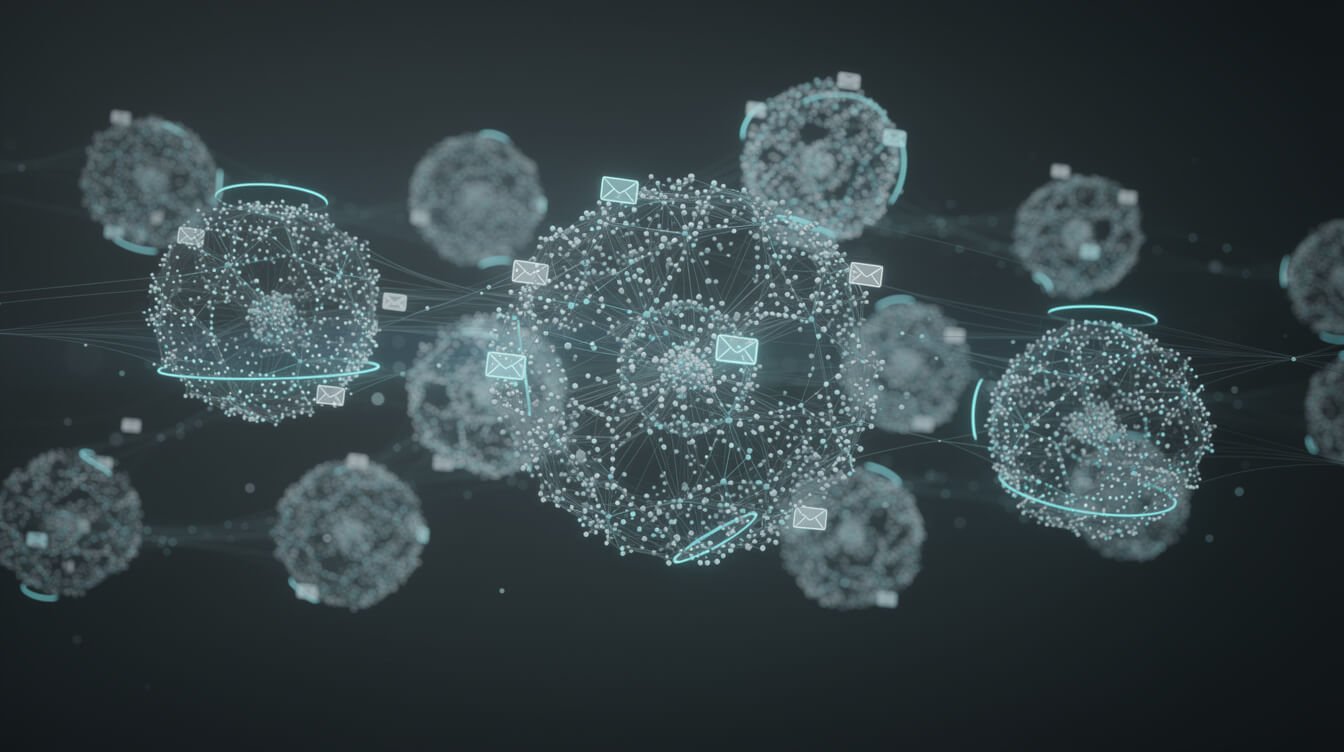
“Personalization” has meant Hi {{FirstName}} for so long that we forgot it’s a rounding error. Sticking someone’s name at the top of an identical blast is not personalization — it’s a mail merge wearing a costume. Real personalization means the message itself changes based on who’s reading it. That’s exactly the work merge tags can’t do and agents can.
Here’s the shift in practice. Traditional segmentation is you, in a dashboard, hand-drawing buckets: “opened in last 30 days,” “purchased once,” “is in Texas.” Static definitions you maintain by hand. Agentic segmentation flips it: the agent reads the raw behavioral signal — what someone clicked, what they bought, what they ignored, how they replied — and forms the relevant grouping at send time, then writes copy tuned to that grouping. Nobody pre-defines the bucket. The audience sorts itself and the message follows.
A concrete example from my own pipeline. When a new subscriber joins my list, an agent doesn’t just tag them and drop them into a fixed sequence. It reads which lead magnet they grabbed, what pages they’d read before subscribing, and it drafts a first email that references the actual thing they were interested in — not a generic “welcome to the family.” Same infrastructure, radically different relevance. If you want the full mental model for doing this without an analytics team behind you, I laid it out in AI personalization for solopreneurs.
The trap to avoid: agentic personalization is only as good as the signal you feed it. Garbage data in, confidently-wrong emails out. Before you point an agent at your list, make sure you’re actually capturing behavior — clicks, replies, purchases — in a place it can read. An agent with rich signal is a sharpshooter. An agent with just names and email addresses is a very expensive way to write “Hi FirstName.”

Want the agent stack I actually run?
Grab the AI Playbook — the exact playbook behind my autonomous newsletter, content, and outreach pipeline. No fluff, just the build.
The Deliverability Reality: Warmup, Verification, and Not Getting Flagged

Here’s the part the “AI writes your emails!” hype crowd skips: an agent that can send more email faster is a liability if your deliverability is soft. Speed into a spam folder is just faster invisibility. Handing sending to an agent raises the stakes on the boring discipline, it doesn’t remove it.
The non-negotiables, agent or no agent:

⚡ GET THE AI EDGE
Weekly AI tips that actually save you time and money. No fluff, no hype — just what works.
- Authenticate properly. SPF, DKIM, and DMARC on your sending domain. This is table stakes in 2026 — Gmail and Yahoo will quietly throttle you without it. It’s a one-time setup that too many people skip.
- Warm up new sending domains and IPs. A brand-new domain that suddenly blasts 10,000 emails looks exactly like a spammer. Ramp volume gradually so mailbox providers learn to trust you. If you let an agent scale sends, cap its daily volume during warmup.
- Verify your list before you send. Bounces and spam-traps are reputation poison. Run addresses through verification and prune dead weight before the agent touches them. An agent sending to a rotten list will torch a good domain in a week.
- Watch engagement, not just delivery. Modern filtering is behavioral. Low opens and high deletes tell Gmail your mail is unwanted, and it acts accordingly. Sending less to people who actually engage beats sending more to everyone.
This is exactly where doing it yourself gets genuinely hard, and where most solo operators hit a wall they didn’t budget for. If you’d rather not spend three weeks learning DMARC alignment and IP warmup schedules the painful way, this is the kind of thing I build and hand over done-for-you — book an automation strategy session and we’ll map the shortest path to an agent-run list that lands in the inbox instead of the promotions tab.
The rule of thumb: let the agent make the creative and targeting decisions, but keep deliverability on rails you control. The agent decides what and who. Your infrastructure decides that it actually arrives.
Build vs. Buy: An Agent-Run Stack vs. Mailchimp and Klaviyo

So do you buy an all-in-one like Mailchimp or Klaviyo, or build an agent-run stack yourself? Honest answer: it depends on whether you want the software to think for you or you want to own the thinking.
Buy (Mailchimp, Klaviyo, Brevo, ActiveCampaign): You get a polished editor, built-in deliverability infrastructure, and templated automations out of the box. It’s the fastest way to a competent, conventional program. The cost is the ceiling — you’re renting their definition of automation, your data lives in their walled garden, pricing scales brutally with list size, and any “AI” features are whatever the vendor decided to ship, applied to everyone identically. You can’t point their AI at a workflow they didn’t imagine.
Build (an agent-run stack): The pattern I run is deliberately unbundled — a lean sending engine (I use Sendy for cost-efficient broadcast), a CRM for tagging and behavioral signal (FluentCRM), and an AI agent that writes the copy and makes the segmentation calls on top. The upside is total: you own the data, the marginal cost of sending is near zero, and the agent can do anything you can describe, not just what a SaaS roadmap allows. The cost is you own the plumbing — deliverability, warmup, and glue all sit on you (or on whoever builds it for you).
The numbers make the trade-off concrete. A hosted platform charging by contact can run you hundreds of dollars a month once your list crosses five figures, and every one of those dollars is rent — you stop paying, the machine stops. An unbundled agent-run stack flips the math: a lean sender plus a self-hosted CRM is a near-flat cost that barely moves as your list grows, and the agent’s per-email cost is a fraction of a cent. Over a year, the gap between renting email marketing and automation software and owning the stack outright is often the price of the done-for-you build several times over. That’s not an argument to always build — it’s an argument to know which side of the line your list is on before you commit.
My actual take after running both models across a fleet of brands: buy when email is a side channel and you want it handled; build when email is a core asset and the compounding advantage of owning your pipeline is worth the setup. This is the same build-vs-buy logic I apply to every tool in the actual stack that runs my autonomous businesses — and the same reason I’ll happily pay for a tool that’s genuinely a commodity while refusing to rent one that sits at the center of the business. For the workflow layer that ties sending, CRM, and agent together, my comparison of n8n vs. Zapier covers which orchestrator I reach for and when.

Want an agent running your email — without building it yourself?
I design and hand over done-for-you agent-run email systems: sending engine, CRM, deliverability, and the agent that writes and segments. You get the receipts, not the homework.
A Starter Blueprint: Let an Agent Run One Campaign, Then Expand

You don’t migrate your whole program to agents on day one. That’s how you nuke your sender reputation and your nerve at the same time. You hand over one campaign, prove it, then expand. Here’s the blueprint I give operators:
- Pick a low-stakes, high-repetition campaign. The welcome email for new subscribers is perfect: it fires constantly, the downside of a mediocre one is small, and there’s a clear success metric. Don’t start with your Black Friday blast.
- Give the agent real signal and hard guardrails. Feed it what the subscriber did before signing up. Then bound it: max one email, a tone spec, a banned-claims list, and a hard volume cap. An agent without guardrails is a liability; an agent with tight ones is an asset.
- Keep a human in the loop at first. For the first week or two, the agent drafts and you approve before send. You’re calibrating trust and catching failure modes while the blast radius is tiny.
- Measure against the old version. Opens, clicks, replies, unsubscribes, and — if you can track it — downstream conversions. You want evidence the agent beats the static email, not a vibe.
- Cut the human loop only when the data earns it. Once the agent’s drafts are consistently as good or better, let it send autonomously within its guardrails. Now expand to the next campaign and repeat.
This is the exact crawl-walk-run path my own newsletter went through. It started as me approving every agent draft. It’s now a pipeline that segments, writes, and sends without me touching it — because it earned that autonomy one campaign at a time. The blueprint isn’t “trust the AI.” It’s “make the AI prove it, cheaply, before the stakes are high.” That discipline is the whole game.
Email Marketing and Automation FAQ
Can AI actually write my newsletters?
Yes — and well, if you feed it real context and keep a human in the loop until it earns trust. The failure mode isn’t AI writing badly; it’s AI writing generically because you gave it nothing specific to work with. An agent that knows what a subscriber clicked and bought writes sharper email than most humans do at 5pm on a Friday. An agent handed only a first name writes forgettable filler. The quality is a function of the signal, not the model.
What’s the best email automation for a small business?
If you want it handled with minimal setup, a buy-side all-in-one (Mailchimp, Brevo, MailerLite) is the pragmatic pick. If email is a core asset and you want compounding ownership, an agent-run stack — a lean sender plus a CRM plus an AI agent — gives you more control and near-zero marginal cost at the price of owning the plumbing. Small businesses that treat email as their main channel increasingly lean toward building, especially now that an agent can cover the copywriting and segmentation that used to require a hire.
Will an AI agent hurt my deliverability?
Only if you let it send faster than your reputation can support. Agents don’t inherently harm deliverability — unwarmed domains, unverified lists, and missing authentication do. Put SPF, DKIM, and DMARC in place, verify your list, warm up gradually, and cap the agent’s volume, and an agent lands in the inbox just as reliably as any other sender. The agent makes decisions; your infrastructure guarantees arrival.
Is email automation the same as agentic email?
No. Automation executes rules you defined in advance — same input, same output, forever. Agentic email makes fresh decisions at send time based on live context: what to write, who to target, whether to send at all. Automation is a machine; an agent is a judgment layer on top of that machine. You want both — reliable automations for the predictable work, an agent for the nuanced work.
Final Thoughts: Automate the Rules, Agent the Judgment
The 2026 version of email marketing and automation isn’t “better drip flows.” It’s a clean division of labor: keep classic automation for the predictable, repeatable work it’s always been great at, and hand the judgment — the writing, the real-time segmentation, the timing calls — to an agent operating inside guardrails you set. The operators who win the next few years won’t be the ones with the fanciest templates. They’ll be the ones who let a well-bounded agent carry the load their competitors are still doing by hand.
Start small. Hand over one campaign, make it prove itself, expand only when the data says so. That’s not a leap of faith — it’s a series of cheap, reversible bets that compound into a list that runs itself. If you want to build toward the same thing across your whole operation, my guide to workflow automation is the natural next step. The tools are finally here. The only question left is whether you’ll be the operator who uses them — or the one still writing “Hi FirstName” by hand.
Get the AI Playbook
The exact systems behind my autonomous email, content, and outreach — sent straight to your inbox. Built by an operator, not an influencer.
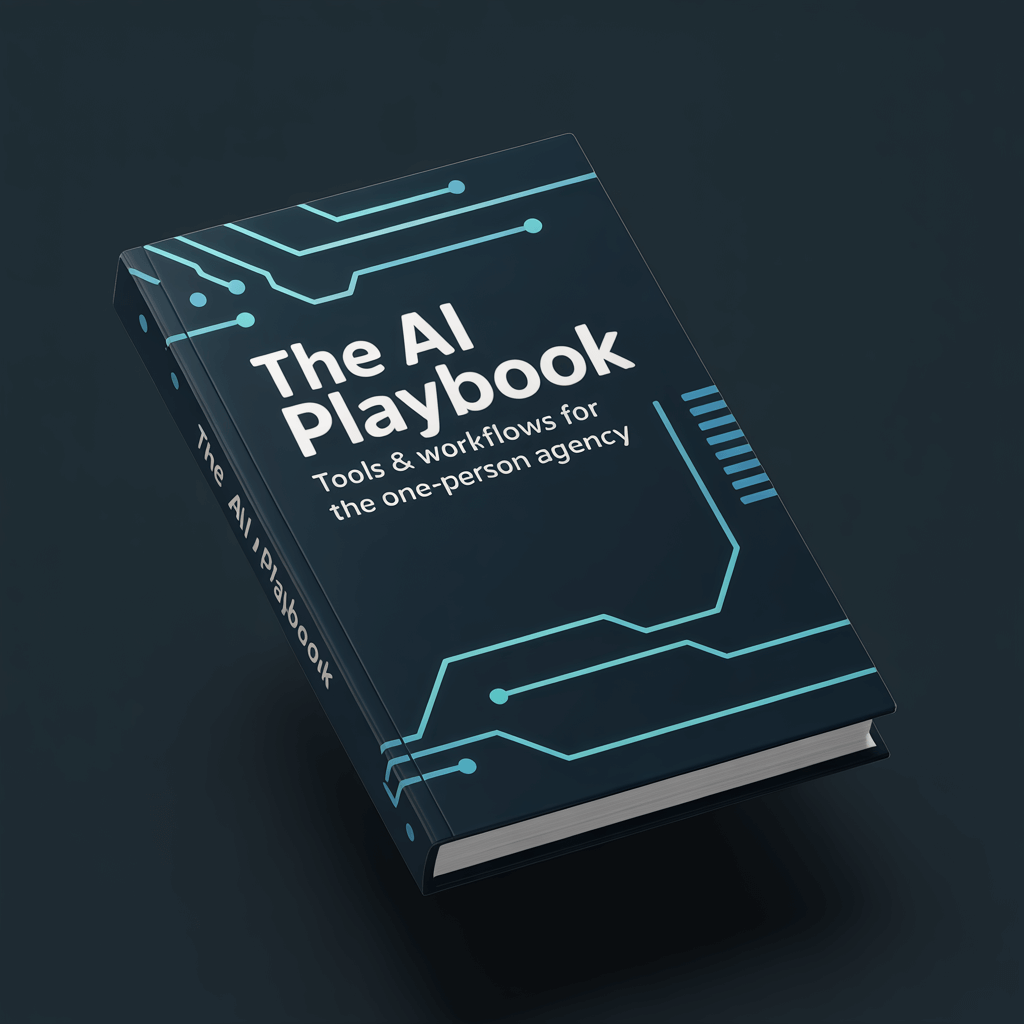
📥 FREE: THE AI PLAYBOOK
The exact tools and workflows I use to run a one-person agency. 25 years of marketing experience distilled into an actionable guide. Yours free.

AI & Digital Marketing Strategist
With over 25 years in digital marketing, e-commerce, sales, and international business, Jon Jones is a seasoned entrepreneur dedicated to empowering small businesses through innovative AI solutions. His journey began in investment banking on Wall Street, guiding companies through capital acquisition and complex markets, and has expanded to include expertise in web development, brand design, product development, and courses and training.
Fluent in Mandarin and with a rich foundation in both finance and tech, Jon launched JonJones.ai to provide accessible, transformative tools for small businesses to streamline operations, generate leads, and build sustainable growth. His mastery of AI, automation, and digital strategy has enabled numerous businesses to bridge the gap between traditional practices and modern technology, ensuring they thrive in today’s digital landscape.