Here’s a lesson I learned the expensive way, and it’s the most important thing I can tell any solopreneur staring down their first automation project:
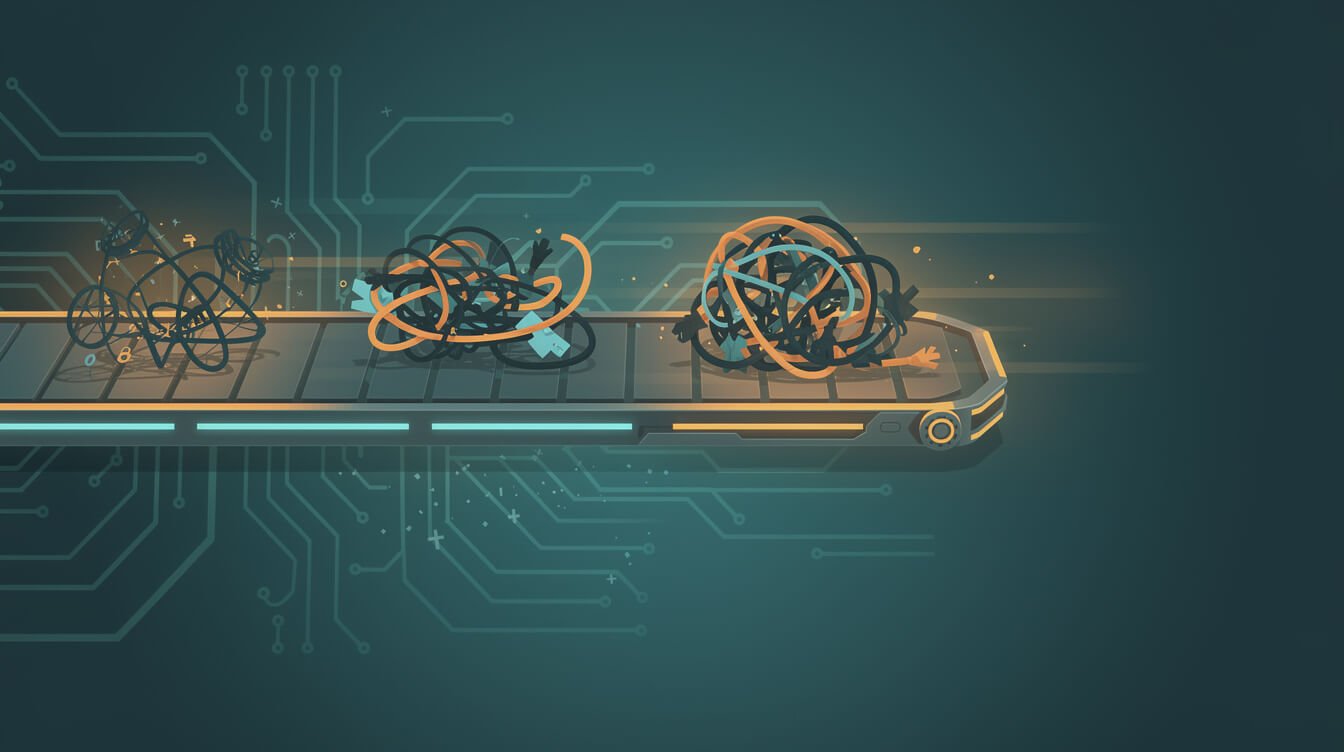
Automation doesn’t fix a broken process. It scales it.
If your process is a mess — unclear steps, missing checks, “I’ll just remember that part” gaps — automating it doesn’t clean it up. It takes the mess and runs it 100 times a day at 3am while you sleep. You don’t get a solution. You get a faster problem.
The mistake almost everyone makes
The instinct is to reach for automation the moment something feels tedious. Tedious usually means “I do this a lot and I hate it.” But tedious and broken are two different things.
Early in building JonOps, I tried to automate a content-handoff step before I could actually explain it in plain English. I couldn’t write down when a draft was “ready” versus “not ready” — I just knew it by feel. So I automated my feeling, which is to say I automated nothing coherent. The agent dutifully pushed half-finished drafts live because I’d never defined the finish line. It wasn’t the agent’s fault. It was mine. The process was broken; the automation just exposed it at speed.
The test: can you write it down?
Before you automate anything, run it through one filter: Can you write the process down as clear steps a stranger could follow?

⚡ GET THE AI EDGE
Weekly AI tips that actually save you time and money. No fluff, no hype — just what works.
If yes — the checks, the inputs, the “if this then that,” the definition of done — you’re ready to automate. If you find yourself writing “and then you just kind of know,” stop. That’s not an automation problem. That’s a process problem, and no amount of AI will paper over it.
Writing it down forces the mess into the open. Half the time I sit down to automate something, the act of documenting the steps is the fix — I spot the redundant step, the missing approval, the decision I never actually defined. Sometimes the whole thing collapses to two steps and doesn’t need automating at all.
The wisdom in one line
Fix it on paper first. A clean process automated is a machine that compounds in your favor. A broken process automated is a mess that compounds against you — and it does it faster than you can catch it.
So this Wednesday, before you hand anything to an agent, ask: would I be comfortable handing these exact written steps to a new hire on their first day? If not, the problem isn’t the tool. It’s the process. Fix that, and the automation becomes almost boring — which is exactly what good automation should be.
Once your process is clean and written down, that document becomes the brief your AI actually runs on. If you’re ready for that step, here’s how I think about building AI-first workflows beyond Zapier — and the companion to today’s lesson, why you should automate the decision, not just the task.
Today’s takeaway: If you can’t write the process down, you’re not ready to automate it. Get it clean on paper, then let the machine make it fast.
📥 FREE: THE AI PLAYBOOK
The exact tools and workflows I use to run a one-person agency. 25 years of marketing experience distilled into an actionable guide. Yours free.

AI & Digital Marketing Strategist
With over 25 years in digital marketing, e-commerce, sales, and international business, Jon Jones is a seasoned entrepreneur dedicated to empowering small businesses through innovative AI solutions. His journey began in investment banking on Wall Street, guiding companies through capital acquisition and complex markets, and has expanded to include expertise in web development, brand design, product development, and courses and training.
Fluent in Mandarin and with a rich foundation in both finance and tech, Jon launched JonJones.ai to provide accessible, transformative tools for small businesses to streamline operations, generate leads, and build sustainable growth. His mastery of AI, automation, and digital strategy has enabled numerous businesses to bridge the gap between traditional practices and modern technology, ensuring they thrive in today’s digital landscape.