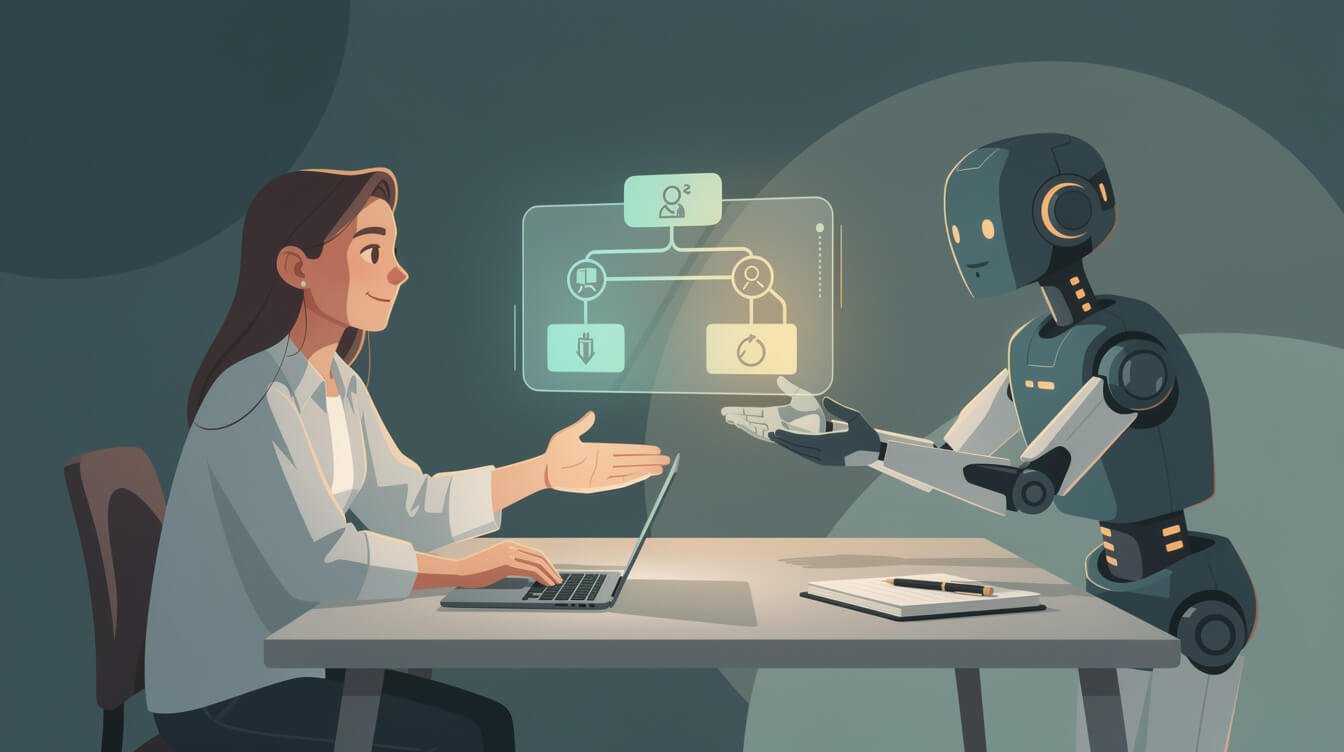
Most people try to automate the doing. The real leverage is automating the deciding.
Here’s the wisdom that took me embarrassingly long to learn while building out the autonomous businesses behind JonOps: a tool that does a task still needs you standing over it. A system that makes a decision runs without you. That gap is the whole game.
The trap: faster hands, same brain
When solopreneurs first reach for AI, they automate the keystrokes. “Write this caption.” “Summarize this email.” “Draft this reply.” It feels productive, and it is — a little. But you’re still the bottleneck, because every output lands back in your lap for a judgment call. You didn’t remove yourself from the loop. You just typed less.
I had agents generating dozens of social posts a day and I was still opening every single one to decide: post it, fix it, kill it. I’d automated my hands and left my brain exactly where it was. The to-do list didn’t shrink. It just changed shape.
The shift: encode the judgment, not just the action
The move that changed everything was writing my decisions down — turning “I’ll know it when I see it” into rules an agent can actually run.
For my content agents that meant a one-page brief: which topics are on-brand, what we never say, when to skip instead of forcing something mediocre, when to escalate to me instead of guessing. Once the judgment lived in the system, the agent stopped handing me decisions and started handing me results.

⚡ GET THE AI EDGE
Weekly AI tips that actually save you time and money. No fluff, no hype — just what works.
The pattern is always the same three questions:
- What decision am I making over and over? (Usually it’s a yes/no or a “which one.”)
- What rule am I actually using? Write it out loud — you’ll be surprised how teachable it is.
- What’s my “stop and ask me” line? Define the edge case where the agent escalates instead of acting. This is what makes delegation safe.
Why this is the unlock for solopreneurs
You don’t have a team to delegate decisions to. So your judgment becomes the thing that never scales — until you write it down. The minute a decision lives in a brief instead of in your head, it can run at 3 a.m., on a day you’re sick, while you’re on a flight. That’s not “doing more.” That’s finally not being the bottleneck.
This is exactly the line between a clever AI tool and an actual autonomous AI agent — the agent owns the decision, with a guardrail for when it shouldn’t. If you want the bigger picture of how these systems run themselves, my agentic AI guide for solopreneurs walks through the full setup.
Today’s takeaway
Pick one decision you made five times this week. Write the rule you used, and write the one case where you’d want to be asked first. Hand both to your AI. You just promoted yourself from operator to owner — on that one decision, anyway. Do it again next Wednesday.
That’s the whole craft of running a one-person empire: not faster hands, but fewer decisions that require you.
Want the field notes from running a fleet of these agents in production? I share the real receipts — wins, misfires, and the briefs that actually work — in my weekly newsletter. Come build alongside me.
📥 FREE: THE AI PLAYBOOK
The exact tools and workflows I use to run a one-person agency. 25 years of marketing experience distilled into an actionable guide. Yours free.

AI & Digital Marketing Strategist
With over 25 years in digital marketing, e-commerce, sales, and international business, Jon Jones is a seasoned entrepreneur dedicated to empowering small businesses through innovative AI solutions. His journey began in investment banking on Wall Street, guiding companies through capital acquisition and complex markets, and has expanded to include expertise in web development, brand design, product development, and courses and training.
Fluent in Mandarin and with a rich foundation in both finance and tech, Jon launched JonJones.ai to provide accessible, transformative tools for small businesses to streamline operations, generate leads, and build sustainable growth. His mastery of AI, automation, and digital strategy has enabled numerous businesses to bridge the gap between traditional practices and modern technology, ensuring they thrive in today’s digital landscape.