

Search artificial intelligence consultant today and you get fifteen results that answer two completely different questions, neither of which is yours. Four of them are consulting-firm brochures. Ten of them are trying to sell you a career. One is a Reddit thread. If you landed here because a board member said “we should get an AI consultant in” and you wanted to know what that person actually does, what they cost, and whether you need one, page one has almost nothing for you.
I checked that SERP this morning rather than trusting a screenshot. The number one result is BCG’s AI capability page: 3,158 words, twelve H2 headings, nine of which begin with the word “Our.” Our Approach. Our Clients. Our Leaders. Our Insights. There is not a single rate, scope, deliverable, or timeline on the entire page. The number two result sells an $894 certificate.
So here is the version written from the other seat. I run ten autonomous brand containers in production, and the agents inside them have executed 1,334 scheduled jobs since 12 June across 20 job types. I am not selling you a certification and I do not have a bench of juniors to keep utilised. What follows is what the work actually looks like, what it costs in 2026, when hiring someone is the wrong move, and the seven questions that separate a builder from a deck-writer in thirty minutes.
What an artificial intelligence consultant actually does in a week
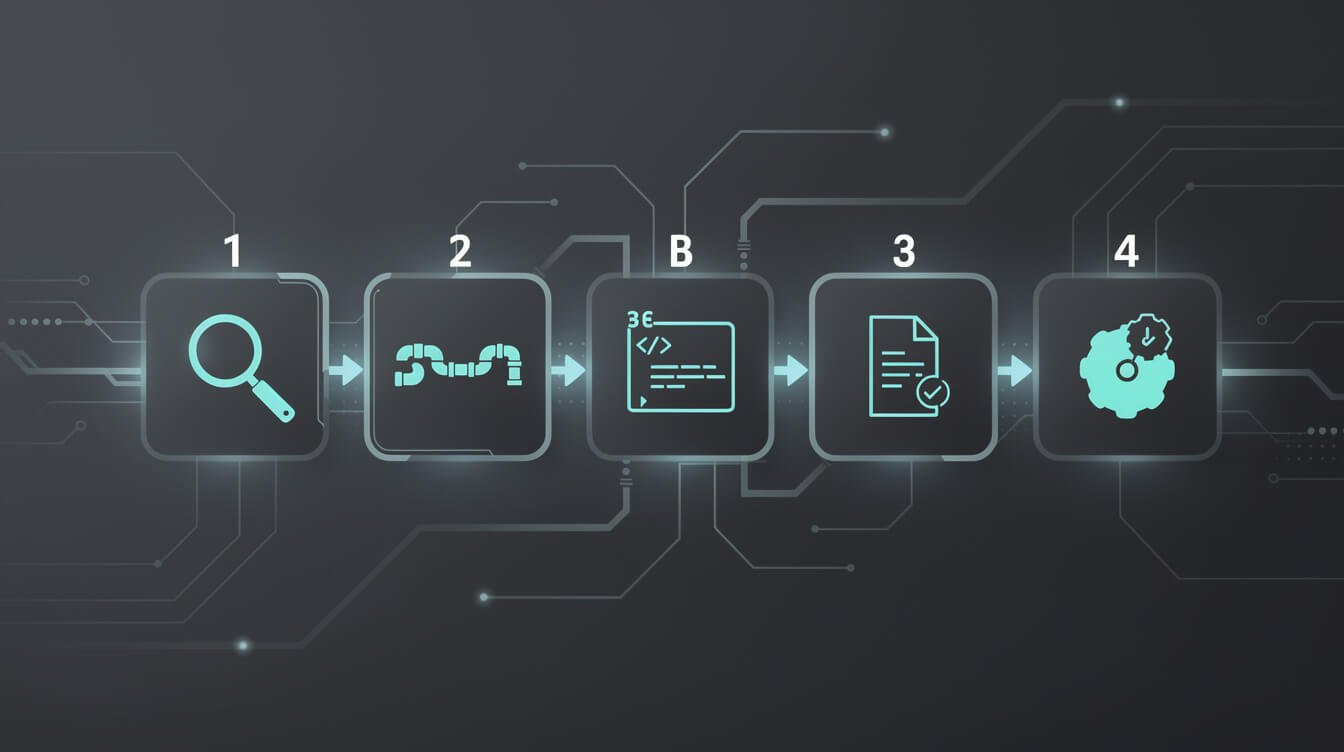
The capability-deck version of this job is “we partner with clients to unlock enterprise value through AI transformation.” The real version is far more boring and far more useful.
A genuine week, in order of how much time it eats:
- Finding the actual bottleneck, which is never the one in the brief. Someone asks for a chatbot. Four hours of watching how the team really works reveals the chatbot would answer questions that only exist because a spreadsheet is emailed around on Tuesdays. Fix the Tuesday spreadsheet and the chatbot becomes unnecessary.
- Writing the thing. Not specifying it, not wireframing it. Opening an editor, wiring the API, running it against real data, watching it fail on the first ugly record.
- Owning the unglamorous middle. Credentials, rate limits, retries, error handling, what happens when the model returns malformed output at 3am.
- Handing it over so it survives you. Documentation, a runbook, and the honest list of what will break first.
Here is a real example from today, at my own expense. While gathering data for this post, my Google OAuth refresh token came back invalid_grant: token has been expired or revoked, which silently kills Search Console reporting and Gmail access for that brand until it is re-paired. That is the job. Not a transformation roadmap: a dead token, found because something tried to use it and logged the failure honestly.
The reason this distinction matters to you as a buyer is that most of the value is in the first and fourth items, and most of the billing on a big engagement is in the second. If you are choosing between candidates, the one who spends the first week questioning your brief is usually worth more than the one who starts building it immediately.
Why every top result is either a Big-4 brochure or an $894 certificate

This SERP is split clean down the middle, and understanding why explains why you cannot find a straight answer.
Half one: enterprise brochureware. BCG at one, EY at five, Centric at nine, IBM at twelve. These pages exist to route a qualified enterprise buyer to a sales conversation. Publishing a rate would be commercially irrational for them, because the rate is negotiated per account. The result is four of the top twelve results being professionally written pages with zero numbers a buyer can use.
Half two: people selling you the career. This is the bigger half now. USAII at two selling a Certified Artificial Intelligence Consultant credential for $894, plus a “self-study kit worth up to US $794” thrown in free. LinkedIn jobs at four. Indeed at six. A business school career guide at seven. An association at eight. Refonte Learning at ten with 4,175 words, the longest page on the SERP. A domain literally called becomeanaiconsultant.com at eleven. A YouTube tutorial, a university careers blog, a course platform.
Ten of fifteen results serve someone who wants to become an AI consultant. Four serve a Fortune 500 procurement process. That leaves the small and mid-sized business owner who just wants to know what they are buying with no page one result at all.
The tell is in the money. Refonte’s page has plenty of dollar figures, but every one of them is salary: an average over $110,000 a year, a range of $90,000 to over $180,000. Those are compensation numbers for someone employed as a consultant. Buyers read them and anchor to a completely wrong figure, because what an employer pays a person per year and what an independent charges you per project are not remotely the same calculation. The em-lyon guide is even starker. It has a section headed salary and career progression and contains no dollar figures anywhere on the page.
Meanwhile the third result is a thread in r/consulting titled “The AI consulting gold rush turned us into the thing we…” sitting between two of the firms it is presumably describing. Google put an unpaid opinion in third place on a commercial term. That is a demand signal for honesty that nobody on that page is serving.
What an artificial intelligence consultant costs in 2026

First, separate the three numbers people conflate.
- Salary. What a firm pays an employed AI consultant. The $90k to $180k band you see quoted everywhere. Irrelevant to you as a buyer except as a floor: nobody independent works for less than they would earn employed, plus the cost of carrying their own risk.
- Firm day rate. What a consultancy bills for a named person on your account, which carries their sales cost, bench cost, partner margin, and office. Multiples of the salary number, and that is not a rip-off, it is arithmetic.
- Independent operator rate. What someone who ships the build themselves charges. No bench to feed, no partner layer, but also no backup if they get sick.
The shapes an engagement actually takes, roughly in ascending order of commitment:
- A paid discovery or audit. A fixed-fee, fixed-length look at your operation that ends in a written document: what to automate, in what order, what it will cost, what to leave alone. This is the single best first purchase, because it is cheap relative to a build and its entire output is a decision you can act on with someone else if you want to.
- Day rate or half-day rate. Best for advisory, architecture review, or working alongside your existing team. Watch out for the failure mode: days consumed by meetings produce decks, not systems.
- Fixed-scope project build. A defined system, delivered and handed over, priced as a whole. Best value per dollar when the scope is genuinely known, which it usually is not until after a discovery.
- Monthly retainer. Right when you have running systems that need maintenance and iteration. Wrong as a starting point, because you are paying for availability before you know what you need.
The ranges vary enormously by market, sector, and whether the person is advising or building, which is exactly why no honest page can print one number for you. What you can do is control the structure. Three rules that save more money than negotiating the rate:
Buy the smallest thing first. A discovery engagement before a build. A single workflow before a platform. Anyone who insists on a twelve-month transformation programme as the entry point is selling the programme, not the outcome.
Pay for the artefact, not the hours. Every engagement should terminate in something you own and can hand to a different person: code, documentation, a runbook, a decision document. Hours produce invoices. Artefacts produce leverage.
Ask what happens if you leave. If the answer is that your automation stops working because it lives in their account, on their platform, under their API keys, the quoted price is not the real price.
For a deeper breakdown of where the money goes inside a firm’s rate, I wrote about what you are actually paying for in high AI engineering consulting rates, and AI consulting for small businesses covers the smaller end specifically. If you want the itemised view of what lands in the deliverable, that is the engagement side of this question rather than the person side.
If you would rather skip the survey and get a straight read on your own situation, that is what a short strategy call is for. Bring the bottleneck, not the technology.

Get the AI Playbook
The same build notes I use on my own fleet: what to automate first, what it costs to run, and what breaks. Free, straight to your inbox.

⚡ GET THE AI EDGE
Weekly AI tips that actually save you time and money. No fluff, no hype — just what works.
Do you need a certification to be one?

No. And I want to be precise about why, because ten of the fifteen results on this SERP have a commercial interest in the opposite answer.
In every buying conversation I have been part of, on either side of the table, not one client has ever asked to see a certification. Not one. What they ask for is: show me something you built, tell me what broke, tell me what it cost to run. The $894 CAIC credential at position two is a real product that real people buy, and the USAII page is well built. But a certificate is an assertion by a third party that you passed their assessment. A running system is evidence. When evidence is available, assertions do not get checked.
What buyers actually check, in the order they check it:
- Something live they can look at. A URL, a repo, a demo, a dashboard with real numbers on it.
- A specific failure you can describe. Anyone who has shipped has broken something in production. A candidate with no failure stories has no production history.
- Running costs. If someone cannot tell you roughly what their system costs per month in API spend and hosting, they have not operated one.
- Whether you understood their explanation. The ability to explain a retrieval pipeline to a non-technical operations manager is not a soft skill here. It is the job.
If you are on the other side of this question and reading because you want to become one: build three things and write down what they cost and how they broke. That portfolio outperforms any certificate on this SERP, and it costs $894 less. I made the longer argument for this in AI and consulting: the solopreneur’s unfair advantage.
When you should hire an artificial intelligence consultant, and 3 cases when you should not

Hire one when any of these is true:
- You have a repetitive, high-volume process and you know exactly what “correct” looks like. This is the highest-return category by a distance. Clear inputs, clear outputs, boring work, done hundreds of times a month.
- You have already tried and the thing works in a demo but dies in production. Extremely common in 2026. The gap between a working prompt and a working system is where consultants earn their money.
- You are about to sign a large platform contract and want someone with no stake in it to read the proposal. A few hours of independent review against a six-figure commitment is the best ratio in this entire article.
- Your team is capable but has never shipped anything agentic and you want someone alongside them for the first build rather than instead of them.
Do not hire one when:
1. Your process is not written down yet. If nobody can describe the workflow end to end without saying “it depends who is doing it,” you are not buying automation, you are buying an expensive discovery of your own operations. Do that part internally first. It is free and you will learn more.
2. The real problem is a tool you already own. A shocking share of “we need AI” briefs resolve to a CRM field nobody fills in, or a report that three people rebuild by hand each month because nobody was ever shown the export button. No model fixes an org chart.
3. You want AI in the announcement, not in the operation. If the driver is a board slide or a competitor’s press release, any consultant who takes the work will deliver something technically real and operationally pointless, and both of you will know it by month three.
There is an honest fourth case: sometimes the right answer is that you do not need a consultant at all, you need two afternoons with the documentation. The tier below custom work has got very good, and I keep a running inventory of the actual tool stack that runs my brands precisely so people can check whether an off-the-shelf tool already solves their problem before paying anyone.
Independent operator vs consulting firm

Both are legitimate. They are good at different things, and picking the wrong shape is more expensive than picking the wrong person.
A firm is genuinely better when the work spans multiple departments and needs political cover; when procurement requires insurance, indemnity, and a named legal entity that will still exist in five years; when you need five people simultaneously for a hard deadline; or when the deliverable really is a strategy document that a board needs to act on. Continuity is the underrated one. A firm survives a person leaving.
An independent operator is genuinely better when the work is one system built well; when you want the person who scoped it to be the person who writes it, with no handover to a junior after the sales meeting; when you need speed, because there is no internal approval chain; and when you want candid advice, because an independent with no bench to fill can tell you that you do not need the project.
The question that reveals which you are being sold, regardless of the logo: who writes the code, and will I meet them before I sign? The classic failure is the partner who runs the pitch and is never seen again while a first-year does the build. That is not a scandal, it is the staffing model, and it is fine as long as you priced it knowingly.
One more structural note. “AI agency” and “AI consultant” are drifting into each other in 2026, and the distinction matters when you compare quotes. An agency typically sells an ongoing service; a consultant typically sells a decision or a build. If you are weighing both, what an AI agency actually is and the buyer’s checklist for choosing one cover that side of the comparison, and AI strategy consulting covers the pure-advisory end.
How to vet one in a 30-minute call

You do not need to be technical to run this. You need to listen for whether the answers contain specifics or adjectives.
- “Show me something you have running right now.” Live, not a case study PDF. The case study was written by marketing; the live thing was written by them. Hesitation here is the single strongest negative signal in the call.
- “What did it cost to run last month?” A real operator answers in dollars, and usually volunteers what surprised them. Anyone who has actually run a pipeline has been startled by a bill at least once.
- “What broke most recently, and how did you find out?” Listen for the detection half. Plenty of people can describe a bug. Far fewer can describe their monitoring, which is where production competence actually lives.
- “What part of my request would you talk me out of?” If they endorse your entire brief in the first call, either you wrote a perfect brief or they are selling. Someone who has done this work will push back on at least one thing before they understand your business well enough to agree with all of it.
- “Who writes the code, and will I meet them?” Covered above. Ask it out loud and watch.
- “What happens to this if we stop working together in six months?” The answer must include: where the code lives, whose accounts hold the credentials, what the handover documentation looks like. If the system only functions while they are paid, you are renting, not buying.
- “What would make you tell me not to do this?” The most useful question on the list. An honest answer proves they have a threshold, and a consultant with no threshold will take any engagement including yours when it is wrong.
A word on the detection question, because I want to show my own hand rather than lecture. Across 1,334 logged agent runs on my fleet, 49 ended in a hard failure, a 3.67 percent failure rate, with the last one on 6 September. That sounds tidy. The part I would rather not print is that 18 runs exited with a success code while never emitting their completion line at all: they reported green, produced nothing verifiable, and every exit-code-based monitor counted them as fine. I only know that number because I re-parse the logs rather than trusting the dashboard. That is the shape of answer you want from question three. Specific, self-incriminating, and regenerable on demand.
If the call goes well, ask for the smallest possible paid engagement next, not a proposal for everything. And if you want to run these seven questions at me, book the call and start at number one. I would rather be tested than described.
Final thoughts
An artificial intelligence consultant is not a category of person, it is a category of work: find the expensive repetitive thing, decide honestly whether a model belongs in it, build the smallest version that survives contact with real data, and hand it over so it keeps running without you. Everything else on page one of that search result is either a sales funnel for a consulting firm or a sales funnel for a certificate.
So use the buyer’s frame, not the brochure’s. Buy the smallest thing first. Pay for artefacts you own, not hours. Check for running systems, not credentials. Ask what breaks and how they find out. And be genuinely willing to hear that your process needs writing down before anybody should be automating it, because that answer is free and it is correct more often than anyone selling this work will tell you.
The people worth hiring in 2026 are the ones who still open an editor. Everyone else is describing the job.
Steal the playbook before you hire anyone
Join the list for real build logs from ten autonomous brands: costs, failures, and the systems that actually held up in production.
📥 FREE: THE AI PLAYBOOK
The exact tools and workflows I use to run a one-person agency. 25 years of marketing experience distilled into an actionable guide. Yours free.

AI & Digital Marketing Strategist
With over 25 years in digital marketing, e-commerce, sales, and international business, Jon Jones is a seasoned entrepreneur dedicated to empowering small businesses through innovative AI solutions. His journey began in investment banking on Wall Street, guiding companies through capital acquisition and complex markets, and has expanded to include expertise in web development, brand design, product development, and courses and training.
Fluent in Mandarin and with a rich foundation in both finance and tech, Jon launched JonJones.ai to provide accessible, transformative tools for small businesses to streamline operations, generate leads, and build sustainable growth. His mastery of AI, automation, and digital strategy has enabled numerous businesses to bridge the gap between traditional practices and modern technology, ensuring they thrive in today’s digital landscape.