
If you just searched for the best AI agency, here’s the uncomfortable truth nobody in those top-ranking articles will tell you: almost every “best AI agency” list you’ll read was written by an agency that ranked itself number one. The whole category is a hall of mirrors. You came looking for a way to separate the operators who actually ship from the wrapper-resellers with a nice logo, and instead you got a listicle designed to sell you the author’s own services.
I run ten autonomous businesses on a stack of Claude Code agents. I’ve been on both sides of this — the buyer wiring money to a “cutting-edge AI partner,” and the operator who actually has to make the systems run at 3am without a human touching them. So instead of another rigged ranking, this is the buyer’s checklist I’d hand a friend: how to vet an AI agency, the receipts to demand, the green flags that take five minutes to confirm, and the red flags that should make you close the tab.

Why every “best AI agency” list is rigged (and what to read instead)

Pull up the current search results and look at who wrote each piece. The 5,000-word “definitive guide” that puts a design studio at the top? Published by that design studio. The “14 best AI agencies to hire” directory? A lead-gen site that charges agencies to appear. The pattern is relentless: the ranking exists to route your budget toward whoever paid for placement or owns the domain.
That’s not a conspiracy — it’s just incentives. Ranking content is cheap to produce and prints leads. But it means the ordering has almost nothing to do with who will actually deliver for your business. A studio that’s brilliant at brand films is not the partner you want wiring an autonomous lead pipeline, and vice versa.
The one honest signal in the whole search result is easy to miss: a Reddit thread titled “finding legitimate AI automation agencies” ranking on page one for a commercial term. Organic forum threads almost never rank against SEO-optimized money pages — unless real people are searching hard enough for an answer that Google surfaces the raw conversation. Read it and you’ll see the actual fear underneath the query: how do I find a legit agency and not get burned by someone reselling a thin wrapper around an API I could call myself?
So what should you read instead of a ranking? Read frameworks. Read a vendor’s actual documentation and changelog. Read the transcript of what an agency’s system does when it runs. And read the rest of this checklist, because the goal isn’t to hand you a name — it’s to make you the kind of buyer who can spot the right partner in one call.
There’s a deeper reason the rankings fail you, too. “AI agency” isn’t one job. It’s at least four different businesses wearing the same label: creative studios bolting generative tools onto design work, marketing shops automating campaigns, dev firms building custom agents and integrations, and pure resellers who slap a brand on someone else’s model. A list that ranks all of them together is comparing a bakery to a bridge builder because they both “make things.” Your first move isn’t to find the “best” agency in the abstract — it’s to figure out which of those four you actually need, then vet ruthlessly inside that lane.
The 7-point buyer’s checklist for vetting the best AI agency
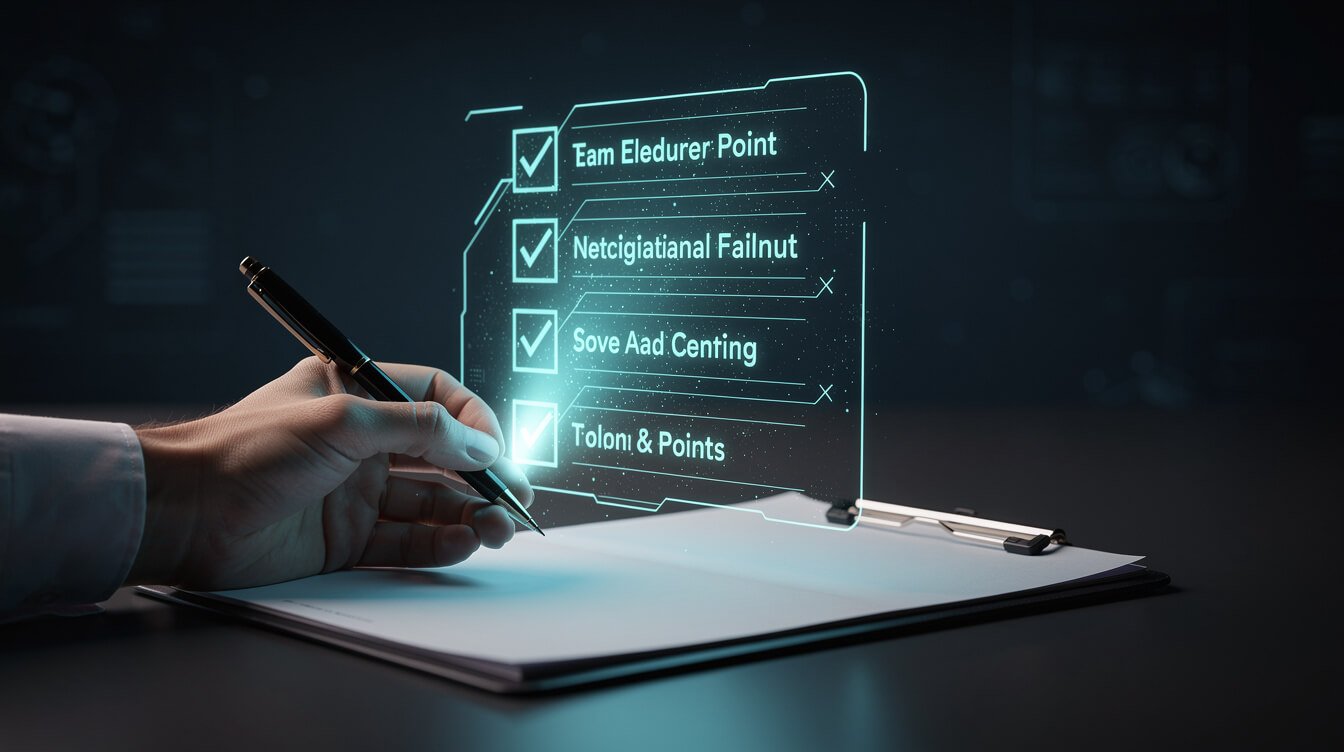
Before you get on a call with anyone, run every candidate through these seven checks. If an agency can’t clear at least five of them, keep looking. The best AI agency for you is the one that treats each of these as obvious rather than intrusive.
- Can they show a live system, not a slide? Ask to watch something they built actually run — a workflow firing, logs streaming, an agent completing a task on screen. Real operators have receipts. Resellers have case-study PDFs.
- Do they own the delivery or subcontract it? Ask who writes the code and who is on the hook at 2am when it breaks. A lot of “agencies” are a sales layer over freelancers you’ll never meet.
- Can they explain the failure modes? Anyone can demo the happy path. Ask what happens when the model hallucinates, the API rate-limits, or the input is garbage. Silence here is disqualifying.
- Do they scope in outcomes or in hours? “We’ll cut your SDR response time to under five minutes” beats “we’ll spend 40 hours on discovery.” Outcome-scoping means they’ve done it before.
- Is there a plan for handoff and ownership? You should end the engagement owning the accounts, the code, and the credentials — not renting your own business back from them.
- Do they push back on your ideas? A vendor that agrees with everything is optimizing for the invoice. An operator will tell you when automation is the wrong answer.
- Can they name what they won’t do? Specialists have edges. If an agency claims to do strategy, design, code, ads, and change management equally well, they do none of them well.
Notice that none of these ask about years in business, team size, or a client logo wall. Those are vanity signals. What you’re testing for is whether there’s a real builder behind the pitch. If you want the deeper definition of what these firms even are, I wrote a plain-English breakdown of what an AI agency actually is that pairs well with this checklist.
Green flags: what a real operator-agency can show you in 5 minutes

Green flags are the fast tells. You can confirm most of these inside the first five minutes of a demo, before anyone gets a chance to bury you in jargon.
They screen-share a running system without being asked twice. When I show someone how my content pipeline works, I open the container logs and let them watch a post get researched, written, illustrated, and published while we talk. That’s the difference between “we can do this” and “this is running right now.” An operator who lives inside their systems reaches for the terminal instinctively.
They talk about maintenance, not just the build. Anyone can wire something together in a weekend. The hard part is keeping it alive when models get deprecated, APIs change, and edge cases pile up. If an agency’s first instinct is to describe how they monitor and harden a system over months, that’s the sound of someone who has actually run one. I’ve written before about what it takes to keep Claude Code agents running in production — the gap between a demo and a durable system is enormous.
They quote specific numbers about their own operations. “We run X workflows across Y clients and here’s our incident rate” is a green flag. Vague gestures at “leveraging cutting-edge AI” are not.
They’re honest about what AI still can’t do. The best operators are almost bearish in conversation. They’ll tell you which tasks are genuinely agent-ready and which still need a human in the loop. That honesty is the most valuable thing you’ll buy from them.
They already understand your business before pitching a solution. A green-flag first conversation spends more time on your operations than on their tech stack. If someone is proposing agents and automations before they understand where your revenue comes from and where your time actually goes, they’re selling a hammer and calling everything a nail. The right partner diagnoses before they prescribe — and sometimes the diagnosis is “you don’t need us for this yet.”

Steal my AI automation playbook
The same frameworks I use to run ten autonomous businesses — the vetting checklists, the build-vs-buy math, and the systems that ship while I sleep. Free, no fluff.
Red flags: wrapper-reselling, vague ROI, and no live receipts

Now the disqualifiers. Any one of these on its own isn’t proof of a scam, but two or more together and you should walk.
They can’t show you anything running. If every request to see a live system gets deflected into “we’ll cover that in the paid discovery phase,” the answer is that there’s nothing to show. Real work leaves a trail.
The whole offering is a thin wrapper. Some “agencies” charge five figures to set up a chatbot that’s a single API call behind a branded UI. If you could replicate their entire deliverable with an afternoon and a documentation page, you’re paying for markup, not expertise.
ROI claims with no mechanism. “10x your revenue with AI” is not a plan. Ask how — through which workflow, measured by which metric, on what timeline. If the answer is a shrug wrapped in buzzwords, the ROI is imaginary.
They own everything and share nothing. Watch out for setups where the agency holds all the credentials, hosts everything on their accounts, and structures the deal so you can never leave. That’s not a partnership; it’s a hostage situation.

⚡ GET THE AI EDGE
Weekly AI tips that actually save you time and money. No fluff, no hype — just what works.
This is exactly where a done-for-you partner earns their fee or exposes themselves — the honest ones will happily walk you through the build-vs-buy math before you spend a dollar. If you’d rather run the numbers yourself first, my breakdown of what an AI SDR actually costs to build versus buy shows the kind of transparent reasoning you should expect from any agency worth hiring. If a vendor won’t do that math with you, that reluctance is your answer.
The questions to ask on the first call (with good and bad answers)

The first call is where the mask slips. Ask these four questions and listen for the shape of the answer, not just the words.
“Can you show me something you’ve built, live, right now?”
Good: They share their screen and open a working system. Bad: “We’ll send over some case studies after the call.”
“What’s the last project that didn’t work, and why?”
Good: A specific story with a lesson. Bad: “Honestly, our clients are always thrilled.” Nobody bats a thousand; pretending you do is the tell.
“Who exactly will do the work, and can I talk to them?”
Good: You meet the builder in week one. Bad: A wall between you and whoever actually writes the code.
“When this breaks, what happens?”
Good: A concrete monitoring, alerting, and response process. Bad: “It won’t break.” It will. The question is whether they’ve planned for it.
You’ll learn more from how comfortably someone answers “what didn’t work” than from any polished portfolio. Operators who’ve shipped real systems have scar tissue, and they’re not ashamed of it.
Pricing sanity-check: what the best AI agency should actually charge for

Pricing in this space is chaos right now, so anchor on value, not on the number. The best AI agency isn’t the cheapest or the most expensive — it’s the one whose price maps cleanly to a specific business outcome.
Be willing to pay well for three things: genuine engineering (custom agents, integrations, and hardening that survive contact with reality), domain judgment (knowing which problems to automate and which to leave alone), and ownership transfer (you end up owning a durable asset, not a subscription to your own operations).
Be reluctant to pay for the opposite: recurring fees on something that took a day to build, “strategy decks” that never become working systems, and per-seat pricing on a wrapper you could self-host. A fair engagement usually looks like a scoped build fee tied to deliverables, plus an optional, clearly-priced maintenance retainer — not an open-ended monthly drip with vague scope.
One practical rule: get the mechanism, the metric, and the timeline in writing before money moves. If an agency resists putting a measurable outcome on paper, the price is irrelevant because you can’t tell whether you got what you paid for.
Watch the shape of the proposal, too. A healthy quote is itemized — you can see what you’re paying for the build, what you’re paying for integrations, and what the ongoing cost covers. A worrying quote is a single big number with a vague “AI transformation package” label and no line items. Itemization isn’t just about price; it’s a proxy for whether the agency actually understands the work well enough to break it into pieces. If they can’t decompose the project on paper, they’ll struggle to deliver it in practice.
Hire vs build: when an agency is worth it, and when a DIY stack wins

Here’s the part most agency articles skip because it costs them the sale: sometimes you shouldn’t hire anyone. The tooling in 2026 is good enough that a determined solopreneur can build a serious automation stack alone.
Hire an agency when the problem is genuinely complex, the cost of getting it wrong is high, you need it live fast, or you simply don’t want to become an automation engineer to run your business. Buying senior judgment and execution is often the highest-leverage money you’ll spend.
Build it yourself when the workflow is well-understood, you enjoy the tooling, and you want the compounding advantage of deeply understanding your own systems. A capable no-code or low-code platform plus a coding agent covers an enormous amount of ground — and if you’re evaluating platforms, my honest shortlist of n8n alternatives is a good starting point for the DIY route.
Run a quick gut-check before you decide. Estimate the hours you’d spend learning the tooling and building it yourself, multiply by what your time is actually worth, and add a generous fudge factor for the things that will break. Compare that to an agency’s scoped fee. If the DIY number is higher — and for anything non-trivial it usually is at first — hiring buys you speed and skips the expensive part of the learning curve. But factor in the compounding side too: the knowledge you build doing it yourself pays dividends on every future automation, while a pure buy leaves you dependent on the next invoice.
The middle path is often best: hire an operator to architect and stand up the first version with you looking over their shoulder, then take ownership and run it yourself. That’s precisely the model I believe in — I’ve written about building an AI agency where the agents do the delivery, and the whole point is leaving clients with a system they own, not a dependency they rent. If you want that kind of build-and-handoff help, that’s the work I do; the honest agencies will offer you the same deal.
Final thoughts: become the buyer no bad agency wants
The best AI agency for your business isn’t hiding at the top of a rigged listicle. It’s the operator who screen-shares a running system in the first five minutes, tells you what they won’t do, quotes outcomes instead of hours, and hands you the keys at the end. You find that partner not by trusting a ranking, but by walking in with a checklist and asking for receipts.
Do that, and something useful happens: the wrapper-resellers self-select out. They can’t survive a buyer who asks to watch the system run and wants the failure modes explained. The real builders, on the other hand, will light up — because for once, someone is asking the right questions. Be that buyer, and you’ll find the right agency far faster than any list could point you to it.
Get the AI Playbook
Join the operators building autonomous businesses with Claude. Real systems, real receipts, delivered to your inbox — plus the vetting checklists I use myself.
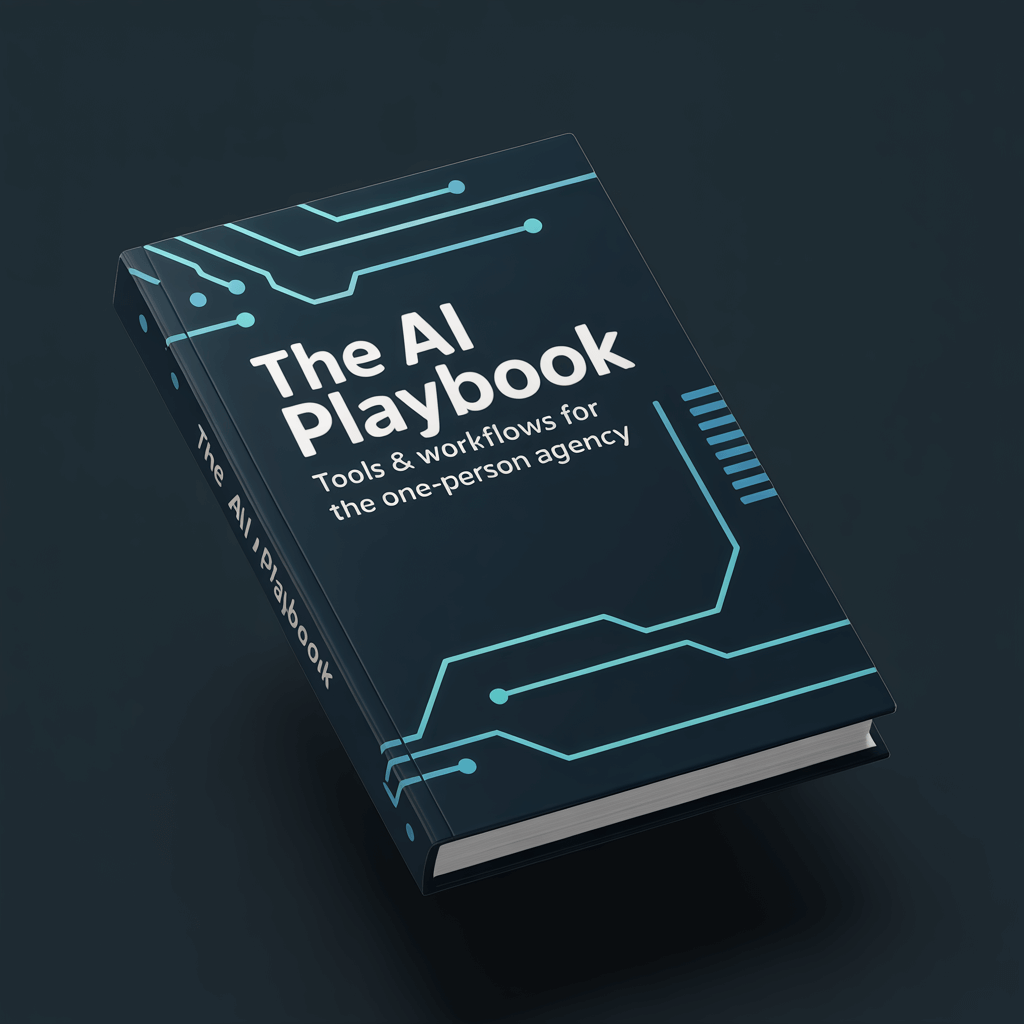
📥 FREE: THE AI PLAYBOOK
The exact tools and workflows I use to run a one-person agency. 25 years of marketing experience distilled into an actionable guide. Yours free.

AI & Digital Marketing Strategist
With over 25 years in digital marketing, e-commerce, sales, and international business, Jon Jones is a seasoned entrepreneur dedicated to empowering small businesses through innovative AI solutions. His journey began in investment banking on Wall Street, guiding companies through capital acquisition and complex markets, and has expanded to include expertise in web development, brand design, product development, and courses and training.
Fluent in Mandarin and with a rich foundation in both finance and tech, Jon launched JonJones.ai to provide accessible, transformative tools for small businesses to streamline operations, generate leads, and build sustainable growth. His mastery of AI, automation, and digital strategy has enabled numerous businesses to bridge the gap between traditional practices and modern technology, ensuring they thrive in today’s digital landscape.