
Every week someone emails me a screenshot of their new AI chatbot for business and asks the same question: “Why isn’t this thing converting?” Nine times out of ten the bot works exactly as designed. That’s the problem. It was designed to answer questions nobody asked, in a tone nobody trusts, with no way to reach a human when it inevitably gets stuck.
I run more than a dozen autonomous businesses out of a stack of Docker containers, and a lot of that fleet talks to real customers without me in the loop. So I have opinions about chatbots that are earned the expensive way — by watching them win deals and by watching them quietly torch them. This is the guide I wish someone had handed me before I shipped my first one: what an AI chatbot for business actually does, the failure modes that cost you customers without ever showing up in a dashboard, and how to decide whether to buy one off the shelf or build your own.
No listicle of 14 tools you’ll never remember. Just the operator’s view of what works.
What an AI Chatbot for Business Actually Does (and What It Won’t)
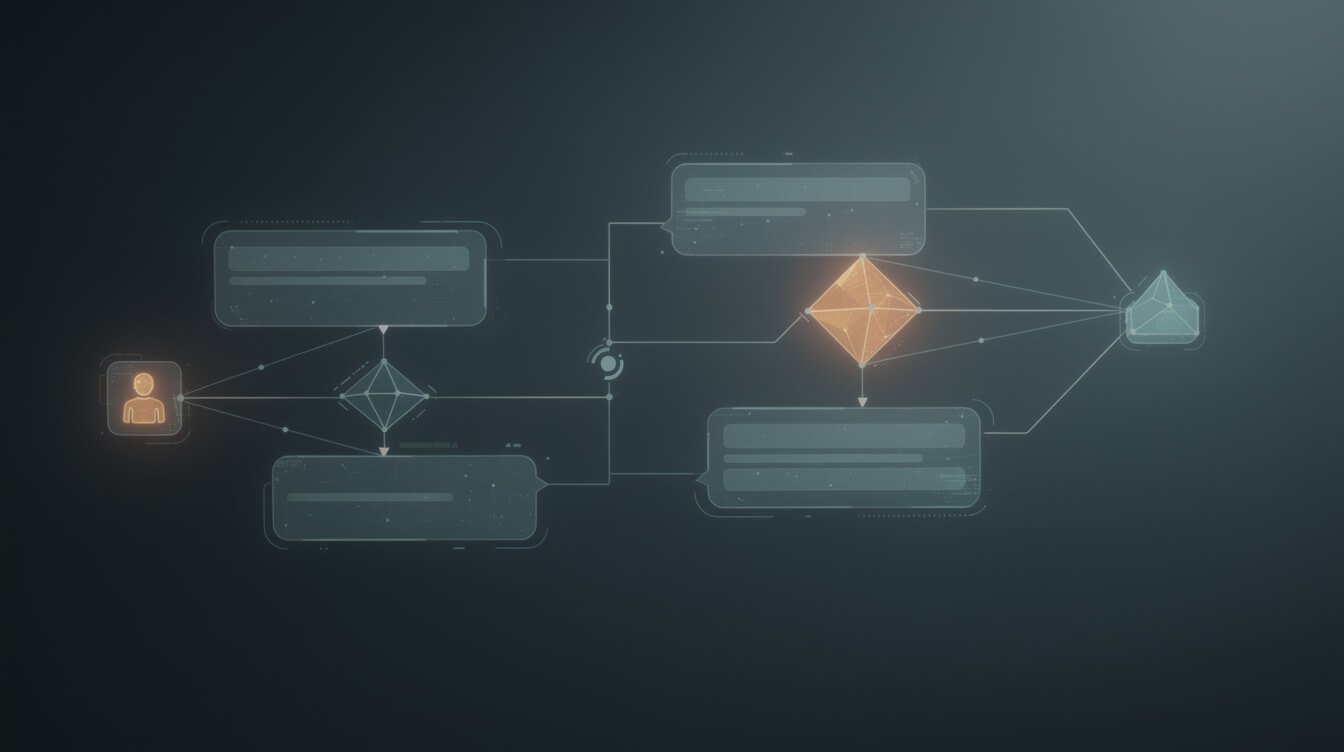
Strip away the marketing and a business chatbot does three useful jobs: it answers repetitive questions instantly, it qualifies and captures leads while you sleep, and it routes people to the right place — a booking link, a checkout, a human. That’s it. When a chatbot is pointed at those three jobs, it earns its keep fast because it collapses your response time from hours to seconds, and speed is the single biggest lever in both support satisfaction and lead conversion.
Here’s the part vendors won’t print on the pricing page: a chatbot is a containment tool, not a magic salesperson. Its job is to handle the 60–80% of conversations that are boring and predictable — hours, pricing, order status, “do you ship to Canada” — so your humans can spend their attention on the 20% that actually needs judgment. If you deploy it hoping it will close your hardest deals or defuse your angriest customers, you’ve aimed it at the exact work it’s worst at.
What it won’t do: replace a genuinely good human interaction, invent trust you haven’t earned, or fix a broken offer. A fast, polite answer to “why is your product worth it” still needs a good answer underneath. The bot is an amplifier. Point it at something that works and it multiplies it. Point it at something confusing and it multiplies that too.
The reason speed matters so much is behavioral, not technical. A prospect who gets an answer in five seconds is still in buying mode; the same prospect who waits four hours for an email has already opened three competitor tabs. A chatbot that reliably answers the top ten questions instantly isn’t “customer service” — it’s conversion-rate optimization wearing a support badge. That’s why I tell clients to measure their bot against revenue and resolution time, not against some fantasy of “replacing headcount.” The headcount was never the point. The response time was.
If you’re weighing this against a broader automation play, I’ve written about where conversational AI fits into a full stack in my guide to the AI marketing agent — the chatbot is one node in that system, not the whole thing.
The 5 Ways a Bad Business Chatbot Quietly Costs You Customers

Nobody fills out a survey to tell you your bot annoyed them. They just leave, and your analytics record it as “bounce.” That’s why bad chatbots are so dangerous — the damage is invisible until you go looking for it. Here are the five leaks I see most often when I audit a client’s setup.
1. The dead-end loop
The customer asks something slightly outside the script. The bot doesn’t understand, so it repeats the same menu. They rephrase. Same menu. There is no exit. This single pattern — a conversation with no escape hatch to a human — is responsible for more lost customers than every other failure combined. If a user has to fight your bot to reach a person, you’ve taught them your company is hard to deal with before they ever became a customer.
2. Confident hallucination
A modern AI chatbot will happily invent a refund policy, a shipping date, or a feature you don’t offer — and say it with total confidence. Now you’re either honoring a promise you never made or calling a customer to walk it back. Both are worse than saying nothing. A bot that grounds its answers only in your approved content is worth ten bots that improvise.
3. The uncanny tone
Over-eager exclamation points, corporate cheerfulness, “I’d be absolutely delighted to assist you with that today!” — customers can smell a bot pretending to be human, and it makes them trust the whole brand less. Ironically, a chatbot that plainly says “I’m an assistant, here’s what I can do” outperforms one cosplaying as a person.
4. Answering questions nobody asked
A pop-up that ambushes someone two seconds into the page, or a bot that pushes a demo before answering the actual question, reads as desperate. Good chatbots are patient. They wait, they answer first, and they earn the right to ask for the email.
5. No memory, no handoff, no follow-through
The customer explains their problem to the bot, gets passed to a human, and has to explain it all over again. Or they leave a question after hours and never hear back. When the conversation dies in the gap between the bot and your team, the lead dies with it. I dug into where that line should sit for sales specifically in my breakdown of the AI SDR build-vs-buy decision — the handoff is where most money leaks.
Buy vs Build: How to Choose the Right AI Chatbot for Your Business

The right AI chatbot for your business depends on four honest questions. Answer these before you look at a single pricing page, because the tool matters far less than the fit.
- Where do your customers actually message you? A website widget, WhatsApp, Instagram DMs, and email are four different products. Buy for the channel your customers already use, not the one that demos well.
- What’s the real job? Deflecting support tickets, capturing leads, and booking appointments need different logic. A bot that’s great at one is usually mediocre at the others.
- What’s your honest budget — including maintenance? The subscription is the small number. The time to write the answers, wire the integrations, and keep them current is the real cost.
- How much control do you need over the answers? The more your business depends on precise, on-brand, compliant responses, the more you’ll want to own the logic instead of renting it.
When buying off the shelf is the right call
If you need something live this week, you’re on common channels, and your questions are standard, buy. Tools like Intercom and Zendesk AI are strong for website support at scale; Tidio and Chatbase are friendly for small teams wiring a bot to a help center; ManyChat and Chatfuel own the Instagram and Facebook DM game. These get you 80% of the value with a credit card and an afternoon. If you’re curious how one popular builder holds up under real use, I put one through its paces in my Botpress review.
When building your own wins
Build when your answers are your edge — when the difference between a generic reply and your reply is the whole point. Build when you need the chatbot wired into systems no off-the-shelf tool knows about: your inventory, your CRM, your booking logic. And build when you’re running enough volume that per-conversation SaaS pricing starts to sting. Owning the logic means no ceiling on what it can do and no monthly ransom on your own customer data. Thanks to agentic tooling, “build your own” is now a weekend, not a quarter.

⚡ GET THE AI EDGE
Weekly AI tips that actually save you time and money. No fluff, no hype — just what works.
One warning on the “buy” math: the sticker price is the cheapest part. The real total cost of ownership is the hours someone spends writing answers, connecting the tool to your other systems, and keeping all of it current as your business changes. A $40/month tool that eats four hours of your week is more expensive than a build that eats one weekend and then runs itself. Price the maintenance, not the subscription, and the buy-vs-build picture usually gets a lot clearer.

Steal My AI Automation Playbook
The free playbook I use to decide what to automate first, what to leave alone, and how to ship it without a dev team. Grab it and start building.
How to Build Your Own AI Chatbot With Claude (a Weekend Project)

This is the part the listicles skip, because they’re selling you the tools. But building your own AI chatbot for business is genuinely accessible now, and the anatomy is simple. Here’s the shape of every good one I’ve shipped.
- Give it a knowledge base, not a personality. Dump your FAQs, policies, product docs, and past support tickets into a folder. This becomes the ground truth the bot is allowed to answer from — and only from. This one step kills the hallucination problem.
- Write a tight system prompt. Tell it exactly what it is, what it can and can’t promise, the tone (plain and honest beats bubbly), and the one rule that matters most: when unsure, hand off to a human — never guess.
- Wire it to your real systems. This is where owning it pays off. Connect it to your calendar to book, your CRM to log the lead, your order system to check status. A tool like n8n or Zapier is the glue if you don’t want to write the plumbing yourself.
- Put a face on it. A no-code builder like Flowise gives you a chat widget and a visual flow; Claude (or the model of your choice) does the actual thinking behind it. You get a custom brain without a custom front-end.
- Test it like a hostile customer. Try to break it. Ask off-topic things, angry things, trick things. Watch where it loops or invents. Fix those before a real customer finds them.
Two practical notes from doing this a lot. First, your old support tickets are gold — they’re a ready-made list of every real question in your customers’ actual words, which beats any FAQ you’d write from scratch. Start there. Second, don’t agonize over the model; a current mid-tier model is more than smart enough for customer questions, and the quality of your answers comes almost entirely from the knowledge base and the system prompt, not from paying for the biggest model on the menu. Spend your effort on the content the bot is grounded in, not on the brand of brain behind it.
My whole fleet runs on this pattern — agents that read from a controlled knowledge base, act through real integrations, and escalate when they hit their limits. It’s the same architecture whether the agent is answering a customer or writing this blog post. If you want the on-ramp to that skill set, start with how to actually use an AI agent for real tasks and build up from there.
Deploy It Without Burning Trust: Guardrails, Handoff, and Scope

A chatbot that’s live is a member of your team talking to customers all day. You’d never let a new hire do that with no training and no manager. Same rules apply. Three guardrails turn a risky bot into a reliable one.
Always leave the door open to a human
Every conversation needs a visible, one-click path to a real person. Not buried, not gated behind three menus — obvious. Counterintuitively, giving people an easy exit makes them use the bot more, because they trust they won’t get trapped. The handoff should carry the full conversation with it so nobody repeats themselves.
Scope it narrow on purpose
The temptation is to make the bot do everything. Resist it. A chatbot that does five things flawlessly beats one that does thirty things at 70%. Decide what it owns, and have it gracefully punt everything else to a human or a form. Narrow scope is the difference between “wow, that was helpful” and “ugh, this thing again.”
Watch the transcripts — they’re free market research
Read your bot’s conversations every week, especially the ones where it failed or handed off. That log is the highest-signal customer research you own: it’s literally your customers telling you, in their own words, what they can’t find and don’t understand. I’ve rewritten entire product pages off a week of chatbot transcripts. Feed those lessons back into the knowledge base and the bot gets sharper every month instead of rotting.
AI Chatbot for Business: Frequently Asked Questions
How much does an AI chatbot for business cost?
Off-the-shelf tools run from free tiers up to a few hundred dollars a month for small businesses, scaling with conversation volume. Building your own means model/API costs (often cents per conversation) plus your time to set it up. The bigger hidden cost in both cases is maintenance — keeping the answers current — so budget for attention, not just dollars.
Will an AI chatbot replace my customer service team?
No, and you don’t want it to. The right model is a chatbot that handles the repetitive 60–80% so your humans can give real attention to the conversations that need judgment. Bots that try to fully replace people are exactly the ones that quietly lose customers.
Do I need to know how to code to build one?
Not really. No-code builders like Flowise plus a capable model handle most of it, and glue tools like n8n or Zapier cover the integrations. Comfort with clear instructions matters more than programming — the hard part is writing what the bot should and shouldn’t say, not the wiring.
What’s the single biggest chatbot mistake?
Trapping people with no way to reach a human. Every other problem is survivable; that one sends customers to your competitor and they never tell you why.
Which AI chatbot is best for a small business?
The best AI chatbot for your business is the one that lives where your customers already message you and does your top three jobs well. For most small teams that means a website tool like Tidio or Chatbase, or a DM tool like ManyChat — or a custom Claude-powered bot if your answers are your competitive edge.
The Operator’s Bottom Line
An AI chatbot for business is one of the highest-leverage things you can deploy right now — and one of the easiest to deploy badly. The winners aren’t the ones with the fanciest tool. They’re the ones aimed at a narrow, boring, valuable job, grounded in real answers, and honest enough to hand off when they hit their limit. Get those three things right and the bot pays for itself in a month. Get them wrong and it bleeds customers you’ll never even know you lost.
Start small. Pick your top three questions, answer them flawlessly, always leave the door open to a human, and read the transcripts. That’s the whole game. The tools will keep changing; those principles won’t. Now go build one — and if you want the playbook I use to decide what to automate first, it’s below.
Build Systems That Run Without You
I ship autonomous businesses out of a stack of containers — and I write down exactly how. Get the free AI Automation Playbook and the field notes from running the fleet.
📥 FREE: THE AI PLAYBOOK
The exact tools and workflows I use to run a one-person agency. 25 years of marketing experience distilled into an actionable guide. Yours free.

AI & Digital Marketing Strategist
With over 25 years in digital marketing, e-commerce, sales, and international business, Jon Jones is a seasoned entrepreneur dedicated to empowering small businesses through innovative AI solutions. His journey began in investment banking on Wall Street, guiding companies through capital acquisition and complex markets, and has expanded to include expertise in web development, brand design, product development, and courses and training.
Fluent in Mandarin and with a rich foundation in both finance and tech, Jon launched JonJones.ai to provide accessible, transformative tools for small businesses to streamline operations, generate leads, and build sustainable growth. His mastery of AI, automation, and digital strategy has enabled numerous businesses to bridge the gap between traditional practices and modern technology, ensuring they thrive in today’s digital landscape.