

If you have spent any time in automation circles lately, you have seen the name everywhere — usually shouted by someone selling a course. So let’s answer the real question plainly: what is n8n, and is it actually the right tool for you, or just the tool everyone is talking about? n8n (pronounced “n-eight-n,” short for “nodes”) is an open-source workflow automation platform that lets you connect apps, APIs, and AI models into automated pipelines — without writing much code, and without paying per-task ransom the way some closed platforms charge.
I run ten autonomous brands from a single VPS, and n8n does real work inside that fleet every single day. So this isn’t a feature-list rehash of the marketing homepage. This is an operator’s field guide: what n8n actually is, how it works under the hood, a real workflow from my own stack, and — the part nobody else will tell you — exactly when n8n is the wrong tool and you should reach for a Claude Code agent instead. By the end you’ll be able to decide in about two minutes whether n8n belongs in your business.
What Is n8n, Really? A Plain-English Definition

Strip away the jargon and n8n is a visual way to wire software together so tasks happen automatically. You drag boxes onto a canvas, connect them with lines, and each box does one job: fetch a row from a database, call an API, send a Slack message, ask an AI model to summarize something. When a trigger fires, your data flows down the line from box to box until the job is done. No cron scripts to babysit, no glue code rotting in a folder somewhere.
The word people fixate on is open-source, and for good reason. n8n is source-available software you can run on your own server, which means three things that matter to an operator: your data never has to leave infrastructure you control, you are not billed per task execution, and you can crack open any integration and change how it behaves. That’s a genuinely different posture from the SaaS automators that meter every step.
Here’s the honest framing, though. “Open-source and self-hostable” is a feature, not a personality. Plenty of people install n8n, marvel at the canvas for an afternoon, and never ship anything that survives contact with a real business. The tool is only as good as the workflow you have the discipline to design, test, and maintain. Keep that in the back of your mind as we go — it’s the difference between n8n being an asset and n8n being another abandoned tab.
If you want the head-to-head against the most common alternative before we go deeper, I wrote a full n8n vs Zapier operator’s verdict after running both in production. This guide is the “start here” companion to it.
How n8n Works: Nodes, Triggers, and the Mental Model
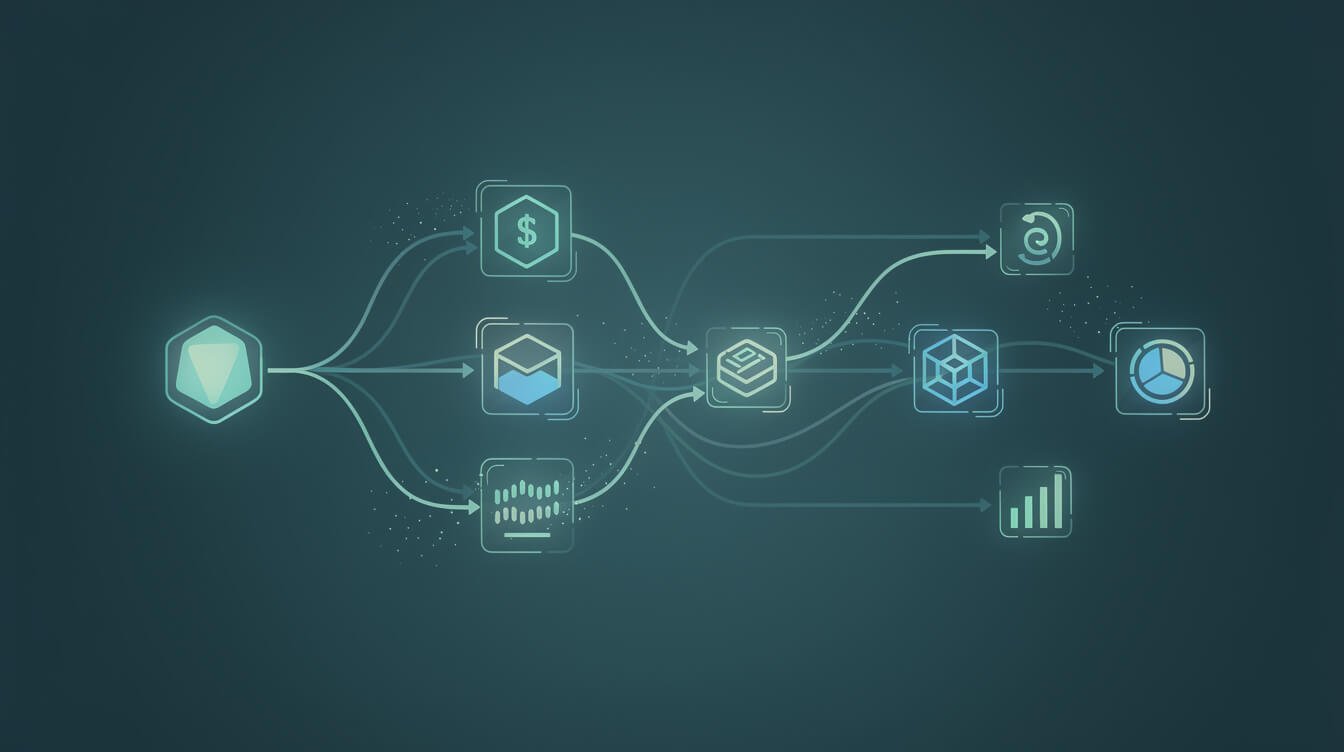
Once you understand three concepts, the whole platform clicks. Everything in n8n is built from these pieces, and they map cleanly onto how you’d describe a task to a new hire.
1. The trigger — what starts the workflow
Every workflow begins with a trigger node. It’s the “when this happens” clause. A trigger might be a schedule (every day at 6am), a webhook (someone submitted a form), an app event (a new email lands in Gmail), or a manual click while you’re building. Nothing runs until a trigger fires, which is exactly the mental model you want: automations are reactions to events, not programs you start by hand.
2. The nodes — each one does a single job
After the trigger, you chain nodes. Each node is a discrete action: an HTTP request, a database query, a data transformation, an “if” branch, a loop, or a call to an AI model. n8n ships with 400+ pre-built app integrations, but the one node that changes everything is the generic HTTP Request node — because it means any service with an API is fair game, integration or not. That single node is why operators outgrow closed platforms and never look back.
3. The data — it flows as items down the line
This is the concept beginners trip on. Data moves through n8n as a list of items (structured JSON), and each node receives the output of the node before it. If a node returns five items, the next node runs five times — once per item. Once that clicks, you stop thinking in scripts and start thinking in pipelines: input comes in, each stage transforms it, output goes out. It’s the same mental model behind good autonomous business systems generally — small stages that each do one thing well.
The AI piece bolts straight onto this. n8n has dedicated nodes for LLMs and “AI Agent” nodes that can call tools, so you can drop a model into the middle of a workflow to classify, summarize, or decide — then route the result to the next node. That’s how a simple automation graduates into something that feels intelligent.
A Real n8n Workflow From My JonOps Fleet (Receipts)

Enough theory. Here’s an actual n8n workflow that runs in my stack, because a definition you can’t picture in production isn’t worth much.
The job: when any of my brand containers publishes a blog post, I want the event captured, enriched, and fanned out to the right places without me touching anything. Here’s the graph, node by node:
- Webhook trigger — a brand container fires an HTTP call to an n8n webhook the moment WordPress confirms a post is live, passing the post ID and URL.
- HTTP Request node — n8n calls the WordPress REST API back to pull the full post: title, categories, featured image, word count. (That generic HTTP node again — no custom “WordPress plugin” required.)
- Set / edit fields node — reshapes the messy API response into a clean record: title, url, brand, published_at.
- Airtable node — appends that record to a “Published Posts” table so I have one source of truth across all ten brands.
- IF node — checks whether the post’s category is on my “repurpose” list. If yes, it continues; if no, the workflow ends quietly.
- Slack/Telegram node — pings me a one-line receipt: “[brand] published [title] — live.”
That’s it. Six nodes, no code beyond one small expression to format the message, and it has run hundreds of times without me opening the editor. The point isn’t the specific workflow — it’s the shape. A trigger, a couple of API calls, one branching decision, an action. Ninety percent of the useful automations a solopreneur needs look exactly like this.
Notice what n8n is not doing here: it isn’t deciding what to write, judging quality, or handling anything ambiguous. It’s moving structured data along a fixed path. Hold that thought — it’s the entire basis of the decision framework coming up.

Steal My AI Automation Playbook
The exact patterns I use to run ten autonomous brands from one laptop — n8n workflows, Claude Code agents, and the decision rules for when to use each. Free.
n8n vs Claude Code Agents: When Each One Wins (Beyond No-Code)

This is the section the marketing pages will never write, because it admits their tool has limits. After running both n8n and Claude Code agents in production, here’s the line I draw — and it’s simpler than the “AI agent” hype suggests.
Use n8n when the path is known. If you can describe the task as a flowchart — “when X happens, fetch Y, transform it, send it to Z” — n8n is the right, boring, reliable answer. Deterministic steps, fixed integrations, structured data. n8n will run that path a million times identically and never get creative. That reliability is a feature.
Use a Claude Code agent when the path is unknown. The moment a task requires judgment — reading a messy email and deciding how to respond, writing an article, debugging code, figuring out which steps to take rather than executing predefined ones — a rigid node graph fights you. That’s where an agent shines: you give it a goal and tools, and it decides the path at runtime. This is the real meaning of “beyond no-code”: not a fancier canvas, but handing the decision-making itself to the machine.
Here’s how the two actually combine in my stack, which is the pro move: n8n handles the plumbing, the agent handles the thinking. n8n triggers on an event and gathers data, hands it to a Claude agent for the judgment call, then takes the agent’s structured output and reliably fans it out. You get the agent’s intelligence and n8n’s dependable delivery. Neither tool is losing; they’re playing different positions.

⚡ GET THE AI EDGE
Weekly AI tips that actually save you time and money. No fluff, no hype — just what works.
If you have reached the ceiling of drag-and-drop automation and you want that thinking layer built into your business properly, that’s exactly the kind of system I design for clients. You can book an automation strategy session and we’ll map where n8n ends and agents should begin for your specific stack.
Want to see the agent side in the wild first? My write-up on shipping real software with AI and my rundown of the MCP servers I actually run both show what “the thinking layer” looks like in practice.
Self-Hosted vs Cloud: The Honest Cost and Maintenance Reality

“n8n is free” is technically true and practically misleading, so let’s do the real math. You have two ways to run it, and the honest tradeoff is money versus responsibility.
Self-hosted (the community edition)
You install n8n on your own server — a $5–$20/month VPS handles a solo operator’s volume comfortably. The software license costs nothing. What it costs instead is ownership: you handle updates, backups, SSL, and the 11pm moment when a version bump breaks a workflow and there’s no support line to call. For a technical operator, this is a bargain and I recommend it. For someone who has never touched a terminal, “free” can quietly become the most expensive option in lost weekends. Be honest with yourself about which one you are.
n8n Cloud (managed)
n8n’s hosted plans start around $20–$25/month and climb with execution volume. You trade dollars for someone else handling uptime, updates, and infrastructure. For most solopreneurs who want the platform without becoming a part-time sysadmin, cloud is the sane starting point — prove the workflows earn their keep first, then decide whether self-hosting is worth the operational tax.
Either way, watch the pricing model as you scale: n8n meters by workflow execution, not per-task-step the way some competitors do. That distinction is a big part of why heavy-volume automators migrate to n8n — a workflow with twenty nodes still counts as one execution. I break the cost curves down further in my n8n vs Zapier comparison, and if you’re trying to build the skill deliberately, my operator’s take on AI automation courses covers what’s actually worth learning.
Who n8n Is Right For (and Who Should Skip It)

Let me save you a weekend. Here’s the honest sorting hat.
n8n is right for you if:
- You’re comfortable with APIs, JSON, and light technical setup — or you’re genuinely willing to learn.
- You want to own your automation infrastructure and data rather than rent it.
- You’re hitting per-task pricing walls on a closed platform and doing real volume.
- Your tasks are mostly deterministic — known inputs, known steps, known outputs.
- You want a canvas that can call any API and drop AI models mid-flow.
You should skip n8n (for now) if:
- You need three simple Zaps and the thought of a VPS makes you tired — a friendlier closed tool will get you live faster.
- Your core problem is judgment, not plumbing — that’s an agent job, not a workflow job.
- You won’t maintain it. An automation you don’t monitor is a liability with a countdown timer, a point I hammer on constantly when I talk about running an autonomous system responsibly.
The meta-lesson: the best automation tool is the one that matches the shape of your problem and your appetite for ownership. n8n is a phenomenal fit for the technical solopreneur who wants control and volume. It’s a frustrating fit for someone who wanted a magic button. Neither is wrong — just know which one you’re buying.
Want the workflow built for you?
I build and harden production automations — n8n, Claude Code agents, or the right blend of both — for operators who’d rather run the business than babysit the canvas.
What Is n8n Best For? Your Questions, Answered
What is n8n used for?
n8n is used to automate repetitive, multi-step tasks across apps and APIs: syncing data between tools, processing form submissions, sending notifications, scraping and enriching data, and orchestrating AI models to classify or summarize information. Anytime you can describe a task as “when this happens, do these steps,” n8n is a strong fit.
Is n8n free?
The self-hosted community edition is free to use — you only pay for the server you run it on (roughly $5–$20/month for a solo operator). n8n also offers managed cloud plans starting around $20–$25/month if you’d rather not host it yourself.
Do I need to know how to code to use n8n?
No, but a little technical comfort helps a lot. You can build many workflows entirely with the visual editor, but understanding APIs, JSON, and basic expressions unlocks the platform’s real power — especially the generic HTTP Request node that connects to any service.
Is n8n better than Zapier or Make?
“Better” depends on your priorities. n8n wins on data ownership, self-hosting, and execution-based pricing for high volume. Closed tools like Zapier win on polish and speed-to-first-automation for non-technical users. See my full n8n vs Zapier verdict for the operator’s breakdown.
Can n8n run AI agents?
Yes — n8n has dedicated LLM and AI Agent nodes that can call tools and make decisions inside a workflow. For fully autonomous, judgment-heavy work, though, a dedicated agent framework like Claude Code often fits better. The strongest setups use n8n for reliable plumbing and an agent for the thinking, as covered above.
Final Thoughts: Is n8n Your Next Move?
So, what is n8n? It’s a powerful, open-source, self-hostable workflow automation platform that connects your apps, APIs, and AI into reliable pipelines you actually own. It’s not magic, and it’s not for everyone — but for a technically comfortable operator who wants control, volume, and no per-task tax, it’s one of the best tools you can put in your stack.
The takeaway I’d tattoo on every new automator: match the tool to the shape of the problem. Deterministic, known-path work? That’s n8n’s home turf. Ambiguous, judgment-heavy work? Reach for an agent. Get that distinction right and you stop collecting shiny tools and start shipping systems that run while you sleep. That’s the whole game — and it’s exactly how one operator quietly runs an empire of autonomous brands.
Pick one boring, repetitive task in your business this week. Map it as a flowchart. If it’s a clean path, build it in n8n. You’ll learn more in that one afternoon than in a month of watching tutorials.
Get the AI Automation Playbook
One operator, ten autonomous brands, one laptop. Join the newsletter and I’ll send you the playbook — the workflows, agents, and decision rules behind the whole system.
📥 FREE: THE AI PLAYBOOK
The exact tools and workflows I use to run a one-person agency. 25 years of marketing experience distilled into an actionable guide. Yours free.

AI & Digital Marketing Strategist
With over 25 years in digital marketing, e-commerce, sales, and international business, Jon Jones is a seasoned entrepreneur dedicated to empowering small businesses through innovative AI solutions. His journey began in investment banking on Wall Street, guiding companies through capital acquisition and complex markets, and has expanded to include expertise in web development, brand design, product development, and courses and training.
Fluent in Mandarin and with a rich foundation in both finance and tech, Jon launched JonJones.ai to provide accessible, transformative tools for small businesses to streamline operations, generate leads, and build sustainable growth. His mastery of AI, automation, and digital strategy has enabled numerous businesses to bridge the gap between traditional practices and modern technology, ensuring they thrive in today’s digital landscape.
Similar Posts
Saturday Shortcuts: 3 File Tricks That Give My AI Agents Long-Term Memory (No Vector Database Needed)
Everyone building AI agents in 2026 seems to think long-term memory requires a vector database, an embeddings pipeline, and a weekend of RAG plumbing. Mine runs on three plain text files. Here are the exact…
Tool Thursday: Telegram Bot API Alerts — 66 Bad Runs, 1 Alert (I Counted My Own Red X’s)
On 13 August I published a Tool Thursday telling you to wire up Telegram Bot API alerts as your agent’s voice. I stand by the setup instructions. I do not stand by the sentence I…
Tool Thursday: The Free Tool That Lets You Actually Trust an AI Agent Overnight
Here’s the question that stops most solopreneurs from ever going hands-off with AI: “If my agent runs while I sleep, how do I know it actually worked?” You don’t need a dashboard. You don’t need…
Wednesday Wisdom: Make Every Agent Safe to Run Twice (The Retry Trap That Almost Doubled My Work)
Here’s a lesson that cost me nothing yesterday — precisely because I’d learned it the hard way months ago. One of my agents timed out overnight. The scheduler killed the process at the 60-minute mark,…
Autonomous AI Agents: What They Are, How They Work, and How to Build Your First One
You’ve heard about autonomous AI agents. You’ve seen the demos. You’ve read the Salesforce marketing decks about “digital labor forces.” But if you’re a solopreneur or small business owner trying to cut through the noise,…
Claude Code Best Practices From 4 Months of Unattended Runs (Not From One Weekend Project)
Nine Claude Code best practices from 1,740 unattended runs, each with the dated incident that taught it, plus the popular tips I dropped.