

Here’s the fear I hear most from solopreneurs eyeing their first AI agent: “What if it wakes up at 3am and quietly runs up a $400 API bill while I’m asleep?”
Fair worry. An autonomous agent that can act on its own can also spend on its own. But after running 10+ agents in production every single night, I can tell you the fix isn’t willpower or luck — it’s three small guardrails you set once. Here are the Saturday shortcuts I use to keep my fleet honest with my wallet.
1. Cap the spend per run, not per month
Monthly budgets are a smoke alarm that goes off after the house is gone. By the time you notice the $400, it’s already spent. Instead, put a hard ceiling on a single run.
My agents each know their unit economics: a standard image is about $0.04, a premium one $0.08, a 30-second AI video roughly $0.33. If a run tries to generate 50 images, that’s a $2 job — fine. If a bug puts it in a loop trying to generate 5,000, the per-run cap trips and the agent stops itself before it ever becomes a $200 mistake. The ceiling is the seatbelt: you hope you never feel it, but it’s the reason a small crash stays small.
2. Put the expensive step behind a cheap gate
The costly calls — the video render, the big-model generation — should be the last thing an agent reaches for, never the first. So I gate them behind a cheap check that runs first.

⚡ GET THE AI EDGE
Weekly AI tips that actually save you time and money. No fluff, no hype — just what works.
Every one of my content agents asks one nearly-free question before it spends a cent: is there actually work to do? Empty queue? It logs the skip and goes back to sleep — zero dollars spent. Only when there’s real, fresh work does it unlock the pricey model. It’s the same instinct as checking the fridge before you drive to the store: the cheap look saves the expensive trip. (This pairs beautifully with logging the skips, not just the ships — you get a paper trail of every dollar you didn’t spend.)
3. Log the cost of every run so drift can’t hide
You can’t manage what you never look at. So every run my agents finish gets one line in the log: what it did, and what it cost. Nothing fancy — a timestamp and a number.
That single habit turns “I think AI is getting expensive?” into “the video agent crept from $0.33 to $0.51 a run on Tuesday — let’s see why.” Cost drift is sneaky; it never arrives as one big scary invoice. It shows up as a few cents here, a retry there, compounding quietly across 30 nights. A one-line cost log drags it into the daylight where you can actually do something about it.
The takeaway
Autonomous doesn’t mean uncontrolled. A per-run cap, a cheap gate in front of the expensive step, and a one-line cost log — that’s the whole seatbelt. Set them once and your agent can run all night without you lying awake doing mental math.
Want the full playbook on running agents that pay for themselves? Book an automation strategy session and I’ll show you the exact receipts from my fleet.
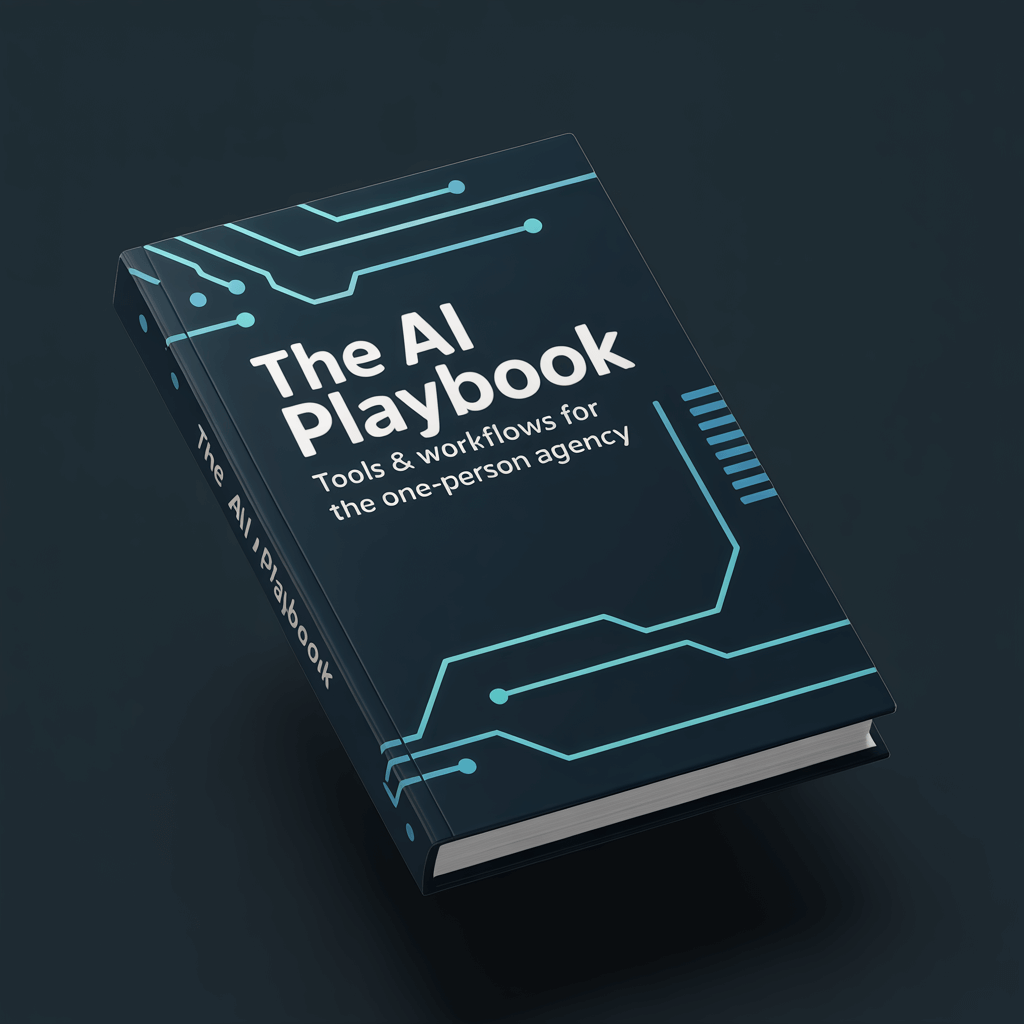
📥 FREE: THE AI PLAYBOOK
The exact tools and workflows I use to run a one-person agency. 25 years of marketing experience distilled into an actionable guide. Yours free.

AI & Digital Marketing Strategist
With over 25 years in digital marketing, e-commerce, sales, and international business, Jon Jones is a seasoned entrepreneur dedicated to empowering small businesses through innovative AI solutions. His journey began in investment banking on Wall Street, guiding companies through capital acquisition and complex markets, and has expanded to include expertise in web development, brand design, product development, and courses and training.
Fluent in Mandarin and with a rich foundation in both finance and tech, Jon launched JonJones.ai to provide accessible, transformative tools for small businesses to streamline operations, generate leads, and build sustainable growth. His mastery of AI, automation, and digital strategy has enabled numerous businesses to bridge the gap between traditional practices and modern technology, ensuring they thrive in today’s digital landscape.