
This is the question I get most from solopreneurs who are curious about AI agents and a bit scared of them: “Do I have to learn to code first?”
Short answer: no. You don’t have to write code. You do have to read a little of it. Here’s the receipt.
The short answer: write in English, read the receipts
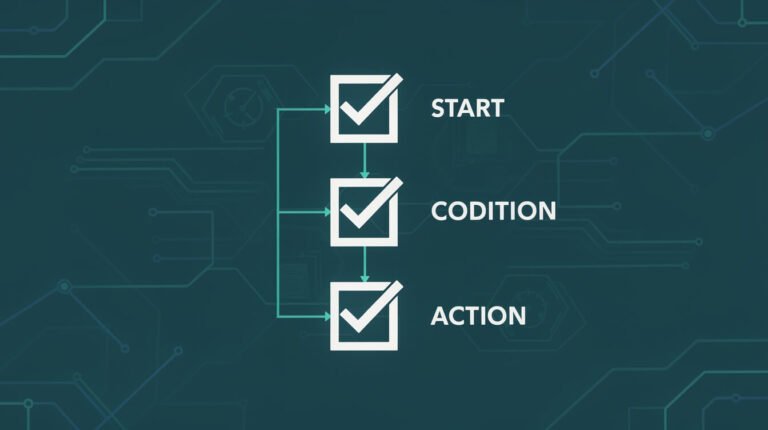
You can run AI agents without coding if you can do two things. Write clear rules in plain English, and check what the agent tells you it did. The agent writes the code. Your job is the rules and the checking.
What’s actually inside my agents’ instructions?
I counted. My fleet runs on 39 instruction files (Claude Code calls them skills). Together they come to 10,205 lines. Leave out the blank lines and it splits like this:
- 4,919 lines of plain English (59%). What to do, in what order, what never to do, and when to stop.
- 3,441 lines inside code blocks (41%). Mostly example API calls the agent can copy: 262 bash snippets and 176
curllines. A handful of HTML, Python and JSON.
The lines that matter most are the English ones. Here’s a real rule from my setup, word for word: “Never invent data — if a queue is empty, skip gracefully.” No syntax. No semicolons. It has saved me more times than any snippet.
Even the skill that writes this daily post is code-heavy on paper (228 code lines vs 171 lines of English). But the code is reference material. The English is what makes the decisions.
So who writes the code?
The agents do, while they work. From October 24 to 29, my agents saved 226 small scripts to their scratch folder during scheduled runs. That’s 4,848 lines across 49 runs, nearly all Python. Some were copied forward from the day before, so 163 are unique.

⚡ GET THE AI EDGE
Weekly AI tips that actually save you time and money. No fluff, no hype — just what works.
Nobody asked for any of them by name. An agent needed to count something, so it wrote a script to count it. Yesterday’s post needed a bounce count, so one script went through 521 outreach leads and found that 26 of my first 54 emails had bounced. Then the script got thrown away. It’s disposable code, written on demand.
Then what do I actually need to know?
Not syntax. Three reading skills:
- What an API key is and where it lives. When my agents needed me, 17 of 17 times it was keys, not content.
- How to read an error. Some APIs say “Ok.” when they mean “pay me”. An agent will happily report that as success unless you’ve told it what failure looks like.
- How to sanity-check a number. If the agent says it published 47 posts, open one. If it says 0 failures, ask how it counted. Agents are confident. Receipts are honest.
When does “no code” stop being enough?
When something breaks that isn’t in your rules. A drag-and-drop tool can only do what its buttons allow. An agent can do almost anything, which is great until it does the wrong thing quickly. That’s why your English has to be specific, and why the rules go stale. My own rulebook had 7 claims that had stopped being true before I checked.
You don’t need a developer to start. You need one person, probably you, willing to read the log when something looks off.
Do this today
- Pick one task you repeat every week. Write the steps in plain English, the way you’d brief a new assistant.
- Add a “never” list. Never send, never pay, never delete, never make up a number. These are your most important lines.
- Add one “how do I know it worked” line. A link, a count, a screenshot. Something you can check in 30 seconds.
- Let the agent write the code. Then read its report, not its code.
The takeaway: AI agents without coding is real, but AI agents without reading isn’t. Write the rules in English, and check the receipts.
Want to see how the pieces fit together? Here’s what my agentic OS looks like after 139 days. If you want help turning your weekly to-do list into rules an agent can run, book a strategy session.
📥 FREE: THE AI PLAYBOOK
The exact tools and workflows I use to run a one-person agency. 25 years of marketing experience distilled into an actionable guide. Yours free.

AI & Digital Marketing Strategist
With over 25 years in digital marketing, e-commerce, sales, and international business, Jon Jones is a seasoned entrepreneur dedicated to empowering small businesses through innovative AI solutions. His journey began in investment banking on Wall Street, guiding companies through capital acquisition and complex markets, and has expanded to include expertise in web development, brand design, product development, and courses and training.
Fluent in Mandarin and with a rich foundation in both finance and tech, Jon launched JonJones.ai to provide accessible, transformative tools for small businesses to streamline operations, generate leads, and build sustainable growth. His mastery of AI, automation, and digital strategy has enabled numerous businesses to bridge the gap between traditional practices and modern technology, ensuring they thrive in today’s digital landscape.