Best AI tools for small business — it’s the search query that leads thousands of business owners down a rabbit hole of listicles, SaaS comparisons, and affiliate links. But the answer they actually need isn’t on any of those lists. It’s a single tool that runs in your terminal, connects directly to your business systems, and costs a fraction of the AI tool stack most owners cobble together.

The AI Tool Problem Nobody Talks About
A post on Reddit’s r/smallbusiness recently asked a simple question: “Anyone actually using AI in their business?” It got 258 comments. The top reply, with over 100 upvotes, wasn’t about some flashy new platform. It was about a guy who used ChatGPT to convert a tariff code PDF into a usable spreadsheet — something that would have taken him an hour by hand.
Scroll through those comments and a pattern emerges. Small business owners are using AI for practical, boring stuff: writing employee warnings, summarizing legal documents, generating Excel formulas, drafting marketing plans. The tools that actually help? They’re usually just ChatGPT or Claude, used directly.
Meanwhile, the second most upvoted comment on that same subreddit — 741 points — was titled “I’m really tired of people trying to sell me ChatGPT wrappers.” A small law practice owner fed up with charlatans pitching yet another AI tool that’s really just a thin skin over the same language model you can already use for free.
Here’s what nobody in the “20 Best AI Tools” listicles will tell you: most of those tools are middlemen. They take an AI model you could access directly, add a logo and a monthly fee, and sell it back to you. The best AI tool for your small business isn’t on any of those lists.
What You Actually Need: An AI That Works, Not One That Talks
There’s a fundamental difference between AI tools that talk and AI tools that work.
ChatGPT, Gemini, and Claude in a browser window — they’re conversational. You type a question, they type an answer. That’s useful for brainstorming and drafting, but it’s limited. The AI can’t see your files. It can’t update your website. It can’t analyze your actual sales data. It can’t send an email on your behalf. It lives in a sandbox, separated from your real business systems.
What you actually need is an AI that can take action. Read your files, write code, call your APIs, publish to your website, process your data — all without you having to copy and paste between a dozen browser tabs.
That tool exists. It’s called Claude Code, and it runs in your terminal.
Claude Code is Anthropic’s command-line interface for Claude. Instead of chatting in a browser, you open a terminal in your project folder and type claude. From there, it can read and edit files on your computer, run scripts, interact with databases, manage your WordPress site, process spreadsheets, and automate virtually anything you’d otherwise do manually.
This article you’re reading right now? It was researched, outlined, written, and published to WordPress using Claude Code. The keyword research, competitive analysis, SERP scraping, image generation, and final publishing — all executed through the same terminal session. Not ten different tools. One.
Setting Up Claude Code on Windows in 30 Minutes
If you’re on a Mac or Linux, you’re two commands away. If you’re on Windows — which most small business owners are — it takes about 30 minutes to set up, and every minute is worth it.
Here’s the honest truth about why this requires a few extra steps on Windows: the most powerful developer tools run on Linux. Windows is great for everyday tasks, but its architecture wasn’t designed for the kind of direct system access that makes AI automation possible. The good news is Microsoft built a bridge. It’s called WSL — Windows Subsystem for Linux — and it gives you a full Linux environment right inside Windows.
Step 1: Install WSL
Open PowerShell as Administrator (right-click the Start menu, select “Terminal (Admin)”) and run:
wsl --installThat’s it. Restart your computer when prompted. This installs Ubuntu, a user-friendly Linux distribution, alongside your existing Windows setup. Nothing changes about how Windows works — you just get a new capability.
Step 2: Install VS Code with the WSL Extension
If you don’t already have Visual Studio Code, download it from code.visualstudio.com. It’s free.
Once installed, open VS Code and install the “WSL” extension from the Extensions marketplace (Ctrl+Shift+X, search “WSL”). This lets VS Code work directly with your Linux environment while keeping the familiar graphical interface you’re used to.
Think of it this way: VS Code is your window into the Linux world. It looks and feels like any other Windows application, but behind the scenes it’s connected to the powerful Linux terminal where Claude Code runs.

Step 3: Install Claude Code
Open your WSL terminal (you can do this inside VS Code by pressing Ctrl+` and selecting the WSL profile) and run:
curl -fsSL https://claude.ai/install.sh | bashThat single command downloads and installs Claude Code. No Node.js required, no package managers to configure, no dependencies to hunt down.
Step 4: Launch Claude Code
Navigate to any folder where you want to work and type:
claudeClaude Code will ask you to authenticate with your Anthropic account. Once connected, you’re in. You have a full AI assistant that can see your files, run commands, and take real action on your behalf.
⚡ GET THE AI EDGE
Weekly AI tips that actually save you time and money. No fluff, no hype — just what works.
Optional: Docker for a Safety Net
If the idea of an AI having access to your file system makes you nervous — which is a reasonable concern — install Docker Desktop for Windows. Docker creates isolated containers where Claude Code can work without touching anything outside that container. It’s the best of both worlds: full AI capability with a safety boundary.
Why Browser-Based AI Keeps Breaking
I recently tried Claude’s browser-based “co-work” feature. It initially showed promise — it started setting up a WordPress page. Then it threw this error:
“This task didn’t load properly. CLI output was not valid JSON. This may indicate an error during startup.”
It broke because browser-based AI runs in a sandbox. That sandbox is designed to protect you, but it also prevents the AI from doing anything meaningful with your actual systems. Every browser-based AI tool — ChatGPT’s “code interpreter,” Google’s AI workspace features, any SaaS tool running in your browser — has the same fundamental limitation. They can’t reach your real files, your real databases, or your real APIs without going through layers of restrictions that inevitably break.
A terminal-based AI doesn’t have this problem. When Claude Code runs in your terminal, it has the same access to your system that you do. It can read the files you can read, run the commands you can run, and access the services you can access. No sandbox. No intermediary. No “this task didn’t load properly.”
The Cost Comparison That Should Make You Angry
Let’s do the math on what small business owners typically spend on AI tools:
- Email marketing AI: $30-100/month
- Social media scheduling with “AI features”: $30-80/month
- AI writing assistant: $20-50/month
- AI chatbot for customer service: $50-200/month
- AI-powered analytics: $50-150/month
- AI accounting assistant: $30-100/month
A modest stack of AI tools easily runs $200-500 per month. Each one does one thing, each requires its own login, and each takes a cut for being the middleman between you and the underlying AI model.
Claude Code with a Pro subscription costs $20 per month. If you use the API directly, most small business users spend around $6 per day — roughly $120-180 per month for heavy usage.
For that price, you don’t get one tool that does one thing. You get one tool that does everything. Write marketing emails, schedule social posts, analyze your bookkeeping data, update your website, generate reports, process customer feedback, draft contracts, build automations — all from the same terminal.
One tool. One subscription. No middlemen.

What Small Business Owners Are Actually Doing With It
Based on real conversations with business owners and my own daily usage, here’s what actually moves the needle:
Content and Marketing. Draft blog posts, write email newsletters, create social media content across platforms, write product descriptions, generate ad copy. Not just writing text in a box — actually publishing it to WordPress, scheduling it on social platforms, formatting it for email. The AI handles the entire workflow, not just the first draft.
Document Processing. Summarize contracts, interpret compliance documents, parse government regulations, convert PDFs to structured data. One business owner described feeding ChatGPT new tariff codes from a PDF and getting back an organized spreadsheet in minutes instead of hours. With Claude Code, you can automate this: point it at a folder of documents and have it extract, summarize, and organize everything.
Data Analysis. Analyze sales data, create financial reports, process customer surveys, compare vendor pricing, forecast inventory needs. Claude Code can read your CSV files and spreadsheets directly, run calculations, and generate reports — no uploading to a third-party service required.
Website Management. Update WordPress pages, create new blog posts, manage WooCommerce products, adjust SEO settings, fix CSS issues. If your business runs on WordPress, Claude Code can manage it through the REST API — creating posts, uploading images, organizing categories, all from the command line.
Custom Automations. Build email sequences triggered by customer actions. Process inbound leads and sort them into your CRM. Generate weekly reports from multiple data sources. Monitor reviews and draft responses. These are the automations that AI SaaS tools charge premium prices for, and they’re just scripts that Claude Code can write and run for you.
Your First 5 Automations
Once you have Claude Code running, start here. Each of these takes minutes, not hours:
- Generate a month of social media content. Tell Claude Code about your business, your audience, and your platforms. It will draft 30 days of posts, complete with hashtags and platform-specific formatting.
- Analyze a spreadsheet you’ve been ignoring. Point Claude Code at that CSV of sales data or customer feedback you’ve been meaning to look at. Ask it to find trends, outliers, and actionable insights.
- Write and publish a blog post. Give it a topic relevant to your business. It will research competitors, draft the article, generate a featured image, and publish it as a draft on your WordPress site — ready for your review.
- Create an email template library. Describe the common emails your business sends — follow-ups, appointment confirmations, thank you notes, review requests. Claude Code will generate a library of templates you can reuse.
- Audit your website for issues. Have Claude Code crawl your site and identify broken links, missing meta descriptions, slow-loading pages, and SEO opportunities. It will give you a prioritized list of fixes.
Stop Shopping for Tools. Start Using One.
The small business owners who are actually getting results from AI aren’t the ones with subscriptions to fifteen different platforms. They’re the ones who picked one capable tool and learned to use it well.
Every hour you spend evaluating the latest AI chatbot widget or marketing automation platform is an hour you could spend actually automating your business. The tool comparison game is a treadmill — there will always be a new one next week promising to be 10x better.
Claude Code isn’t the only way to do this. But it’s the most direct path between you and real AI capability. No wrappers. No middlemen. No sandbox. Just you, your business data, and an AI that can actually do something with it.
The setup takes 30 minutes. The first automation takes another 30. By the end of your first hour, you’ll have accomplished more than most small business owners do in months of “evaluating AI tools.”
Open a terminal. Type claude. Start building.
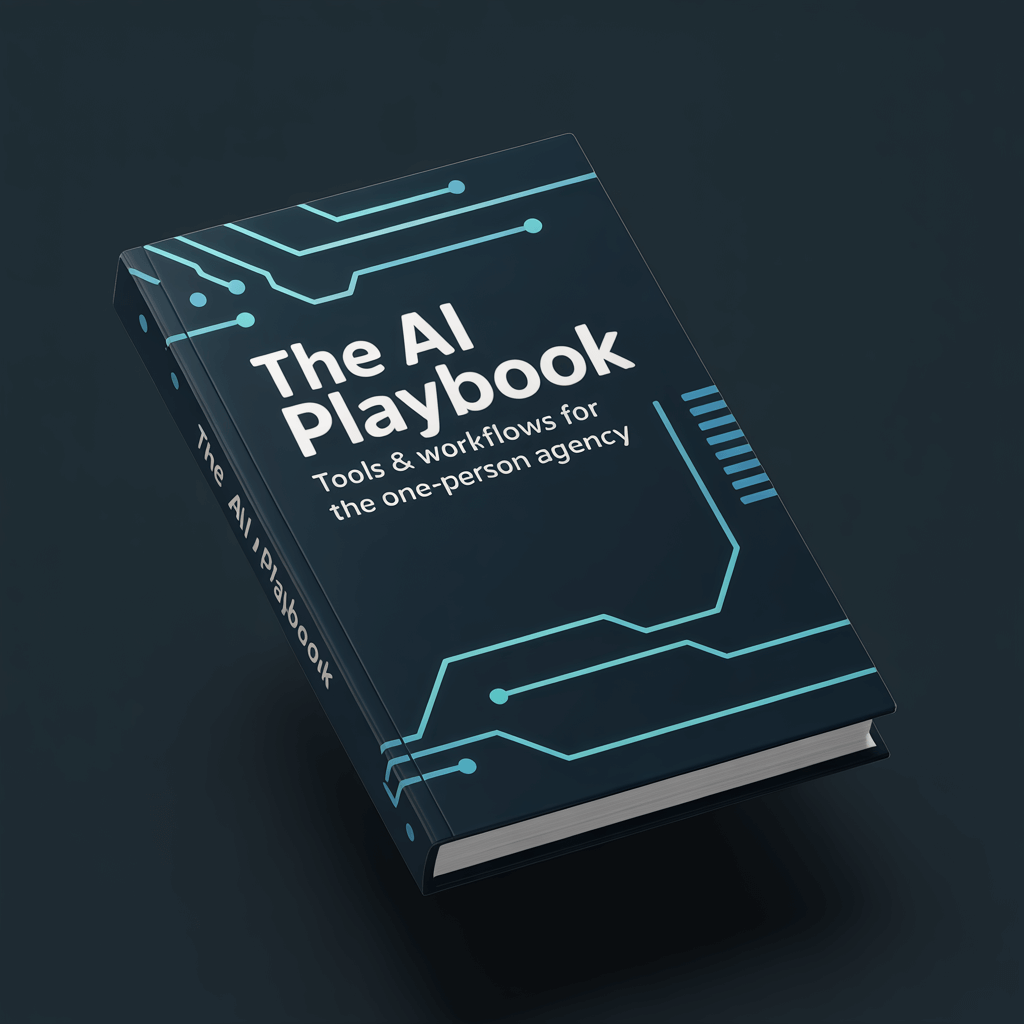
📥 FREE: THE AI PLAYBOOK
The exact tools and workflows I use to run a one-person agency. 25 years of marketing experience distilled into an actionable guide. Yours free.

AI & Digital Marketing Strategist
With over 25 years in digital marketing, e-commerce, sales, and international business, Jon Jones is a seasoned entrepreneur dedicated to empowering small businesses through innovative AI solutions. His journey began in investment banking on Wall Street, guiding companies through capital acquisition and complex markets, and has expanded to include expertise in web development, brand design, product development, and courses and training.
Fluent in Mandarin and with a rich foundation in both finance and tech, Jon launched JonJones.ai to provide accessible, transformative tools for small businesses to streamline operations, generate leads, and build sustainable growth. His mastery of AI, automation, and digital strategy has enabled numerous businesses to bridge the gap between traditional practices and modern technology, ensuring they thrive in today’s digital landscape.