

Search “Claude Code certification” and you land in a wall of prep sellers, course vendors and a Reddit thread from someone who just finished “the” certification. Here’s the thing almost none of them say up front: there is no exam called the Claude Code certification. Anthropic runs four proctored Claude certifications, none of them is about Claude Code alone, and you can’t sit any of them unless you work at a firm in the Claude Partner Network.
That matters for two kinds of readers. If you’re a builder, you want to know whether a Claude Code certification is worth chasing and whether you can even get in. If you’re hiring someone to build agents for your business, you want to know what that badge on their LinkedIn actually proves. This guide answers both, from Anthropic’s own exam pages, eligibility rules and FAQ (all checked on November 9, 2026), plus the receipts from a fleet of Claude Code agents I run unattended every day.
By the end you’ll know the four exams, what each one costs, where Claude Code really shows up on them, who’s allowed to register, the free route everyone else can take, and what to ask for instead of a certificate.
Is There a Claude Code Certification? The Short Answer

No, not as a single exam. What people call a “Claude Code certification” is usually one of three very different things, and the prep-seller pages blur them together because blurring sells courses.
- A Claude certification. One of four proctored exams Anthropic delivers through Pearson VUE. Closed book, 120 minutes, scored from 100 to 1,000 with 720 to pass, and a Credly badge that’s valid for 12 months. Claude Code is one topic among several, not the subject of the exam.
- A certificate of completion. What you get for finishing a free Claude Academy course such as Claude Code 101 or Claude Code in Action and passing its quiz. Anyone can earn one. It records that you completed a course, not that you passed a proctored exam.
- The Claude Partner Badge: Claude Code. The closest thing to a literal Claude Code credential. It’s a free learning path inside Anthropic Partner Academy with eight courses, a hands-on capstone and a 34-question scenario assessment. It’s a badge, not a certification, and it’s for partners only.
Anthropic’s own eligibility page puts it plainly: certificates of completion and certifications “are two different things, and the names are close enough that people mix them up.” So when someone says they’re “Claude Code certified,” the useful follow-up is: which one? A free course certificate, a partner badge and a proctored exam are not the same signal, and they shouldn’t carry the same weight.
The Reddit thread ranking for this search is a good example. It reads like a course write-up (the agentic loop, tool use, how Claude reads and edits files), which is Claude Code 101 territory, not a proctored exam. Nobody’s lying. The labels are just close enough that the difference gets lost.
The 4 Claude Certification Exams Compared

Here’s the full lineup from Anthropic Partner Academy. Prices are in US dollars before any partner-tier discount.
| Exam | Code | Who it’s for | Price | Counts toward partner tier? |
|---|---|---|---|---|
| Claude Certified Associate – Foundations | CCAO-F | Consultants, sellers and delivery leads who guide customers to the right Claude use cases | $99 | No |
| Claude Certified Developer – Foundations | CCDV-F | Engineers building with the Claude API, Claude Code and MCP | $125 | Yes |
| Claude Certified Architect – Foundations | CCAR-F | People who scope and design Claude solutions: model choice, agentic vs single-shot, eval and cost | $125 | Yes |
| Claude Certified Architect – Professional | CCAR-P | Architects designing and governing Claude at enterprise scale | $175 | Yes |
What all four have in common, per Anthropic’s certification FAQ:
- Format: multiple choice plus scenario-based multiple response. 120 minutes of exam time, about 135 minutes in the seat. Anthropic’s Architect Foundations page lists 60 questions.
- Closed book. No notes, docs, translation tools or AI assistants.
- Passing score: 720 on a scaled 100–1,000.
- Delivery: online proctored (Pearson OnVUE) or at a Pearson test center, in English or Japanese.
- Validity: 12 months. On-time renewal is a free, non-proctored assessment. Let it lapse and you pay the full fee to sit the exam again.
- Retakes: full price every time. You wait 14 days after a first fail, 30 after a second and 90 after a third, with a maximum of four attempts per exam in any rolling 12 months.
Three details the prep pages tend to skip:
- Prices have moved. Architect Foundations went from $99 to $125 on June 30, 2026, the same day delivery moved to Pearson and badges moved to Credly. Older guides quoting $99 for everything are out of date.
- The exams change on December 7, 2026. Associate, Developer and Architect Professional get updated content that day, and the new exam guides come out November 17. If you’re testing on December 7 or later, study from the new guide.
- The official practice exam is gone. It was retired in the move to Pearson. The exam guide’s sample questions are now the only official preview, so the “mock exams” you find are third-party.
Discounts depend on your firm’s partner tier. Registered partners pay full price. Select, Preferred and Global Premier partners get 50% off automatically. Global Premier partners pay nothing through December 31, 2026, then drop back to the standard 50%.
Claude Code Certification Content: Where Claude Code Actually Shows Up

This is the part I didn’t expect, and it changes which exam you’d pick if Claude Code is what you care about. Each exam page publishes its domain weights. Here’s how much of each one is about Claude Code:
- Developer – Foundations: Claude Code is 3.1% of the exam. The heavy domains are Applications and Integration (33.1%), Model Selection and Optimization (16.8%) and Agents and Workflows (14.7%). It’s an API exam with Claude Code as a footnote.
- Architect – Foundations: “Claude Code Configuration & Workflows” is 20%, alongside Agentic Architecture & Orchestration (27%), Prompt Engineering & Structured Output (20%), Tool Design & MCP Integration (18%) and Context Management & Reliability (15%).
- Associate – Foundations: no Claude Code domain at all. It’s about everyday use: output evaluation (21%), workflow integration (16%), governance (15%) and prompting (14%).
- Architect – Professional: no named Claude Code domain. The closest is Developer Productivity & Operational Enablement at 7%.
So if your goal is a Claude Code certification in the sense of “an exam that tests Claude Code,” Architect – Foundations is the one, not the Developer exam, even though the name suggests the opposite. The Developer exam gives Claude Code less weight than prompt engineering, security or tools.
The Architect Foundations domains also make a good checklist even if you never sit the exam. Read them as questions about a system you run:
- Agentic architecture and orchestration: how do your agents hand work to each other, and what happens when one fails halfway?
- Claude Code configuration: where do your rules live, and which of them can the model skip?
- Context management and reliability: what does each session actually load, and what gets dropped?
That last one is where a running system teaches you things a multiple-choice exam can’t. My fleet’s shared memory file is 2.4 MB today, far more than any session can load in one go. My own CLAUDE.md says “always read MEMORY.md” as rule number one. On paper that’s a rule; in practice it’s impossible, and no run ever reported it as broken. A question can describe compaction. Only running something for months shows you a rule that quietly became impossible to follow and never once raised an error.

Get the AI Playbook
The patterns, read-back checks and real run logs behind a fleet of unattended business agents, plus whatever broke this week. Free, and you can leave whenever you like.
Who Can Sit a Claude Certification: The Partner Network Gate
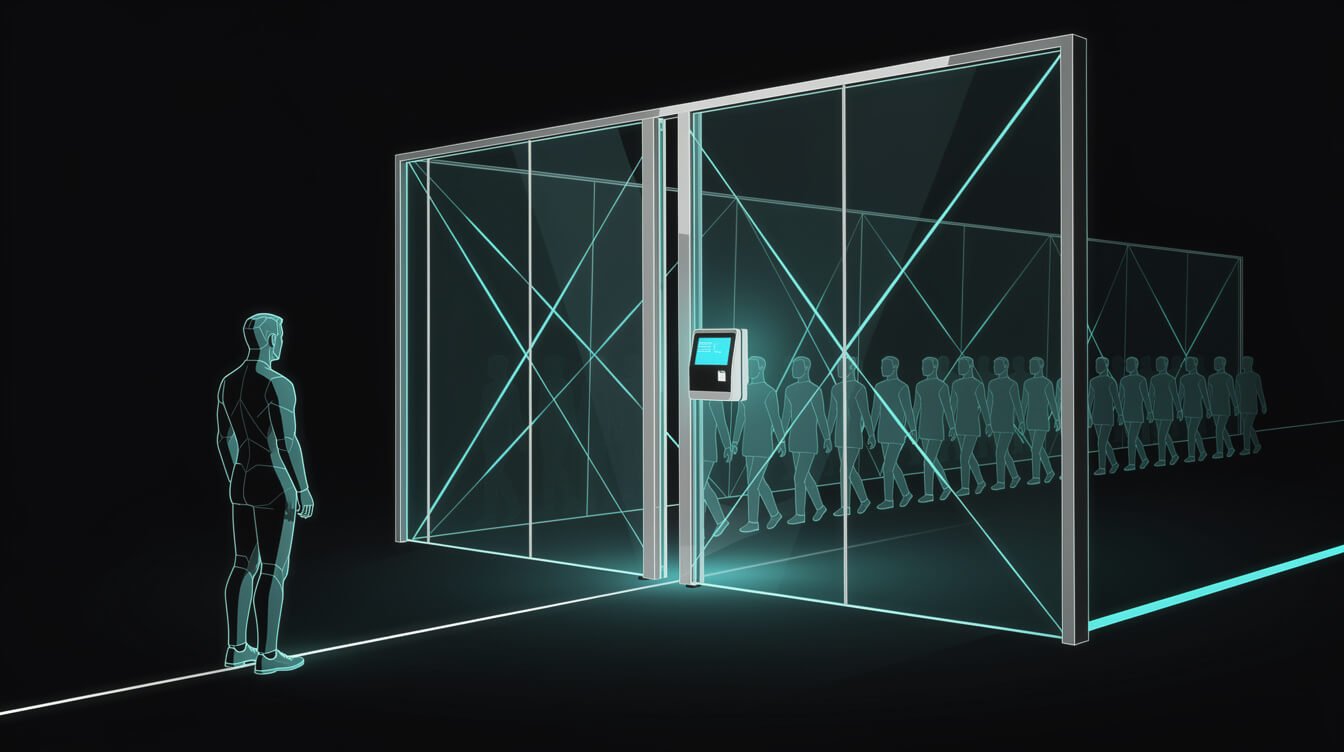
This is the line that makes most “how to get Claude Code certified” articles misleading. From Anthropic’s eligibility page: “Claude certification exams are open to people who work at organizations in the Claude Partner Network.” Customers and non-partners can’t register.
The mechanics are strict:
- You sign in with a company email on a domain listed in your firm’s partner record. A personal address won’t work, and neither will a subsidiary or regional domain that isn’t on the record.
- If your domain isn’t recognized, partner support has to add it, which takes 7 to 10 days.
- You pay by card in Partner Academy, then get a Pearson link to book. You need to be 18 or older and bring a government-issued ID whose name matches your exam profile exactly, or you forfeit the fee.
So what is the Claude Partner Network? Anthropic launched it on March 12, 2026 with a $100 million commitment to firms that help enterprises adopt Claude. Membership is free, and “any organization that is bringing Claude to market is eligible to join.” By June, Anthropic said more than 40,000 firms had applied and more than 10,000 consultants had earned a Claude certification.
The tier ladder tells you who the program is built for:
| Tier | Active certified people | Customers in production | Public customer stories |
|---|---|---|---|
| Select | 10+ | 2+ (trailing 12 months) | 1+ |
| Preferred | 100+ | 15+ | 3+ |
| Global Premier | 1,000+ | 100+ across 3+ regions | 15+, plus a joint business plan |
New applicants start at Registered, with a minimum commitment to 10 certified practitioners. On paper a one-person consultancy can apply. In practice the program is designed around benches of certified staff, which is why the exam is a firm-building tool first and a personal credential second.
One more detail worth knowing: a certification only counts toward a firm’s tier if the holder has used Claude in the past 90 days. Anthropic doesn’t treat a passed exam as enough on its own. It pairs every badge with recent usage, production customers and public references. Hold that thought for the hiring section.
The Free Route: Claude Academy Courses and Their Certificates

If you’re not at a partner firm, here’s your real option, and it’s a good one. Anthropic’s public courses, now moving to Claude Academy at academy.claude.com, are free, cover Claude Code properly, and end with a quiz and a shareable certificate of completion.
The two Claude Code courses:

⚡ GET THE AI EDGE
Weekly AI tips that actually save you time and money. No fluff, no hype — just what works.
- Claude Code 101: 12 lectures, about 1.5 hours of video, one quiz. It starts from first principles (the agentic loop of gather context, act, verify), then covers installing across terminal, VS Code, JetBrains, desktop and web, approval modes and Plan Mode, the explore → plan → code → commit rhythm, context commands like
/compactand/clear, and finally CLAUDE.md, subagents, skills, MCP and hooks. - Claude Code in Action: 9 lectures for people who already use Claude Code for single prompts. It’s about running long, hands-off sessions you can trust: plan mode and compaction, a lean CLAUDE.md, skills, matching permission modes to the job, hooks that enforce rules the model can’t skip, scheduled routines and headless runs, and verifying unsupervised work “in proportion to how little you watched.” It’s also on Coursera.
That second course reads like a summary of everything I learned the hard way running agents on cron. If you’re starting from zero, do the courses in order, then pair them with something hands-on, like my Claude Code tutorial for beginners and the ten-minute install guide. If you want a wider list of AI-building courses, paid and free, that’s covered in the vibe coding courses roundup.
One housekeeping note: the old Anthropic Skilljar site says that legacy experience goes away in early December 2026. If you’ve already earned course certificates there, sign in at Claude Academy and claim them before then.
Be honest with yourself about what the certificate is, though. It shows you finished a course and passed its quiz. Nobody proctored it. It’s a fine thing to list and a weak thing to lean on, and the courses are worth much more than the PDF they produce.
Hiring a Claude Consultant: What a Certification Proves and What to Ask For Instead

If you’re a business owner or an ops lead evaluating someone to build with Claude, here’s a fair reading of a current Claude certification:
- It proves: the person passed a closed-book, proctored exam on Claude concepts within the last 12 months, and works at a firm that’s in Anthropic’s partner network.
- It doesn’t prove: that they’ve run anything unattended, how they handle a failure at 3 a.m., whether their agents tell the truth about what they did, or whether anything they built is still running six months later.
That’s not a knock on the exam. It’s what exams can and can’t measure. Anthropic clearly agrees, since its own tiers require production deployments and public customer stories on top of headcount. Do what Anthropic does: treat the badge as a starting signal and then ask for evidence.
Here’s what I’d ask any Claude consultant for, certified or not:
- Run logs from a live system. Not a demo video. A count of runs and outcomes. Mine, for example: 2,004 logged runs from June 12 to November 8, 2026, with 1,613 success, 216 skip, 45 fail and 125 that ended without stating an outcome at all. That last number is the interesting one, and anyone who’s run agents for real will have one like it.
- A failure story with a fix. Ask for the worst silent failure they’ve had and what they changed. Good answers sound like “the API returned zero rows for a bad field name, and the agent reported it as an empty queue.” Vague answers sound like “we have monitoring.”
- How they verify output. Does anything read back what the agent wrote? I published the practices that held up over four months of unattended runs, and nearly every one is about verification, not prompting.
- Where the credentials live and what the agent can touch. If they can’t describe the sandbox, they haven’t thought about it. Here’s how I audit my own container, open gaps included.
- Who owns the system when they leave. Files you can read, in a repo you control.
For the broader hiring question, I keep that in separate guides: what an AI consultant actually does and costs, how to spot a repackaged agency, and an honest comparison of AI automation consultants. If you’d rather talk it through for your own business, you can book an automation strategy session and we’ll work out which workflow is worth automating first, and what proof you should expect from whoever builds it.
For Solo Operators: Is a Claude Code Certification Worth It?

If you run a one-person or small automation business, here’s my honest take. It depends on who you sell to.
It’s worth it if you work at (or with) a partner firm, or you sell into enterprises whose procurement teams filter vendors by Anthropic credentials. In that world, a badge can be the thing that gets you onto the shortlist, and Architect Foundations is the one that tests Claude Code most.
It’s probably not your bottleneck if you sell to solopreneurs and small businesses. Those buyers won’t ask for a Credly badge. They’ll ask, “Can you show me one that works?” And you mostly can’t sit the exam anyway without joining the partner network, which is built for firms with benches of certified staff.
Either way, the cheapest path to being genuinely good is the same:
- Take the free courses. Claude Code 101, then Claude Code in Action. Use the Architect Foundations domain list as your syllabus.
- Build one system that runs without you. One scheduled job doing one real task, every day.
- Make it leave receipts. Every run ends with a result line you can count. That’s what turns “I know Claude Code” into a sentence a buyer can check.
- Write down what broke. Your failure log is your portfolio. Mine became a whole post on orchestration because the failures were the interesting part.
This is what I mean by agentic engineering: the discipline isn’t knowing the answers to the exam questions, it’s building the habits that keep a system honest when nobody’s watching. A certification can confirm you know the vocabulary. A system with three months of logs shows you can do the job. If you can get both, great. If you can only get one, get the logs.
Claude Code Certification FAQ

Is there an official Claude Code certification?
Not as a standalone exam. Anthropic offers four Claude certifications (Associate, Developer, Architect Foundations and Architect Professional). Claude Code is tested inside them, most heavily in Architect Foundations at 20%. Partners can also earn a separate Claude Partner Badge: Claude Code.
How much does a Claude certification cost?
$99 for Associate, $125 for Developer Foundations, $125 for Architect Foundations and $175 for Architect Professional, in USD before partner discounts. Select tier and above get 50% off. Retakes cost the full fee.
Can I take a Claude certification exam without working at a partner?
No. Registration needs a company email on a domain in a Claude Partner Network member’s record. Personal emails are rejected. Non-partners can take the free Claude Academy courses, which award certificates of completion.
Is the Claude Code in Action certificate a real certification?
It’s a real certificate of completion from Anthropic, but it isn’t a proctored certification. You earn it by finishing the free course and passing its quiz, and anyone can do that.
How hard is the exam, and how long does it last?
You get 120 minutes of closed-book multiple choice and multiple response questions (about 135 minutes in the seat), and you need a scaled 720 out of 1,000 to pass. There’s no official practice exam anymore, so the sample questions in each exam guide are your best preview.
How long is a Claude certification valid?
12 months. On-time renewal is a free, non-proctored assessment. If it lapses, you retake the full exam at full price.
Should I hire a consultant just because they’re Claude certified?
Treat it as a starting signal, not a decision. Ask for run logs from a live system, a real failure story and how they verify output. Anthropic’s own partner tiers require production customers on top of certifications, which tells you how much weight the badge carries alone.
Final Thoughts: Get the Knowledge Free, Earn the Proof by Running Something
The phrase “Claude Code certification” points at something that doesn’t quite exist. There are four proctored Claude exams locked behind a partner-network gate, a partner-only Claude Code badge, and a set of free courses that teach most of what matters. Once you can see those three apart, the decision gets simple.
If you’re at a partner firm or sell to enterprise procurement, Architect Foundations is the exam that actually tests Claude Code. Watch the December 7 content change and study from the guide dated November 17 or later. If you’re a solo operator, take the free courses this week and spend the money you’d have spent on prep material on one agent that runs every day and leaves a log. If you’re hiring, ask which credential they mean, then ask to see the logs.
Certificates expire after 12 months. A system that has run every day for a year doesn’t need renewing. It just needs someone to read what it wrote.
Receipts Beat Badges: Get the Playbook
Each issue covers one real system from the fleet: what it does, what it logged, and what broke. It’s the portfolio-building habit from this post, delivered weekly. Free.
📥 FREE: THE AI PLAYBOOK
The exact tools and workflows I use to run a one-person agency. 25 years of marketing experience distilled into an actionable guide. Yours free.

AI & Digital Marketing Strategist
With over 25 years in digital marketing, e-commerce, sales, and international business, Jon Jones is a seasoned entrepreneur dedicated to empowering small businesses through innovative AI solutions. His journey began in investment banking on Wall Street, guiding companies through capital acquisition and complex markets, and has expanded to include expertise in web development, brand design, product development, and courses and training.
Fluent in Mandarin and with a rich foundation in both finance and tech, Jon launched JonJones.ai to provide accessible, transformative tools for small businesses to streamline operations, generate leads, and build sustainable growth. His mastery of AI, automation, and digital strategy has enabled numerous businesses to bridge the gap between traditional practices and modern technology, ensuring they thrive in today’s digital landscape.