Every AI consulting firm wants to sell you a six-figure “digital transformation.” Here’s the thing — most small businesses don’t need that. They need someone to look at their operations, point out the three things AI can actually fix, and help them build it. That’s what real AI consulting for small businesses looks like.
If you’re wondering whether hiring an AI consultant is worth it — or if you can just figure it out yourself — this guide breaks down what AI consulting delivers, what it costs, and how to tell if you need it.

What AI Consulting for Small Businesses Actually Means
Forget the enterprise jargon. AI consulting for small businesses means bringing in someone who understands both AI tools and small business operations to help you automate the stuff that’s eating your time.
A good consultant doesn’t show up with a slide deck about “leveraging synergies.” They audit your workflows, identify where you’re bleeding time and money, and build solutions using tools you can actually afford. Here’s what that looks like in practice:
- Workflow audit — mapping every repetitive task in your business (data entry, email responses, scheduling, invoicing)
- Tool selection — matching the right AI tools to your actual problems, not the most expensive option
- Implementation — setting up automations, training your team, and making sure everything works
- Ongoing optimization — tweaking systems as your business grows and new tools become available
The difference between a consultant who gets small business and one who doesn’t? The good ones start with a $500 fix that saves you 10 hours a week. The bad ones start with a $50,000 proposal and a 6-month timeline before you see any results.
5 Signs You Actually Need an AI Consultant
Not every business needs outside help with AI. Some owners genuinely enjoy the tech side and have time to learn. But if any of these sound familiar, it’s time to bring in help:
- You’re doing the same task more than 20 times a week. Manually sending follow-up emails, updating spreadsheets, copying data between apps — that’s automation territory. A consultant can set this up in days, not months.
- You’ve tried AI tools but couldn’t make them stick. ChatGPT, Zapier, Make — you signed up, played around, maybe built one automation. Then it broke and you went back to doing things manually. A consultant bridges the gap between “cool demo” and “reliable daily system.”
- You’re spending more on people than processes. If you’re paying a VA $2,000/month to do work an AI agent could handle for $50/month, the math speaks for itself. A consultant identifies exactly where that swap makes sense — and where it doesn’t.
- Your competitors are moving faster. They respond to leads in minutes while you take hours. They publish content daily while you manage one post a week. AI consulting closes that speed gap without adding headcount.
- You don’t know what you don’t know. The AI landscape changes every month. New models, new tools, new capabilities. A consultant who lives in this space every single day spots opportunities you’d never find scrolling through Twitter.
What Does AI Consulting Cost for Small Businesses?
Let’s talk real numbers. AI consulting pricing varies wildly, but here’s what the market actually looks like in 2026:
- Hourly consulting: $150-$400/hour for independent consultants, $300-$600/hour for agency consultants
- Strategy sessions: $500-$2,000 for a one-time audit and prioritized roadmap
- Project-based implementations: $2,000-$15,000 depending on complexity and number of systems
- Monthly retainers: $1,000-$5,000 for ongoing optimization, monitoring, and support
The sweet spot for most small businesses? Start with a strategy session ($500-$1,500) to identify your top opportunities. Then move into a project-based implementation ($2,000-$5,000) to build the first round of automations. This staged approach lets you validate ROI before committing to bigger investments.
Here’s the ROI reality check: if a $3,000 consulting engagement saves you 15 hours per week in manual work, and your time is worth $50/hour, that’s $750/week in recovered time. The consulting pays for itself in a month. After that, every hour saved is pure profit.
Compare that to hiring. A full-time employee costs $40,000-$60,000/year plus benefits. An AI system that handles the same work costs $50-$200/month in tool subscriptions. The economics aren’t even close.
The AI Consulting Process: What Actually Happens
A legitimate AI consulting engagement for small businesses follows a predictable pattern. Here’s what to expect — and what to demand — at each stage:
Week 1: Discovery and Audit. The consultant maps your entire operation — every tool, every workflow, every bottleneck. They interview you and your team to understand not just what you do, but why you do it that way. This is where most value gets unlocked. Business owners can’t see their own inefficiencies because they’re too close to the daily grind. A fresh set of expert eyes changes everything.
Week 2-3: Strategy and Prioritization. Based on the audit, the consultant builds a ranked list of automation opportunities. The best ones prioritize by ROI — what saves the most time for the least cost and complexity. You should walk away from this phase with a clear, written roadmap that you could hand to any competent implementer.

⚡ GET THE AI EDGE
Weekly AI tips that actually save you time and money. No fluff, no hype — just what works.
Week 3-6: Implementation. The consultant builds your automations, integrates your tools, and stress-tests everything. For small businesses, the first round of implementations typically includes:
- AI assistant for customer inquiries — handling email, chat, or phone automatically with smart routing for complex issues
- Automated workflows for repetitive tasks — using tools like n8n, Make, or Zapier to eliminate manual data entry and app-switching
- Content generation pipelines — blog posts, social media, email newsletters produced at scale while keeping your brand voice
- AI-powered lead scoring and CRM automation — so your sales efforts target the highest-value prospects automatically
Week 6+: Training and Handoff. A good consultant doesn’t create dependency. They train you to manage and modify your own automations. They document everything with clear SOPs. And they make sure you can troubleshoot common issues without picking up the phone. If a consultant wants an indefinite retainer without teaching you anything, find a different consultant.
Which AI Tools Deliver Real ROI for Small Businesses?
Your consultant should recommend tools based on your specific needs, not their affiliate commissions. Here are the categories that consistently deliver measurable ROI for small businesses:
- AI Agents — autonomous systems that handle entire workflows end-to-end. Customer support, lead qualification, appointment booking, data processing. Tools like Claude Code and custom GPTs can replace 20-40 hours of manual work per month for a fraction of the cost.
- Workflow automation — platforms like n8n (self-hosted with no per-task fees) or Make that connect your apps and automate data flow between them. The real power comes from combining AI decision-making with automation execution.
- Content creation — AI writing assistants for blog posts, social media, and email campaigns. The goal isn’t replacing your voice — it’s handling first drafts, variations, and repurposing at scale.
- Customer communication — AI chatbots that actually resolve issues (not just deflect them), email assistants that draft personalized responses, and voice agents that handle phone inquiries 24/7.
- Analytics and insights — AI tools that crunch your data and surface patterns you’d never spot manually. Sales trends, customer behavior shifts, churn risk, inventory optimization.
The key is integration. Individual AI tools are useful on their own. But the real value comes when they work together in automated pipelines. A lead comes in through your website, gets scored by AI, receives a personalized follow-up email within 2 minutes, gets added to your CRM with enriched data, and your calendar books a discovery call. All without you touching a single thing.
DIY vs. Hiring a Consultant: The Honest Answer
Can you do this yourself? Absolutely — if you meet these criteria: you enjoy learning new technology, you have 10-20 hours to invest in setup and testing, your automation needs are straightforward (fewer than 5 tools to connect), and you don’t mind troubleshooting at 11pm when something breaks.
For everyone else, a consultant is the faster path. Here’s the uncomfortable truth: a consultant has already made every mistake you’re about to make. They know which tools play nice together and which ones will waste your weekend. They’ve built the same automation you need for 10 other businesses. What takes you 40 hours of trial and error takes them 4 hours of focused work.
The math usually works like this: hire a consultant for $2,000-$3,000, get your systems running in 2 weeks. Or spend 3 months figuring it out yourself, losing $10,000+ in productivity along the way. Both paths get you to the same destination. One just gets you there faster with fewer headaches.
If you want to start learning the DIY route, our guide to Claude Code walks you through building AI-powered automations from your terminal — no prior coding experience required. It’s a great way to understand what’s possible before deciding whether to bring in a pro.
How to Choose the Right AI Consultant
Not all AI consultants are created equal, and the wrong one will cost you time and money with nothing to show for it. Here’s your due diligence checklist:
- Demand small business case studies. Enterprise experience doesn’t translate to a 5-person team. You need someone who’s worked with businesses your size and understands your constraints.
- Check if they’re tool-agnostic. A consultant who only recommends one platform is selling you their stack, not the best solution. The right tools depend on your business, not their partnerships.
- Look for builders, not strategists. Anyone can create a pretty slide deck. You need someone who writes code, configures systems, and ships working automations. Ask to see something they built recently.
- Talk to their past clients. Get references from businesses similar to yours. Ask specifically: what was the ROI, how long until you saw results, and would you hire them again?
- Verify they stay current. AI moves faster than any other industry. If your consultant is recommending the same tools they recommended two years ago, they’re behind. Ask what they’re building right now.
Your Next Step
You don’t need to commit to a massive engagement to get started. Most good AI consultants offer a discovery session for $500-$1,000 where they map your operations and identify your top 3 automation opportunities. That session alone is worth the investment — even if you decide to implement everything yourself.
If you’re running a small business and spending hours every day on work a machine could handle, AI consulting isn’t a luxury. It’s the fastest path from “drowning in busy work” to “running a business that scales.” Explore our AI consulting services to see what that looks like for your business.
Stop doing robot work. Build systems that do it for you.
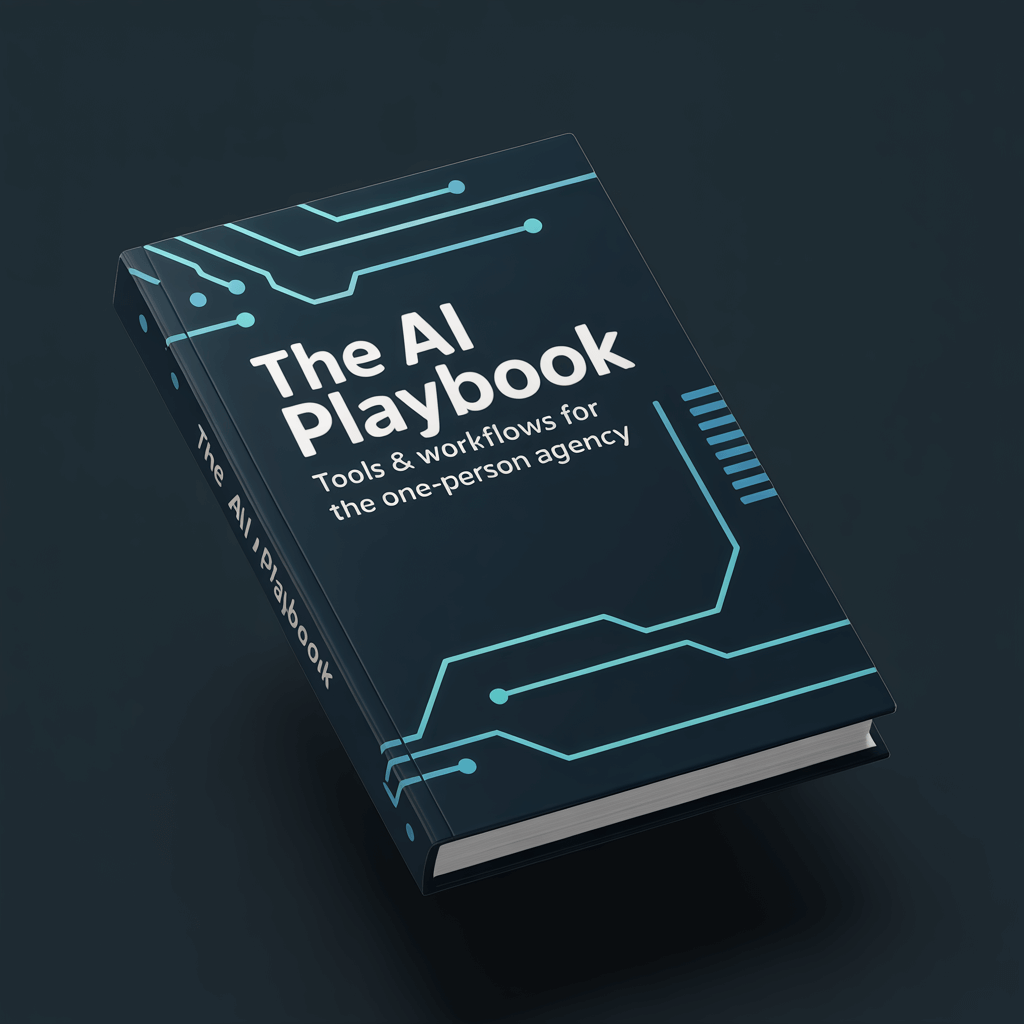
📥 FREE: THE AI PLAYBOOK
The exact tools and workflows I use to run a one-person agency. 25 years of marketing experience distilled into an actionable guide. Yours free.

AI & Digital Marketing Strategist
With over 25 years in digital marketing, e-commerce, sales, and international business, Jon Jones is a seasoned entrepreneur dedicated to empowering small businesses through innovative AI solutions. His journey began in investment banking on Wall Street, guiding companies through capital acquisition and complex markets, and has expanded to include expertise in web development, brand design, product development, and courses and training.
Fluent in Mandarin and with a rich foundation in both finance and tech, Jon launched JonJones.ai to provide accessible, transformative tools for small businesses to streamline operations, generate leads, and build sustainable growth. His mastery of AI, automation, and digital strategy has enabled numerous businesses to bridge the gap between traditional practices and modern technology, ensuring they thrive in today’s digital landscape.