
Search “ai marketing agency” today and you get two piles of results that never quite answer the question. One pile is agency homepages promising “AI-powered growth.” The other is listicles ranking ten tools you’ve never heard of. Neither tells you the thing you actually want to know: what does an AI marketing agency do differently, day to day, from the agency you already fired?
I run one. Not a slide deck about one — an actual operation where autonomous agents write the blog posts, schedule the social, and send the newsletters while I sleep in a different timezone. So this isn’t theory. In this guide I’ll show you the real workflow (which tasks are agent-run and which still need a human), what the results honestly look like, what a legit shop should charge for, and — the part nobody in the space wants to say out loud — when you should skip the agency entirely and just build the stack yourself.
What an AI Marketing Agency Actually Is (vs a Traditional One)

Let’s kill the buzzword first. A traditional marketing agency sells you human hours. You pay a retainer, and a team of people — strategists, writers, media buyers, designers — spends time on your account. The bottleneck is headcount. Want more output? Hire more people, raise the retainer.
An ai marketing agency, done right, sells you systems that produce output without proportional human hours. The deliverable isn’t “10 blog posts a month.” It’s a pipeline that produces those posts — researched, written, illustrated, published, and distributed — where a human touches the strategy and the edge cases, not the assembly line. The bottleneck moves from headcount to system design.
That distinction matters because most agencies slapping “AI” on the door are still selling human hours; they just use ChatGPT to write faster internally and pocket the margin. That’s not an AI marketing agency. That’s a normal agency with a productivity hack. The real version rebuilds the delivery model so the agents are the delivery. I’ve written before about building an agency where the agents do the delivery — that’s the structural line in the sand.
Quick gut check when you’re evaluating one: ask them what happens to their output if their headcount stays flat for a year. A traditional agency’s output flatlines. A real AI-native shop’s output keeps climbing because the systems compound. If they can’t answer that cleanly, you’re talking to a repackaged retainer.
The AI Marketing Workflow, Task by Task: Agent-Run vs Human-in-the-Loop

Here’s where the abstract definitions fall apart and the real work begins. Not everything should be automated, and anyone who tells you it should has never run this in production. The skill is knowing which tasks agents own outright and which need a human hand on the wheel.
Tasks agents run end-to-end
- Keyword and SERP research. Pull the queue, hit a SERP API, scrape the top-ranking pages, and summarize the content gap. Zero human input needed — this is pattern work at scale.
- Draft production. Long-form blog posts, social captions, newsletter copy. An agent with a good brief and brand-voice rules writes a better first draft than most junior hires, faster.
- Image and asset generation. Featured images, section graphics, social visuals — generated, compressed, and pushed to the CDN automatically.
- Scheduling and distribution. Posting to five social platforms at the right local time, queuing the newsletter, tagging the CRM. Pure plumbing, perfect for agents.
- Reporting. Pulling analytics, flagging what moved, queuing the next action. An agent does this every morning without being asked.
Tasks that stay human-in-the-loop
- Strategy and positioning. What angle owns the market? What’s the offer? An agent can execute a strategy brilliantly and pick a bad one confidently. That call stays human.
- Brand-risk moments. Anything that could commit the business — pricing, partnerships, public apologies, sensitive claims. My own agents are explicitly barred from making commitments; they escalate to me.
- Taste and the final 10%. The line between “fine” and “sharp” is judgment. A human reads the draft the agent produced and decides if it’s actually good.
- High-value 1:1 conversations. Sales calls, key-client relationships, the human stuff that closes deals.
The winning setup isn’t “AI does everything.” It’s a factory floor where agents run the line and a human runs quality control and direction. If you want to see how the same agent-vs-human split plays out in the sales function specifically, I broke it down in my piece on what an AI sales agent actually is.
A Real Autonomous Pipeline: Content → Social → Newsletter (With Receipts)

Enough principle. Here is a real pipeline — the one running this brand — so you can see what “the agents do the delivery” means concretely. The post you’re reading right now was produced by it.
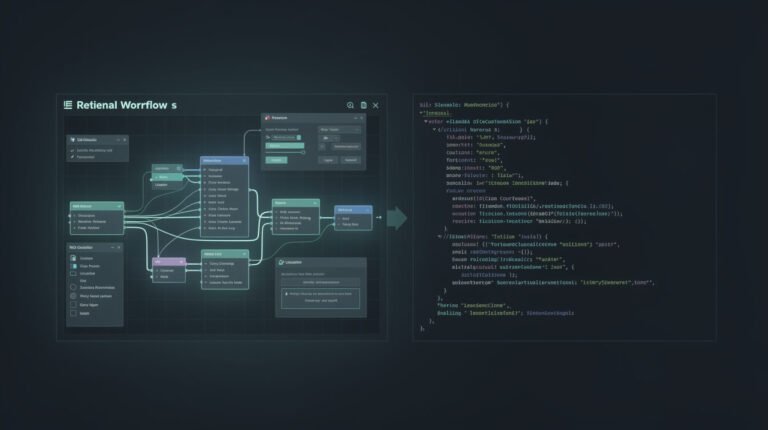
Every night, a scheduled agent wakes up in a container. It checks a refresh queue (pages losing rank get first priority), then pulls the next topic from a content calendar in Airtable. It runs live SERP research, scrapes the top competitors, identifies the gap, and writes a 2,800–3,200 word post in the brand voice. It generates a featured image and one graphic per section, compresses them, and pushes them to a CDN. It sets the SEO metadata, inserts the newsletter forms, publishes to WordPress, and logs the whole thing to a project tracker for me to review over coffee.
Then the distribution agents take over. One repurposes the post into platform-native social content — different copy and image ratios for Facebook, Instagram, Pinterest, TikTok, and the rest — and schedules it. Another drafts the newsletter. A separate agent mines relevant communities for conversations worth joining and queues drafts for review. None of this requires me to be awake.
What makes it a system and not a pile of scripts is the source of truth. Everything — the calendar, the keyword queue, the published log, the social queue — lives in one database. Each agent reads its instructions from there and writes its results back, so no agent steps on another and I can see the entire operation’s state on one screen. When something breaks, it fails loudly into a queue instead of silently skipping. That’s the unglamorous engineering that separates “I automated my blog” from “I run an autonomous marketing operation.” The tools are commodities; the orchestration is the moat.
The point of the receipts isn’t “look, robots.” It’s that the marginal cost of the next post, the next social set, the next newsletter is close to zero — so the output compounds instead of capping out at whatever a human team can grind through.
Social is where most people first try to automate and first get burned, because a generator that spits out captions isn’t a system. I wrote a whole teardown on why an AI social media post generator isn’t a system — the difference between a tool that produces text and a pipeline that actually publishes without you is the entire game.

Get the AI Playbook
The exact stack, prompts, and workflows I use to run an autonomous marketing pipeline solo. Free, no fluff — just the receipts.
What Results Actually Look Like (and the Vanity Metrics to Ignore)

This is the section agency sites skip, because honesty is bad for closing. So let me be honest.
An AI marketing pipeline does not produce overnight traffic. What it produces is consistency and volume that a solo human can’t sustain, and consistency is what SEO and social algorithms reward over months. The realistic curve is flat for the first 8–12 weeks while content indexes and compounds, then a steady climb as the library grows and internal links strengthen each other. Anyone promising a hockey stick in week two is selling you the hockey stick, not the results.
Metrics that actually matter
- Indexed, ranking pages over time. Is the library growing and earning impressions? That’s the compounding asset.
- Query growth in Search Console. More distinct queries surfacing your pages means you’re covering the topic space, not just one keyword.
- Email list growth and open rates. An owned audience is the only distribution you control. This is the real ROI line.
- Qualified inbound. Are the right people reaching out because the content did the pre-selling?
Vanity metrics to ignore
- Raw post count. “We published 200 posts” means nothing if none rank. Volume is an input, not a result.
- Impressions with no clicks. Ranking on page two for a fat keyword is a rounding error.
- Follower counts. Followers you can’t convert are decoration.
- AI-output volume dashboards. “The agent generated 4,000 words today” is an activity metric dressed up as an outcome.
If an agency reports the second list and dodges the first, that’s your signal. The whole advantage of an AI pipeline is that measurement is cheap and constant — there’s no excuse for hiding behind vanity numbers.

⚡ GET THE AI EDGE
Weekly AI tips that actually save you time and money. No fluff, no hype — just what works.
What a Legit AI Marketing Agency Should Charge For

Pricing in this space is a mess, so let’s clean it up. There are three defensible models, and one that should make you walk.
- Build fee (one-time). You pay to have the pipeline designed and stood up for your business — the calendar, the agents, the brand-voice rules, the integrations. This is real engineering work and it’s worth real money. Think of it like paying to build a factory, not to rent labor.
- Management retainer (ongoing). Someone owns the strategy, reviews the output, tunes the system, and handles the edge cases. This should be meaningfully lower than a traditional agency retainer, because the agents are doing the grind — you’re paying for direction and quality control, not headcount.
- Outcome or performance component. Tied to leads, pipeline, or revenue. Fair when the agency has real influence over the outcome and both sides define “outcome” honestly up front.
The model to walk away from: a fat monthly retainer priced like a traditional agency, justified by “but it’s AI.” If the agents make the work cheaper to produce, that saving should show up in your price, not just their margin. A real AI-native shop competes on the fact that it can deliver more for less — if their pricing looks identical to the 2019 agency down the street, the AI is a marketing label, not an operating model.
This is also the honest reason a lot of businesses are better off building than buying — which is exactly where we’re headed. If you do want a human to design and run the system for you, that’s the kind of GTM-acceleration and done-for-you build work I do; the rest of this guide will help you decide whether you even need it. For a deeper checklist on vetting a shop, I put together a buyer’s checklist for choosing the best AI agency.
Build It Yourself: The Minimum Stack a Solopreneur Can Run

Here’s the part no agency will tell you: a solopreneur or small team can run a shockingly capable version of this themselves. You won’t match a well-engineered fleet, but you’ll get 70% of the value for a rounding-error cost. Here’s the minimum viable stack.
- A capable LLM with agentic ability — the brain that researches, writes, and can actually run tools, not just chat.
- A database as source of truth — a simple Airtable base for your content calendar, keyword queue, and publish log. This is the spine everything hangs off.
- Your publishing platform’s API — WordPress, Ghost, whatever. If it has a REST API, an agent can publish to it.
- An image pipeline — a generation model plus compression, so every post ships with visuals.
- A scheduler — a social scheduling API and a cron job. This turns “I’ll post later” into “it posts whether I remember or not.”
- An email tool — any list platform with an API for the newsletter.
The hard part isn’t the tools — it’s the orchestration and the brand rules. What order do the steps run in? What does the agent do when the queue is empty? How does it stay on-voice and avoid making claims it shouldn’t? That’s the actual work, and it’s why “build vs buy” is a real decision and not a foregone conclusion. If you’re still fuzzy on what the “agency” wrapper even means around a stack like this, my honest definition of an AI agency untangles it.
Start smaller than you think. Automate one workflow — say, blog research and drafting — end to end before you touch social or email. A single reliable agent beats five half-wired ones that need babysitting.
Frequently Asked Questions About AI Marketing Agencies
What does an AI marketing agency actually do?
A real ai marketing agency designs and runs systems that produce marketing output — content, social, email, reporting — with agents doing the repetitive execution and humans owning strategy, taste, and edge cases. The deliverable is a working pipeline, not a set number of human hours. If a shop just uses AI to write faster internally while selling you the same retainer, it’s a traditional agency with a productivity hack, not an AI-native one.
Is an AI marketing agency cheaper than a traditional one?
It should be, for the same volume of output — because the agents lower the marginal cost of producing each asset. The honest version passes some of that saving to you. Be suspicious of any agency charging traditional-retainer prices “because it’s AI”; if the AI is real, it shows up in your invoice, not just their margin.
Can I replace my marketing team with AI?
No — and anyone who says yes hasn’t run this in production. You can replace a large chunk of the repetitive execution (research, drafting, scheduling, distribution, reporting). You cannot replace strategy, positioning, taste, brand-risk judgment, and high-value relationships. The best setups shrink the team and aim its remaining human hours at the things machines are bad at.
Should I hire an AI marketing agency or build the stack myself?
Build it if you’re technical enough to wire APIs, your budget is tight, and you want to own marketing as a core capability. Hire one if your time is worth more than the build curve, you need results faster than you can learn, or your setup has real complexity. Either way, someone still has to own the thinking — the agents only handle the grind.
How long before an AI marketing pipeline shows results?
Expect roughly 8–12 weeks of flat-looking effort while content indexes and compounds, then a steady climb as the library grows and internal links reinforce each other. The advantage isn’t speed to first win — it’s consistency and volume no solo human can sustain, which is exactly what search and social algorithms reward over time.
Hire vs Build: An Honest Decision Framework
So which is it for you? Here’s the framework I’d actually use, stripped of sales incentive.
Build it yourself if: you (or someone on your team) are technical enough to wire APIs and comfortable iterating, your budget is tight, your needs are relatively standard, and you see marketing as a core capability worth owning. The build is a weekend-project-that-becomes-an-asset, and every improvement compounds under your control.
Hire an AI marketing agency if: your time is worth more than the build curve, you need results faster than your learning speed allows, your setup has real complexity (multiple brands, regulated claims, heavy integrations), or you simply want an operator accountable for the outcome. You’re paying to skip the mistakes and get a tuned system on day one.
The trap to avoid either way: treating “AI marketing” as a magic button. Whether you build or buy, someone still has to own strategy, taste, and the edge cases. The agents handle the grind. They don’t handle the thinking. Get that division right and an AI marketing agency — or the one you build in your own container — becomes the highest-leverage marketing decision you’ll make this year.
My honest bias, since you asked: start by building the smallest useful piece yourself. You’ll learn what’s actually hard, and you’ll be a far sharper buyer if you do eventually hire. The worst outcome isn’t building or buying — it’s paying retainer prices for a system you never understood.
Get the AI Playbook
The exact stack, prompts, and workflows I use to run an autonomous marketing pipeline solo. Free, no fluff — just the receipts.
📥 FREE: THE AI PLAYBOOK
The exact tools and workflows I use to run a one-person agency. 25 years of marketing experience distilled into an actionable guide. Yours free.

AI & Digital Marketing Strategist
With over 25 years in digital marketing, e-commerce, sales, and international business, Jon Jones is a seasoned entrepreneur dedicated to empowering small businesses through innovative AI solutions. His journey began in investment banking on Wall Street, guiding companies through capital acquisition and complex markets, and has expanded to include expertise in web development, brand design, product development, and courses and training.
Fluent in Mandarin and with a rich foundation in both finance and tech, Jon launched JonJones.ai to provide accessible, transformative tools for small businesses to streamline operations, generate leads, and build sustainable growth. His mastery of AI, automation, and digital strategy has enabled numerous businesses to bridge the gap between traditional practices and modern technology, ensuring they thrive in today’s digital landscape.