If you’re searching for how to use Claude Code, every guide you’ll find is written for software engineers. They talk about Git hooks, VS Code extensions, and subagent configurations. This one is different. This is for business owners who want AI that actually does the work — not AI that just talks about doing the work. I run six projects simultaneously from one terminal. No coding degree. Twenty-five years of marketing experience and an AI that takes action.

The Desktop App Is a Toy
I’m going to say something that will upset a lot of people: the AI you’re using is a toy.
Not the AI itself — the AI is extraordinary. But the way you’re using it? A chat window in your browser where you type a question and get a polished paragraph back? That’s a fraction of what this technology can actually do. It’s like buying a Ferrari and only using it to sit in your driveway with the AC on.
I know this because I spent months using AI the same way everyone else does. Open ChatGPT. Ask a question. Copy the answer. Paste it somewhere. Open ChatGPT again. Repeat.
Then I discovered what happens when you take the same AI out of the browser and connect it to your actual business systems. Everything changed.
Right now, at this moment, I’m simultaneously running six projects from a single terminal window. Not switching between six different SaaS tools. Not copy-pasting between six browser tabs. One terminal, one AI, six businesses — including the blog post you’re reading right now.
That’s not hype. That’s Tuesday.
What Claude Code Actually Is (The Business Version)
Every guide on how to use Claude Code is written for software engineers. They talk about Git hooks and VS Code extensions and subagent configurations. That’s fine if you’re a developer. Most of you aren’t.
Here’s what Claude Code actually is in plain English: it’s an AI that can do things, not just say things.
When you use Claude or ChatGPT in a browser, the AI lives in a sandbox. It can’t see your files. It can’t touch your website. It can’t access your data. All it can do is read your message and write a response. You’re the middleman for everything — copying text in, copying answers out, manually doing whatever the AI suggests.
Claude Code removes the middleman. It runs in your terminal — that black window with the blinking cursor that you’ve probably seen in movies and assumed was only for hackers. When Claude Code is running in your terminal, it can:
- Read and edit files on your computer directly
- Run scripts that automate repetitive tasks
- Call APIs to connect with your business tools
- Publish content to your website, social media, and email platforms
- Process data from spreadsheets, PDFs, and databases
- Build automations that run whenever you need them
The difference isn’t subtle. Browser AI is a consultant who gives you advice. Claude Code is an employee who does the work.
Think about how you currently use AI. You probably open ChatGPT, ask it to write an email, copy the result, open Gmail, paste it in, make some edits, and send it. Seven steps for one email. With Claude Code, you’d say “draft a follow-up email to the leads who downloaded our pricing guide last week and send it through our email system.” One step. And it actually sends the email — you don’t have to copy-paste anything.
That’s the difference between AI that talks and AI that works.
What I Actually Built With It
I’m not writing about this theoretically. Here’s what I actually use Claude Code for, every day, across six simultaneous projects:
A complete blog production pipeline. I give Claude Code a keyword. It researches the competition by analyzing what’s currently ranking on Google, identifies content gaps, drafts a 2,000+ word article in my voice, generates a featured image with AI, formats the post for WordPress with proper heading structure, sets up Rank Math SEO metadata — focus keyword, meta title, meta description — and publishes it as a draft. The article you’re reading went through this exact pipeline. So did my previous post on the best AI tools for small business. From keyword research to published draft, start to finish, in one terminal session.
Social media across 10 platforms simultaneously. I built something called the Social Launch Pad. One command publishes optimized content to Twitter, Facebook, Instagram, LinkedIn, Pinterest, Threads, Bluesky, Google Business Profile, Medium, and Substack. Each version is automatically formatted for that platform’s character limits, hashtag conventions, and audience expectations. Instagram gets first-comment hashtags. Pinterest gets a board assignment and pin title. LinkedIn gets a professional tone. What used to take an entire morning of logging into ten different platforms takes 90 seconds.
Lead generation at scale. For a client project, Claude Code helped me scrape, verify, and organize over 7,000 business leads with valid email addresses. It scraped Google Maps for businesses matching specific criteria, ran every email address through two separate verification services to ensure deliverability, categorized leads into priority tiers based on business size and relevance, and organized everything into Airtable with clean fields ready for outreach campaigns. Work that would have taken a research team three months took an afternoon.
E-commerce product creation. AI-generated product designs get automatically mocked up onto merchandise templates, uploaded to WooCommerce with professional descriptions, proper pricing for each size variant, SEO-optimized categories and tags, and gallery images — all automated. Products that used to take two hours of manual work in WooCommerce take about five minutes. I’ve launched dozens of products this way.
Self-hosted newsletter infrastructure. Instead of paying Mailchimp $300 a month, Claude Code helped me set up my own email marketing platform on my own servers with Amazon SES. It configured SPF, DKIM, and DMARC records for deliverability, built HTML email templates, and created the subscriber management system. Total ongoing cost: about $1 per thousand emails sent.
This article. I told Claude Code my target keyword. It pulled search volume data, scraped the top-ranking articles, identified that every competitor was writing for developers (not business owners), generated an outline exploiting that gap, and wrote the draft you’re reading. When I’m done reviewing, it’ll publish to WordPress, generate social media versions for all my platforms, and cross-post to Medium and Substack. One terminal session. One tool.
None of this requires a computer science degree. I have 25 years of marketing experience and precisely zero years of formal programming education. Claude Code writes the scripts. I tell it what I want to accomplish. We figure out the technical implementation together in plain English conversation.
How to Set Up Claude Code (30 Minutes or Less)
I wrote a detailed setup guide in my previous post, The Best AI Tool for Small Business. Here’s the condensed version.
Mac or Linux: Open your terminal and run:
curl -fsSL https://claude.ai/install.sh | bashDone. Type claude to start.
Windows (most of you): This takes about 30 minutes, and every minute is worth it.
- Install WSL. Open PowerShell as Administrator and run
wsl --install. Restart your computer. This gives you a Linux terminal inside Windows — nothing about your regular Windows setup changes. - Install VS Code. Download it free from code.visualstudio.com. Add the “WSL” extension so VS Code can talk to your Linux environment. Think of VS Code as your window into the terminal world — it looks like a normal Windows app, but it’s connected to the environment where Claude Code runs.
- Install Claude Code. Open your WSL terminal (inside VS Code, press Ctrl+` and select the WSL profile) and run:
curl -fsSL https://claude.ai/install.sh | bash - Launch. Navigate to any folder where you want to work and type
claude. Authenticate with your Anthropic account.
That’s it. You now have the same tool I use to run six businesses.
If the idea of an AI having access to your file system makes you nervous, install Docker Desktop. It creates isolated containers where Claude Code can work without touching anything outside that sandbox. Full AI capability with a safety boundary.
For the full step-by-step walkthrough with troubleshooting, read the complete setup guide here.
“But I’m Not Technical” — You Don’t Need to Be
I know what you’re thinking. Terminal? Command line? That’s for programmers.
Let me be direct: I thought the same thing. I’m a marketing guy. I’ve spent my career in WordPress dashboards and Google Analytics, not writing code. The terminal was something I associated with the IT department, not with running a business.
Here’s what changed my mind: Claude Code speaks English, not code.
You don’t type commands. You type sentences. “Create a content calendar for my business.” “Analyze this spreadsheet and find trends.” “Write a blog post about our new service and publish it to WordPress.” You describe what you want in plain language, and Claude Code figures out the technical implementation.

⚡ GET THE AI EDGE
Weekly AI tips that actually save you time and money. No fluff, no hype — just what works.
Yes, it runs in a terminal. But the terminal is just a window. What matters is that you’re having a conversation with an AI that can actually take action on what you ask for. The interface looks different from what you’re used to — there’s no colorful dashboard, no drag-and-drop interface. There’s just a cursor and your words.
Once you get past the aesthetics, you realize the terminal is actually simpler than most SaaS tools. There are no menus to navigate, no settings to configure, no tutorials to watch. You type what you want. It happens. That’s it.
The 25-year marketing veteran writing this article figured it out. If I can do it, you can do it.

Your First Real Automation: A 30-Day Content Calendar in 60 Seconds
Forget “Hello World.” Here’s an automation that will save you actual time on your first day.
Open your terminal, type claude, and then type something like this:
I own a dog grooming business called Paws & Claws in Austin, Texas.
Create a 30-day social media content calendar with posts for Instagram,
Facebook, and LinkedIn. Include post copy, relevant hashtags, and best
posting times for each platform. Save it as a CSV file I can open in
Excel called content-calendar.csv.
That’s it. Claude Code will think about your business, industry, and target audience, generate 30 days of platform-specific posts with appropriate hashtags and calls-to-action, format everything into a clean spreadsheet, and save the file directly to your computer.
When it’s done, you’ll have a CSV file sitting right there on your machine. Open it in Excel or Google Sheets. A month of content, ready to go.
No SaaS subscription. No content calendar tool. No $50/month social media planner. Just you, a terminal, and an AI that actually does the work instead of just talking about it.
Want to take it further? Try these follow-up prompts in the same session:
- “Now add a column for image descriptions I can use for AI image generation”
- “Create a separate email newsletter plan that complements this social calendar”
- “Write the full post copy for week one — make each one ready to publish”
Your Second Automation: Turn a Messy Spreadsheet Into Actionable Insights
Every business owner has one. That spreadsheet of sales data, customer feedback, or transaction records that you’ve been meaning to analyze for months. The one sitting in a folder called “get to this later.”
Point Claude Code at it:
Read the file sales-data-2025.csv in my Documents folder. Analyze it
and tell me: What are my top 5 selling products? Which month had the
highest revenue? Are there any trends I should know about? Create a
summary report and save it as a PDF.
Claude Code opens the file directly — no uploading to a website, no pasting data into a chat window, no worrying about data privacy because everything stays on your machine. It reads your actual file, runs the calculations, finds the patterns, and generates a report you can share with your team or your accountant.
Try asking follow-up questions: “Which customers haven’t ordered in the last 90 days? Create a re-engagement email template for them.” Now you’ve gone from data analysis to actionable marketing in two prompts.
This is what I mean by AI that works, not AI that talks. The browser version would have given you a nice paragraph about analyzing sales data. Claude Code actually analyzed the data.
Why This Changes Everything for Small Business
Let’s talk about money.
A typical small business spends $200 to $500 per month on AI-powered marketing tools — and that’s being conservative. Email marketing with AI features, social media scheduling with AI, writing assistants, chatbots, analytics platforms. Each one does one thing, each requires its own login and learning curve, and each is fundamentally just a wrapper around the same AI models you can access directly.
Claude Code with a Pro subscription costs $20 per month. If you use the API heavily, you might spend $120 to $180 per month — and that covers unlimited use cases, not just one.
The content calendar automation we just walked through? That replaces a social media scheduling tool. The blog pipeline I described? That replaces a writing assistant, a content management plugin, and a keyword research tool. The lead generation system? That replaces prospecting software that charges per lead. The data analysis? That replaces a business intelligence dashboard.
But it’s not just about cost. It’s about capability. For the first time, a solo business owner has access to the same automation capabilities that Fortune 500 companies spent millions building internally. The same AI models. The same API access. The same ability to build custom pipelines that do exactly what your business needs — not what some SaaS company decided to ship as a feature.
The playing field isn’t leveling. It’s already level. Most small businesses just haven’t realized it yet.
What Happens After Your First Session
Here’s what I’ve seen happen with business owners who try Claude Code for the first time.
Day one, they generate a content calendar or analyze a spreadsheet. They’re impressed but skeptical — they could have done this in ChatGPT, right? Maybe. But then they notice the file sitting on their computer. They didn’t copy-paste anything. The AI just… did it.
Day two, they try something bigger. “Can you read all the reviews of my business on Google and tell me what customers complain about most?” Claude Code scrapes the reviews, categorizes the feedback, and generates a prioritized list of issues with suggested responses. That would have taken hours of reading and note-taking.
By week two, they’re asking Claude Code to build things they never would have attempted: automated email sequences triggered by customer behavior, weekly reports that pull data from multiple sources, a system that monitors their competitors’ websites for pricing changes.
By month two, they can’t imagine going back. The browser chatbot feels like sending a letter when you could make a phone call. The tools they used to pay for feel like paying someone to do something they can now do in 60 seconds.
This is the trajectory. It starts with a content calendar and ends with you running your business differently than you ever thought possible.
Stop Watching AI Demos. Start Building.
You’ve seen the LinkedIn posts. The Twitter threads. The YouTube videos with thumbnails showing someone’s shocked face next to “THIS AI TOOL CHANGED EVERYTHING.”
None of that matters until you open a terminal and type claude.
The gap between knowing about AI and using AI is exactly one action: installing Claude Code and giving it your first real task. Not a test prompt. Not “write me a poem.” A real business task that you’d otherwise spend an hour doing manually.
Give it your messiest spreadsheet. Point it at your most neglected marketing channel. Ask it to build the automation you’ve been meaning to set up for six months. Tell it about your business and let it show you what’s possible.
I’m building this stuff in public. Every week on jonjones.ai, I break down the actual systems, the actual automations, and the actual results — not theory, not projections, not “10 ways AI could maybe help your business someday.” If you want to see what AI can really do for a small business when you take it out of the sandbox, follow along.
The setup takes 30 minutes. Your first automation takes 60 seconds. And by the end of that first session, you’ll understand why the desktop app was always a toy.
Open a terminal. Type claude. Start building.
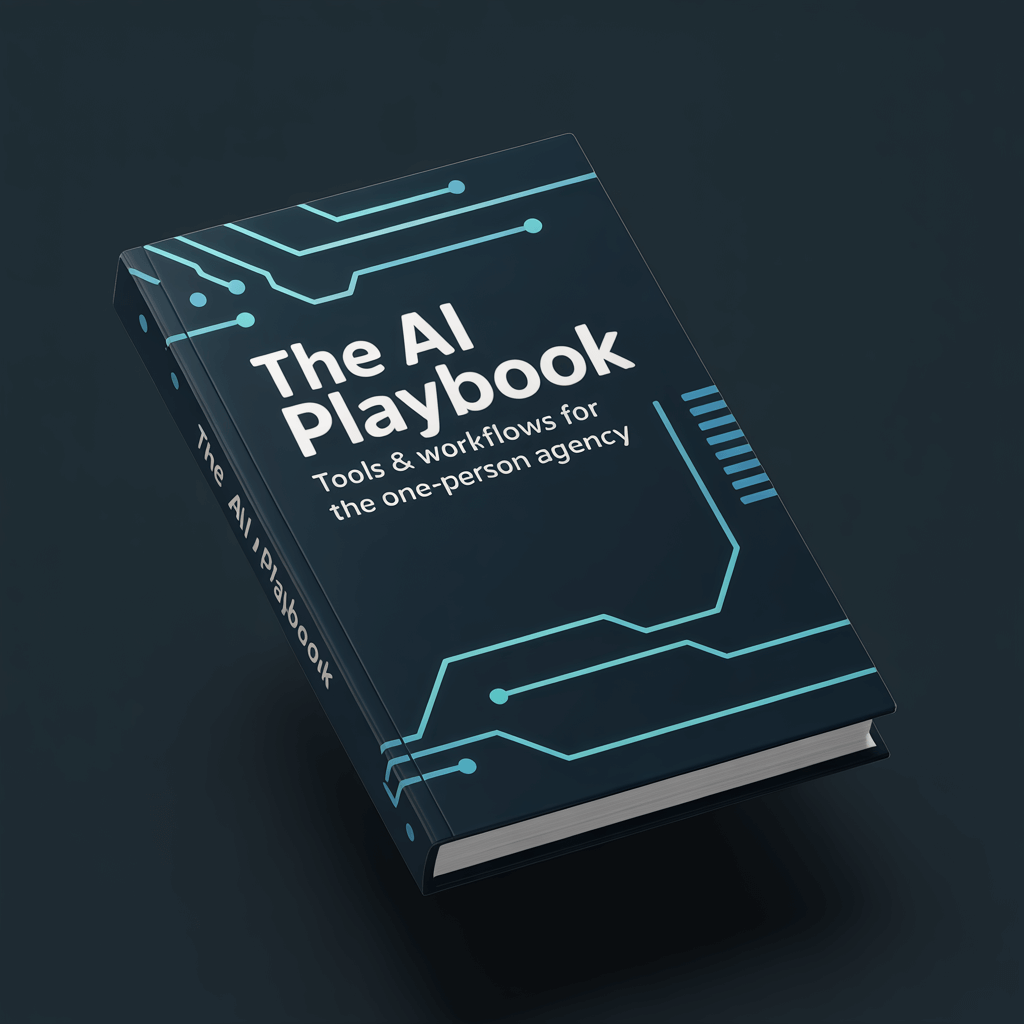
📥 FREE: THE AI PLAYBOOK
The exact tools and workflows I use to run a one-person agency. 25 years of marketing experience distilled into an actionable guide. Yours free.

AI & Digital Marketing Strategist
With over 25 years in digital marketing, e-commerce, sales, and international business, Jon Jones is a seasoned entrepreneur dedicated to empowering small businesses through innovative AI solutions. His journey began in investment banking on Wall Street, guiding companies through capital acquisition and complex markets, and has expanded to include expertise in web development, brand design, product development, and courses and training.
Fluent in Mandarin and with a rich foundation in both finance and tech, Jon launched JonJones.ai to provide accessible, transformative tools for small businesses to streamline operations, generate leads, and build sustainable growth. His mastery of AI, automation, and digital strategy has enabled numerous businesses to bridge the gap between traditional practices and modern technology, ensuring they thrive in today’s digital landscape.