Here’s the phrase that sends most people down the wrong rabbit hole: self-hosted AI server. Type it into Google and you’ll get a wall of guides about GPUs, VRAM, and which open-weight model to cram onto a graphics card. All useful. All slightly beside the point if what you actually want is for AI to run something for you — a business, a workflow, a fleet of tasks that happen while you sleep.
I run more than ten autonomous brands from a single self-hosted AI server. Not as a demo. As the actual thing that pays. And the surprising part is how little of it is about hosting a model at all. This is the operator’s guide to what a self-hosted AI server really is in 2026, what it costs, and — the question nobody in the search results answers honestly — whether you even need one.
What a self-hosted AI server actually means in 2026
“Self-hosted AI server” gets used for two completely different jobs, and conflating them is why so many people overspend on hardware they never needed.
Meaning one: hosting the model. You run an open-weight large language model — Llama, Mistral, Qwen, DeepSeek — on your own hardware instead of calling someone else’s API. This is what most guides mean. The whole conversation becomes GPUs, VRAM, and quantization, because a capable model needs serious silicon to generate tokens fast enough to be usable.
Meaning two: hosting the runtime. You run the software that orchestrates AI — the agents, workflows, schedulers, and integrations that actually do work — on a server you control. The model can still live behind an API. What you’re self-hosting is the machinery that decides what to ask, when, and what to do with the answer.
Both are legitimately “a self-hosted AI server.” But they solve different problems. Meaning one is about data sovereignty and cost-per-token at scale. Meaning two is about owning the automation that runs your business so it isn’t trapped inside a no-code tool’s monthly plan. I live almost entirely in meaning two, and I’d bet most solopreneurs reading this should too. Here’s why.
Do you actually need to self-host the model?
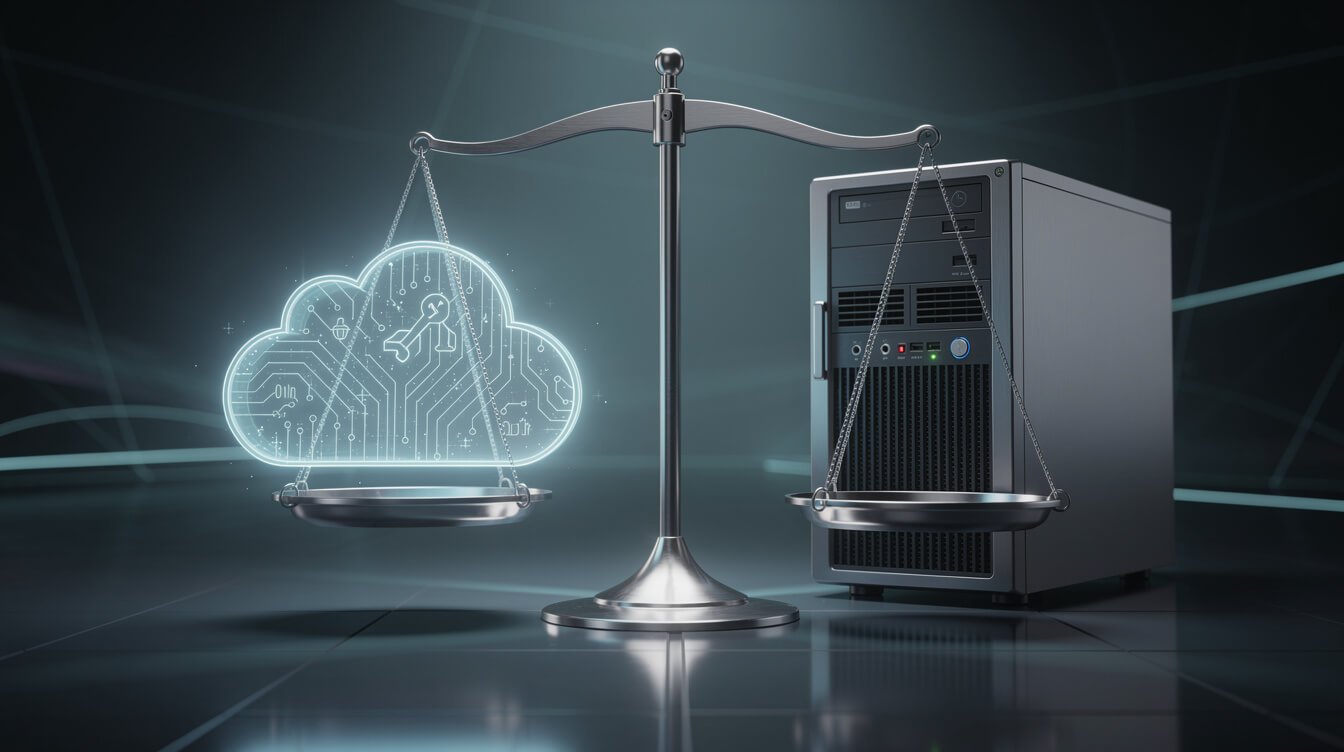
Short version: probably not. And I say that as someone who self-hosts nearly everything else.
Self-hosting the model makes real sense in a narrow set of cases:
- Hard data residency rules. Regulated data (health, legal, finance) that genuinely cannot leave your infrastructure — GDPR, HIPAA, and friends.
- Enormous, steady token volume. If you’re burning millions of tokens a day on a predictable workload, owning the hardware can beat per-token API pricing.
- Deep customization. Fine-tuning on proprietary data where you need the weights in your control.
Run the numbers before you buy anything. Say you need a million tokens of solid output a day. Against a hosted API that’s a modest, predictable monthly bill. To match that quality locally you’d need serious GPU hardware, and even then you’re maintaining a machine, patching drivers, and paying for electricity — for a model that’s usually a notch behind the best hosted ones. The break-even point where owning silicon wins is much further out than most people guess, and it moves further every time hosted prices drop.
For everyone else — and that’s most solopreneurs and small teams — the honest math is unforgiving. A frontier-class API call costs fractions of a cent. A GPU box capable of running a comparably smart model costs thousands up front, draws power around the clock, and still won’t match the quality of the best hosted models. You’d be spending real money to get a worse brain that you now also have to babysit.
我的經驗法則是: self-host the model only when privacy or scale forces your hand. Otherwise, rent the intelligence and self-host the thing that’s genuinely yours — the automation. If you’re weighing tools at this layer, my breakdown of n8n alternatives for operators covers where the orchestration options actually differ.
What I self-host instead: the agent runtime
Here’s the receipt. My self-hosted AI server doesn’t run a single large language model. It runs a fleet of agents — each one a containerized Claude Code process on a schedule, each one assigned to a brand and a job.
Concretely, on one box:
- Ten-plus brand containers, isolated from each other, each with its own credentials, memory files, and skill set.
- A cron schedule that wakes each agent for a specific task — write today’s blog post, check email, mine social conversations, run outreach — then puts it back to sleep.
- Every run leaves artifacts: container logs, published posts, scheduled social, newsletter sends. Real output I can audit the next morning.
A real day on the self-hosted AI server
To make it concrete, here is a compressed version of what one box does in a day. At midnight a content agent wakes, pulls the next keyword from a queue, researches the live search results, writes and publishes a full post with images, then logs the result and goes back to sleep. Mid-morning a social agent repurposes that post across platforms. Around lunch another agent mines relevant online conversations for genuinely useful places to contribute. In the afternoon an outreach agent adds and verifies leads. Evening brings a second social pass and an email-triage run. Each of these is a separate container, a separate schedule, a separate job — and none of them need me sitting there.
Multiply that by ten-plus brands and you would assume it needs a data center. It does not. It needs one well-organized server, disciplined scheduling, and agents that log everything so I can trust the output without watching it happen.
The intelligence comes from a hosted model over an API. The orchestration — the part that turns “a smart model” into “a business that runs itself” — is what lives on my server. That’s the distinction the model-centric guides miss entirely. I’ve written the full teardown of what actually runs my 10-brand business in production if you want the deep version, and 運作一個完全自主的人工智慧代理究竟需要哪些條件 for the honest failure modes.
Why self-host this layer instead of paying for a hosted automation platform? Because when your entire operation lives inside someone else’s product, you inherit their pricing, their rate limits, their outages, and their roadmap. On my own server, an agent is just code and a schedule. I can change anything, at any time, for the cost of the VPS.

Want the shortcut? Grab the AI Playbook.
The exact patterns I use to run autonomous businesses on cheap infrastructure — sent straight to your inbox. No fluff, just the moves that work.
What a self-hosted AI server really costs
This is where the two meanings split hardest on your wallet.
If you self-host the model: you’re buying or renting a GPU. A usable local setup starts with a consumer GPU with 16–24GB of VRAM (think low four figures to build) and climbs fast toward enterprise cards if you want frontier-level quality. Add power, cooling, and the hours you’ll spend maintaining it. It’s a capital project.
If you self-host the runtime (my setup): you need a plain Linux server. My entire agent fleet runs on a mid-tier VPS that costs less per month than a couple of streaming subscriptions. No GPU. The heavy thinking happens on the model provider’s hardware; my server just runs containers, schedules jobs, and moves data. The only variable cost is API usage, which scales with what you actually do.
Here is a rough monthly shape for the runtime approach, so the “cheap” claim is not hand-waving. The VPS itself is a fixed low cost — often in the tens of dollars a month for a machine that comfortably runs a handful of containers. On top of that sits API usage, which is genuinely variable: a few dollars for a light workload, more as you add agents and volume. There is no per-seat tax, no per-workflow surcharge, and no surprise hike when a SaaS vendor rewrites its pricing. You pay for the compute you rent and the tokens you use — nothing else.
That’s the punchline the hardware guides bury: for automation, a self-hosted AI server is cheap. A small VPS, Docker, and a model API is enough to run a serious operation. I broke down the ongoing numbers in 運行一個人工智慧代理 24/7 的實際成本是多少? — spoiler, it’s dominated by API spend, not infrastructure.

⚡ 取得人工智慧優勢
每週提供真正省時省錢的AI小技巧。沒有廢話,沒有誇大其詞——只有切實有效的方法。.
If you’d rather not assemble any of this yourself, this is precisely the kind of build I do for clients — an autonomous system running on infrastructure you own, handed over working. You can 預約自動化策略會議 and we’ll map what your version should actually run.
The stack: Docker, scheduling, and keeping agents alive
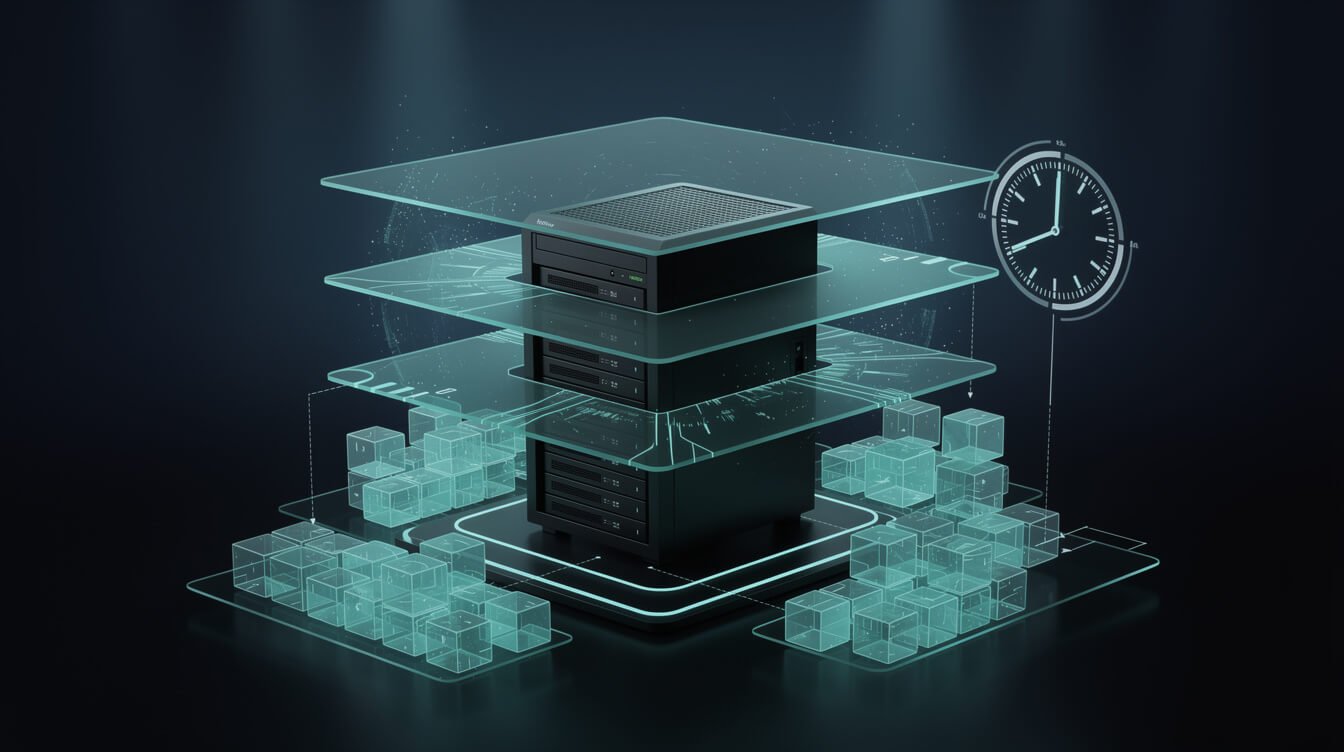
You don’t need anything exotic. The stack that runs my fleet is boring on purpose, and boring is what survives being left alone.
- A Linux VPS as the base — the always-on machine.
- Docker to isolate each brand into its own container, so one agent’s mess can’t touch another’s. Containers are the single biggest reliability upgrade you can make; I explain why in my note on the free tool that keeps ten AI businesses from colliding.
- Cron (or a scheduler) to trigger each agent at its assigned time. This is the heartbeat. No schedule, no autonomy — just a program waiting for you to run it.
- The agent runtime — in my case Claude Code — reading a set of instructions and skills, executing, and logging what it did.
- Environment variables for every credential, injected at container start. Secrets never live in code.
The mental model: the VPS is the building, Docker gives each business its own locked room, cron is the alarm clock, and the agent is the worker who shows up, does one job well, and clocks out. Add a model API for the thinking and you have a self-hosted AI server that runs work without you in the loop.
Security and reliability for an always-on AI server
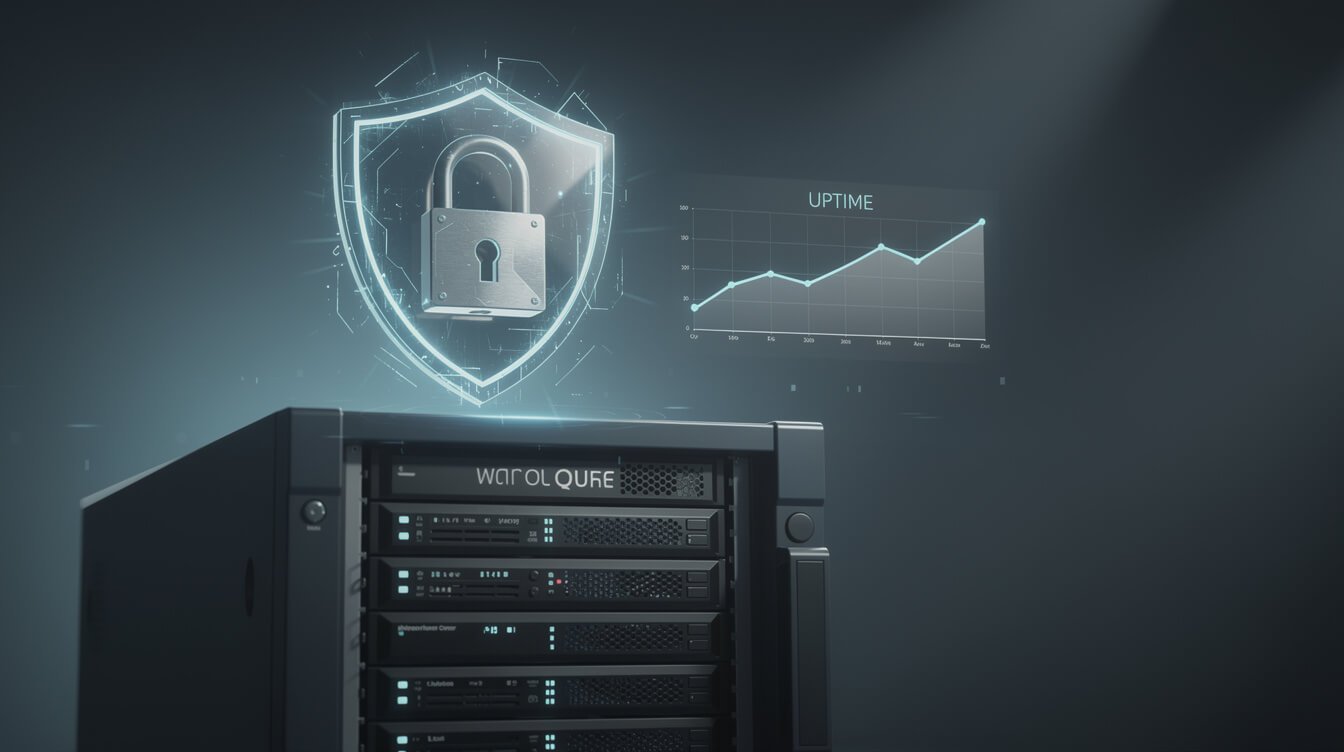
A server that runs your business unattended is a server that can hurt you unattended. This is the part hobby tutorials skip, so treat it as non-negotiable.
Lock the front door
SSH keys only, no password login. A firewall that exposes nothing you don’t explicitly need. Keep the OS patched. If a service doesn’t need to face the internet, don’t let it.
Contain the blast radius
This is where Docker earns its keep again: each agent runs with only the credentials for its job. If one container is compromised or an agent misbehaves, it can’t reach into the others. Least privilege isn’t paranoia — it’s what lets you sleep while the machine works.
Make it recoverable
Autonomy without idempotency is a liability. If an agent reruns after a crash, it must not double-post, double-send, or double-charge. I keep dedup checks and run-logs so a repeated run is a no-op, a habit I unpack in keeping an AI agent from doing the same job twice. Back up your memory files and configs, and have a one-command way to rebuild a container from scratch.
Watch it
Every one of my agents ends its run with an alert — success, skip, or failure — to a channel I actually read. A self-hosted AI server you can’t observe isn’t autonomous; it’s just unsupervised.
Is a self-hosted AI server worth it for a solopreneur or SMB?
Here’s the honest decision framework, no vendor spin.
Self-host the model if: you have strict data-residency requirements, genuinely massive and steady token volume, or a fine-tuning need that demands the weights. Otherwise you’re buying a slower brain and a second job.
Self-host the runtime if: you want to own your automation, escape per-seat SaaS pricing, run things on your own schedule, and build something that compounds instead of renting it monthly. For a solopreneur or small team, this is almost always the right layer to control — and it’s cheap enough that the barrier is knowledge, not money.
Stay fully managed if: you have one or two simple workflows, no appetite for a terminal, and your time is better spent elsewhere. There’s no shame in it. Self-hosting is leverage, not a virtue.
The trap to avoid is thinking you need meaning one (a GPU rig) when your actual goal is meaning two (work that runs itself). Nine times out of ten, a small VPS and a model API get you there for pocket change.
Frequently asked questions
Do I need a GPU for a self-hosted AI server?
Only if you’re hosting the model yourself. If you run agents and workflows against a hosted model API — the setup I recommend for most people — a plain CPU VPS with no GPU is plenty.
Is self-hosting AI cheaper than paying for SaaS tools?
For the automation layer, usually yes. A small VPS plus API usage often costs less than stacking several per-seat no-code subscriptions, and it doesn’t get more expensive every time you add a workflow.
Is a self-hosted AI server safe to leave running unattended?
Yes, if you harden it: SSH keys, a tight firewall, per-agent least-privilege credentials, idempotent jobs, backups, and alerting on every run. Unattended is fine; unobserved is not.
Can I run a self-hosted AI server on a Raspberry Pi or old laptop?
For a light agent runtime against a hosted model, absolutely — the workload is modest. For hosting a capable model locally, no; that needs a serious GPU. Match the hardware to which “self-hosted AI server” you’re actually building.
Should I self-host the model or the runtime?
For most solopreneurs and small teams, the runtime. Rent the model’s intelligence over an API and put your energy into owning the automation — the agents, schedules, and integrations that actually produce work. Self-host the model only when privacy rules or genuine scale make it unavoidable.
What’s the simplest way to start?
Rent a small Linux VPS, install Docker, put one agent in one container on a schedule, and give it a single job — like drafting a daily post or triaging your inbox. Prove one loop works, then add the next.
最後想說的
The most useful thing I can tell you about a self-hosted AI server is that the popular version of the question — which GPU, which model — is the wrong one for most people. The intelligence is a commodity you can rent by the token. The orchestration — the agents, the schedule, the containers, the receipts — is the durable asset, and it runs happily on a cheap box you fully control.
Start small. One VPS, one container, one agent doing one job on a schedule. Get that loop running and observable, then let it compound. That’s not a science project; it’s the exact pattern running more than ten businesses for me right now, quietly, while I write this. Own the runtime, rent the brain, and let the server do the shift work.
Steal my autonomous-operator playbook
Join the operators building AI systems that actually run themselves. One practical email, real receipts, zero hype.
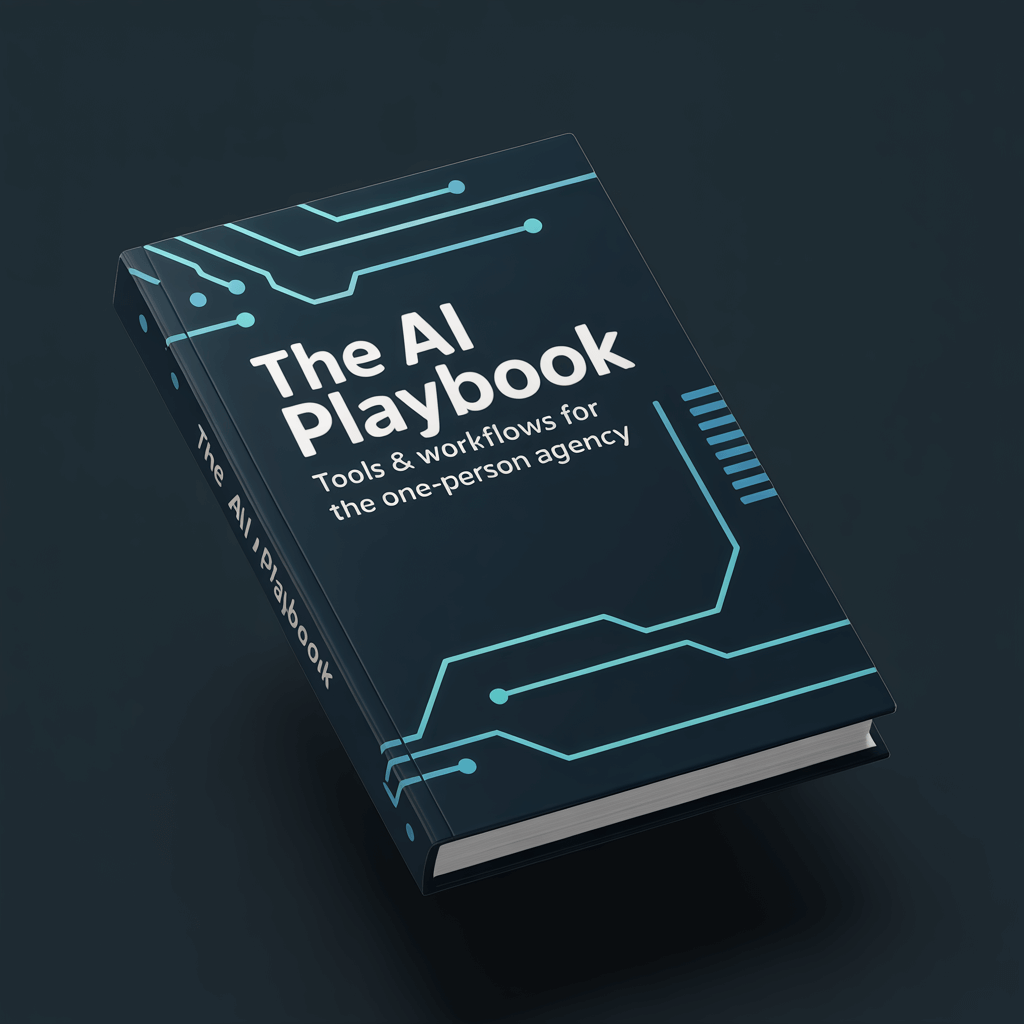
📥 免費:《人工智慧劇本》
我用來經營一人代理公司的所有工具和工作流程。 25 年的行銷經驗濃縮成一份實用指南。免費贈送。.

人工智慧與數位行銷策略師
Jon Jones擁有超過25年的數位行銷、電子商務、銷售和國際商務經驗,是一位資深企業家,致力於透過創新的人工智慧解決方案賦能小型企業。他的職業生涯始於華爾街的投資銀行,曾指導企業完成資本募集和應對複雜的市場環境。如今,他的專業領域已拓展至網站開發、品牌設計、產品開發以及課程培訓。.
Jon精通普通話,並在金融和科技領域擁有深厚的功底。他創立了JonJones.ai,旨在為小型企業提供易於使用且具有變革意義的工具,幫助他們簡化營運、拓展客戶並實現永續成長。他對人工智慧、自動化和數位化策略的精通,已幫助許多企業彌合了傳統模式與現代技術之間的鴻溝,確保它們在當今的數位化環境中蓬勃發展。.