
|

2026 年企業人工智慧工具:我旗下 10 個自主品牌的實際運作技術堆疊(並非又一個 Top 50 排行榜)

aitools biz featured

搜尋 "“AI tools for business” and you will drown. Every result is the same shape: a numbered list of 9, 17, or 50 tools, each with a tidy pros-and-cons box and a pricing line, ranked by category — best chatbot, best video generator, best meeting-notes bot. It looks helpful. It is not. Because a pile of tools is not a system, and nobody running a real business wins by collecting apps. They win by wiring a small number of them into something that runs without them.

I run ten autonomous brands as a solo operator. Each one publishes content, answers email, posts to social, chases leads, and reports on itself — mostly while I sleep. That does not happen because I found the “best” AI tool. It happens because a handful of tools are chained into a stack where the output of one becomes the input of the next. This is the article the listicles never write: the actual stack, what each tool replaced, what it costs, and — the part everyone skips — how the pieces connect.

Why Every “Best AI Tools for Business” List Fails You

ai tools for business shown as disconnected app icons snapping into one system

Here is the dirty secret of the “best AI tools for business” genre: most of those articles are written by the tool vendors themselves, or by affiliate sites earning a commission on every signup. The Lindy post ranking #1 today is a well-made piece — and it is published by Lindy, which conveniently lands at number one on its own list. Zapier’s 8,000-word mega-list is genuinely useful and also, unsurprisingly, recommends Zapier. That is not a scandal; it is just how content marketing works. But it means the ranking you are reading optimizes for the publisher’s funnel, not for your business.

The deeper problem is structural. A listicle treats each tool as a standalone purchase decision — “here is the best AI for meetings, here is the best AI for analytics” — as if you were shopping for kitchen gadgets one at a time. But value in an AI stack does not live inside any single tool. It lives in the connections between them. The best writing tool in the world is worthless to me if it cannot pull its brief from where my keywords live and push its output to where my site publishes. A tool that does not connect is a tool that creates work, because now a human — you — has to be the integration layer, copy-pasting between tabs.

So when you evaluate AI tools for business, stop asking “is this the best tool in its category?” and start asking two better questions: what job does this replace in my business, and what does it plug into on either side? A merely good tool that snaps cleanly into your stack beats a brilliant tool that lives on an island. Every day of the week.

The Three Layers of an AI Business Stack: Brain, Hands, and Memory

three glowing layers representing brain, hands and memory of an AI business stack

Before I name a single product, here is the mental model that makes the whole thing make sense. Every autonomous business system I run — and every one I have built for clients — decomposes into exactly three layers. Get these three right and the specific tools become almost interchangeable. Get them wrong and no amount of premium subscriptions will save you.

1. The Brain (reasoning and decisions)

This is the layer that thinks. It reads a messy input, decides what to do, writes the words, makes the judgment call. In 2026 this is a large language model — for me, almost always Claude. The brain is where the intelligence lives, but on its own it is a genius locked in a room with no hands and no notebook. It can reason brilliantly about a task and then do absolutely nothing about it.

2. The Hands (actions in the real world)

This is the layer that does. It publishes the post, sends the email, updates the record, posts to the platform. Hands are your automation runners and your integrations — the parts that turn a decision into an action that changes something outside the model. A brain without hands is a consultant who writes great strategy decks that nobody executes.

3. The Memory (state and source of truth)

This is the layer that remembers. It is where the business keeps its facts: which keywords are queued, which posts are live, which leads replied, what happened yesterday. Without memory, every run starts from zero — the brain re-decides things it already decided, the hands redo work already done, and nothing compounds. Memory is what turns a clever one-off script into a system that gets smarter over time.

That is the whole architecture: a brain to decide, hands to act, memory to remember. If you have read my guide to agentic AI for solopreneurs, this will sound familiar — it is the same skeleton under every autonomous agent. The rest of this article is just naming the specific AI tools for business I use for each layer, and showing the wiring between them.

The Orchestration Layer: Claude Code Agents Plus n8n

central AI agent node branching into automated task nodes in a control room

The brain and the hands meet in the orchestration layer, and this is where I diverge hardest from the listicles. They will tell you to pick either a no-code automation tool 或者 a coding agent. I run both, because they are good at opposite things.

Claude Code agents are the brain-plus-hands for anything that needs judgment. Each of my brands runs as a container with its own set of skills — write today’s blog post, reply to customer email as the founder, mine social conversations for leads. These are not rigid workflows; they are agents that read context, make decisions, and use tools (WordPress, Airtable, image generation) to act. When a task is fuzzy — “write the best possible post for this keyword” — you want a reasoning agent, not a flowchart. This entire post was researched, written, illustrated, and published by exactly such an agent.

n8n is the hands-plus-nerves for anything deterministic. When a webhook needs to fire on a schedule, when data needs to move from A to B on a trigger, when three APIs need to be called in a fixed order — that is n8n’s home turf. It is the reliable plumbing that wakes the agents up and catches their output. I dug into exactly where each one wins in my AI優先工作流程自動化指南, but the short version is: n8n for the predictable chains, Claude Code agents for the judgment calls, and a webhook between them so the deterministic layer can summon the reasoning layer on cue.

What did this replace? An entire virtual-assistant workflow and a rat’s nest of Zapier zaps that broke every time a tool changed its UI. The orchestration layer is the single highest-leverage thing you can build, because it is the layer that lets everything else run unattended.

The Source-of-Truth Layer: Why Airtable, Not a Database

glowing structured grid of data cells representing a single source of truth

Every agent I run reads from and writes to the same place: Airtable. It holds the keyword queue, the content calendar, the research notes, the published-posts log, the social queue, the lead lists. When an agent wakes up, its first question is always “what does the source of truth say I should do?” — and its last action is always “record what I just did.” That closed loop is the memory layer, and it is the difference between a system and a pile of scripts.

The obvious objection: why Airtable and not a real database like Postgres? Because the memory layer has two users, not one. The agents read it — and so do I. When I want to know why a brand did something, I open a spreadsheet-shaped view and read it like a human, no SQL required. I can hand-edit a queue, drop in a note, or reprioritize a row from my phone, and the next agent run just picks it up. A raw database gives you power at the cost of a human-friendly surface; Airtable gives up a little power to stay legible to a solo operator. For a one-person business, legibility wins. I unpack the full pattern in my piece on AI data analytics for solopreneurs.

The wiring is the point again: Airtable is not valuable because it is the “best” database. It is valuable because it sits in the exact center of the stack, readable by both silicon and human, so every tool on either side has one agreed set of facts to work from. Pick whatever memory layer you like — but pick , put everything in it, and make every tool talk to it.

個人創業者的免費人工智慧操作手冊

竊取我的人工智慧劇本

The exact stack, skills, and prompts I use to run autonomous brands solo — sent straight to your inbox. No fluff, just the receipts.

喬恩瓊斯

⚡ 取得人工智慧優勢

每週提供真正省時省錢的AI小技巧。沒有廢話,沒有誇大其詞——只有切實有效的方法。.

訂閱電子報 - 部落格行動號召
引流工具 - AI 策略手冊

The Content and Comms Tools That Actually Earn Their Subscription

automated content and communications pipeline moving data toward social and email nodes

With the three layers in place, the “tools” everyone obsesses over become simple line items — hands that the brain reaches for. Here are the ones that survive contact with a real P&L, and the job each one actually does:

  • WordPress + its REST API — the publishing surface. Not glamorous, but the API is what lets an agent create a post, set the SEO metadata, and attach a featured image with zero clicks. A publishing tool your agents cannot drive by API is a dead end.
  • An image pipeline (Replicate for generation, then compression + a CDN) — every post and social card needs art. One script turns a text prompt into a compressed, uploaded, ready-to-embed image. This replaced a stock-photo subscription and a designer for routine work.
  • A social scheduler with an API (I use Metricool) — the agents write platform-native captions and hand them to the scheduler for nine platforms. The tool is unremarkable; the API is everything.
  • An email sender (Sendy) for newsletters — cheap, API-driven, and it does one job well.
  • Claude itself for comms — customer and partner email gets drafted in my voice by the same brain that writes the blogs.

Notice what is 不是 on this list: no “AI social media manager” all-in-one, no “AI content suite,” no bundled platform promising to do everything. Those tools optimize for looking complete in a demo. My tools optimize for having an API an agent can call. If you want to see the writing half of this wired end to end, I documented it in my AI content creation pipeline breakdown. And if reading this you are thinking “I want this wired for me, not a homework assignment” — that is literally the done-for-you work I do, and the CTA below is not decoration.

What I Tried and Dropped (and Why)

a curated tech stack with some tools glowing and others greyed out and set aside

The listicles never tell you what to skip, because skipping does not pay a commission. So here is the graveyard — the “best AI tools for business” I genuinely tried and cut, and the lesson each one taught.

  • All-in-one “AI agency in a box” platforms. They demo beautifully and collapse the moment your process is even slightly non-standard. You cannot see the wiring, so when it breaks you cannot fix it. I would rather assemble three tools I understand than rent one black box I do not.
  • Zapier as the primary orchestrator. Fine for a couple of steps; painful and expensive as the backbone of a real system. Task-based pricing punishes exactly the high-volume automation you built it for, and complex logic fights the interface. It moved to a bit-part; n8n took the lead role.
  • Dedicated “AI writing tools” (Jasper-style). Once I had a reasoning agent that could pull a brief, research the SERP, and write in brand voice, a separate templated writing app was pure redundancy. The brain already writes.
  • No-code chatbot builders for internal automation. Great for a simple website widget, a ceiling for anything ambitious. When I outgrew them I graduated to code-driven agents — the exact migration I walk through in my honest guide to no-code AI agents.

The pattern across every cut: I dropped tools that hid their wiring or charged me more precisely when they worked harder. What I kept were the boring, API-first, connectable pieces. Subtraction is a feature. A smaller stack you fully understand will out-run a bigger one you do not.

Done-for-you AI automation stack build

Want This Stack Wired For You?

You have the map now. If you would rather have the whole brain-hands-memory stack built, connected, and running in your business without spending a month learning it yourself, that is exactly what I do.

Book an automation strategy session

How to Assemble Your Own AI Tools for Business Stack in a Weekend

You do not need to boil the ocean. You need one working loop, then you extend it. Here is the order I would build in if I were starting today, compressed into a weekend.

Saturday morning: choose your three layers

Pick one brain (Claude), one memory (Airtable, or a single spreadsheet to start), and one pair of hands for a single job you do repeatedly. Do not shop for the “best” — shop for the ones with clean APIs and a free tier. Write down the one job you will automate first. Make it small and painful: “draft replies to inbound contact-form emails,” not “run my whole business.”

Saturday afternoon: build the memory and the first action

Create your source of truth — a table with the inputs the job needs and a column to record what happened. Then get your hands working in isolation: a script or an n8n flow that can perform the single action manually. No intelligence yet, just proof the action fires.

Sunday: connect the brain and close the loop

Now wire the brain in the middle: read the row from memory, let Claude make the decision or write the content, hand the result to the hands to execute, and write the outcome back to memory. The moment that loop runs once unattended, you have a system — not a tool. Everything after that is repeating the pattern for the next job. My breakdown of the MCP tools that give Claude real superpowers is the natural next step once your first loop is humming, because MCP is how you give the brain more hands.

Two weekends in, you will have two or three loops running and you will finally understand — in your gut, not in theory — why a list of AI tools for business was never the answer. The tools were never the hard part. The wiring was.

Frequently Asked Questions About AI Tools for Business

What are the best AI tools for business in 2026?

The honest answer is that “best” depends entirely on what they connect to. For a solo or small business, the highest-leverage stack is a reasoning model (Claude) as the brain, an automation runner (n8n) plus code-driven agents as the hands, and a legible source of truth (Airtable) as the memory. Choose API-first, connectable tools over feature-packed all-in-ones every time.

How much does a real AI business stack cost to run?

Far less than the “AI agency in a box” platforms want you to believe. My per-brand costs are dominated by model usage and a handful of modest SaaS subscriptions — typically low tens of dollars a month per brand, not the hundreds a bundled suite charges. Because the tools are API-first, you pay for what you use, not for a seat you half-use.

Do I need to know how to code to build one?

Not to start. A no-code runner like n8n plus a spreadsheet can carry your first loop. But you hit a ceiling fast, and 2026-era coding agents like Claude Code mean “writing code” increasingly looks like describing what you want in plain English. The graduation from no-code to code is less scary than it was even a year ago.

Should I use one all-in-one AI platform instead of assembling tools?

For a simple, standard need, an all-in-one can be fine. For anything ambitious or non-standard, assembling a few connectable tools wins — you can see the wiring, fix what breaks, and avoid being locked into one vendor’s roadmap. The moment your process is even slightly unusual, the black box becomes the bottleneck.

What is the single most important layer to get right?

The memory layer — your source of truth. It is the least glamorous and the most decisive. Get it right and every tool has one agreed set of facts to work from, so work compounds. Get it wrong and every run starts from zero, no matter how good your brain or hands are.

Final Thoughts: Stop Collecting, Start Wiring

The reason the “best AI tools for business” lists never quite deliver is that they answer the wrong question. They tell you 什麼 to buy and never how it fits together — and the fit is the entire game. Ten autonomous brands do not run on a superior tool nobody else found. They run on an ordinary handful of tools, chosen for their APIs, wired into a brain-hands-memory loop, and pointed at one source of truth.

So close the twenty tabs of listicles. Pick your three layers, automate one small painful job end to end, and watch it run once without you. That single loop will teach you more about AI tools for business than any top-50 roundup ever could — and it is the first brick of a business that works while you sleep.

Free AI Playbook newsletter signup

取得人工智慧策略手冊

Join the operators building businesses that run themselves. The stack, the skills, and the real receipts — delivered free.

引流工具 - AI 策略手冊
人工智慧行動指南-免費下載

📥 免費:《人工智慧劇本》

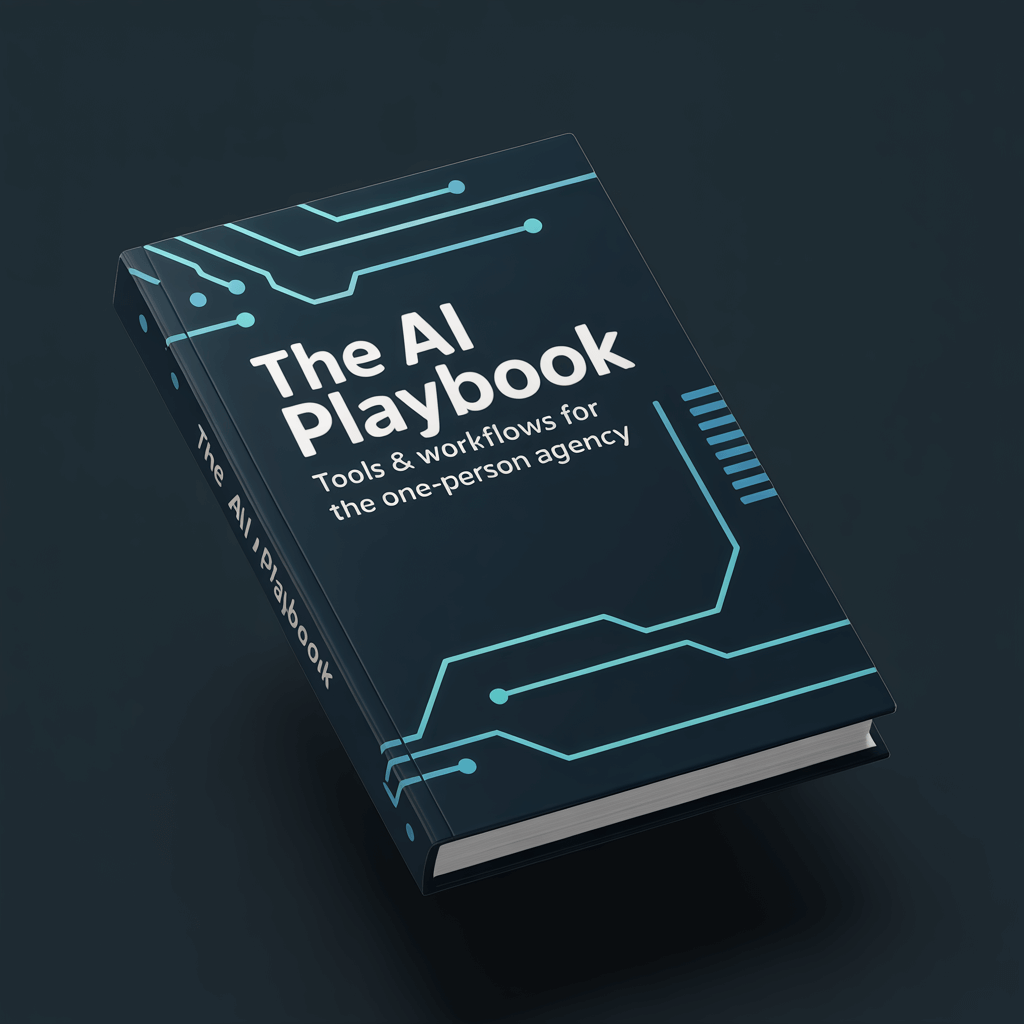
我用來經營一人代理公司的所有工具和工作流程。 25 年的行銷經驗濃縮成一份實用指南。免費贈送。.

引流工具 - AI 策略手冊

相關文章

發佈留言

發佈留言必須填寫的電子郵件地址不會公開。 必填欄位標示為 *