

If you have ever wished you could hand a chunk of your to-do list to a competent intern who never sleeps, you are asking the right question at the right time. Learning how to use ChatGPT agent is the closest thing most solopreneurs and small teams have to that intern today. Agent mode does not just answer you — it opens a browser, clicks around, fills forms, writes files, and hands back a finished deliverable while you do something else.
But here is the part nobody selling you a course wants to say out loud: it is brilliant at some jobs and genuinely bad at others. I run ten autonomous brands out of a single laptop, and I have watched agents save me hours one afternoon and quietly waste an hour the next. So this is not a hype piece. This is a field guide: how the feature actually works, the seven tasks it reliably nails, the three it botches, and the guardrails that keep it from embarrassing you in front of a client.
What ChatGPT Agent Actually Is (and How to Use ChatGPT Agent Mode)

Regular ChatGPT is a conversation. You ask, it answers, you copy the answer somewhere useful. Agent mode is different: it is ChatGPT with hands. Give it a goal and it plans the steps, uses a built-in browser and a code environment, and executes them in sequence — pausing to ask you a question or confirm something risky before it commits.
To turn it on, open the tools menu in the composer or type /agent, then describe the outcome you want rather than the keystrokes. Agent mode ships on the paid tiers (Plus, Pro, Business, Enterprise), and OpenAI has been folding it into its broader “work” capabilities for longer multi-step jobs, so the exact menu label may shift over time. The mental model does not: you are delegating a 任務, not sending a message.
The single biggest mistake I see is people treating agent mode like a faster chatbot. It is not faster — a real agent run can take several minutes because it is genuinely doing the work. The payoff is that those minutes are hands-off. You brief it, walk away, and review a result. If you would not hand the job to a capable freelancer with a one-paragraph brief, it is probably not an agent job yet.
Before You Start: The 5-Minute Setup That Prevents 90% of Failures

Agents fail for boring reasons far more often than exotic ones. Spend five minutes on these and your success rate jumps dramatically.
- Write the brief like a work order, not a wish. State the goal, the inputs, the format of the output, and what “done” looks like. “Research the top five project-management tools for a 4-person agency, compare pricing and integrations, and give me a table plus a one-line recommendation” beats “find me a PM tool.”
- Give it the raw materials up front. Paste the spreadsheet, the URL, the login flow, the brand voice notes. An agent that has to guess will guess wrong.
- Set a stopping condition. Tell it when to come back to you: “stop and ask before you submit any form” or “draft only, do not send.”
- Decide what it may touch. Never point an agent at an account you cannot afford to have it change. Use a throwaway or read-only context for anything sensitive.
If this discipline sounds familiar, it should: it is the same rigor that makes any automation reliable. If you want the deeper version of that mindset, my walkthrough on Claude Code vs Codex for running your business covers how to brief an agent so it does not go off the rails.
One more setup habit that pays for itself: keep a short reusable brief for the tasks you repeat. I have a saved paragraph for “research and shortlist” jobs and another for “clean and summarize this data.” Ninety seconds of copy-paste and a couple of edits, and the agent starts from a proven prompt instead of a cold one. Small teams underrate this — the quality of your output tracks the quality of your brief far more than which model you are on.
7 Real Tasks ChatGPT Agent Nails

These are the jobs where I reach for an agent without hesitation. Every one is something I have actually shipped with it, not a demo-day fantasy.
- Competitive and market research. Point it at a topic and it will visit a dozen sources, pull the relevant facts, and return a structured comparison. This is its home turf — the moment you would otherwise open fifteen browser tabs is the moment to hand it off instead.
- Structured data collection. “Visit these 20 company pages and pull the founder name, city, and contact email into a table.” Tedious for you, trivial for it, and easy to spot-check because the answer is right there on each page.
- First-draft content from a spec. Feed it an outline and source material and it returns a solid draft you edit — not publish blind, but a real head start that turns a blank page into a red-pen job.
- Spreadsheet and data wrangling. It can open a messy CSV, clean the columns, run the analysis in its code environment, and hand back a chart plus the numbers. For a non-technical owner this quietly replaces a whole category of “I’ll deal with it later” tasks.
- Repetitive form-filling and portal work. Directory submissions, lead-form entry, routine data entry across a browser — the stuff you have been paying a VA to do, minus the back-and-forth.
- Trip and event planning with constraints. Give it a budget, dates, and preferences and it will assemble real options with live prices and booking links instead of the generic advice a plain chatbot hands you.
- Turning a vague idea into a plan. “I want to launch a paid newsletter” becomes a step-by-step plan with tools, timeline, and first actions you can start on today — because it can actually go check what those tools cost right now.
Notice the pattern: every winning task is bounded, checkable, and repetitive. There is a clear finish line and you can verify the result at a glance. That is the sweet spot.
3 Tasks ChatGPT Agent Quietly Botches

Honesty is the whole point of this guide. Here is where agent mode lets you down, usually without telling you it did.
- High-stakes actions with no undo. Sending an email to a client, making a purchase, posting publicly, changing account settings — anything irreversible. It 能 do these, which is exactly why you should not let it without a human confirming first. One wrong click at scale is a real incident.
- Anything requiring current, authoritative accuracy it cannot verify. Legal, medical, tax, or fast-moving pricing details. It will confidently return a plausible answer that is subtly out of date. Treat its facts as a starting point to check, never as the final word.
- Long, ambiguous, judgment-heavy projects. “Rebrand my business” or “figure out my pricing strategy.” With no clear finish line and lots of taste involved, the agent wanders, over-commits to an early assumption, and hands back something confident and wrong. These are the jobs where 你 are the value; use the agent to gather inputs, then make the call yourself.
The through-line for all three failures: no verifiable finish line, or consequences you cannot take back. When you feel yourself reaching for an agent on a task like this, that is the signal to stay in the driver’s seat and use plain ChatGPT as a thinking partner instead.
A Build-Log Walkthrough: What a Real Agent Run Looks Like

Theory is cheap, so let me show you an actual run. Last week I needed a shortlist of podcasts to pitch for one of my brands. In plain ChatGPT that is an hour of tab-juggling. With agent mode it was a brief and a coffee break. Here is exactly how it went, because the shape of this run is the shape of almost every good one.
The brief: “Find 15 podcasts about AI and small business with active episodes in the last 60 days. For each, give me the show name, host, rough audience size if you can find it, and the best contact or booking link. Put it in a table. Do not contact anyone.” Notice every ingredient from the setup checklist is in there: goal, format, a verifiable finish line, and a hard stop before anything irreversible.
What it did: it planned the search, opened its browser, worked through directories and show pages, and — this is the tell of a good agent — paused once to ask whether I wanted business podcasts that only occasionally cover AI. I said yes. It kept going, hit a page that would not load, noted it, and moved on instead of stalling.
What I got: a clean table of 15 shows in about eight minutes. Were they perfect? No. Two of the audience-size figures were clearly guesses, and one “contact link” was a generic homepage. But I had a 90%-done deliverable I would have paid a VA half a day for, and the 10% I fixed took five minutes because I could see exactly which cells to check. That ratio — mostly right, quickly verifiable — is the whole game. When you feel it, you are using agent mode correctly.

⚡ 取得人工智慧優勢
每週提供真正省時省錢的AI小技巧。沒有廢話,沒有誇大其詞——只有切實有效的方法。.
How to Use ChatGPT Agent Safely: Guardrails That Actually Matter

Speed without guardrails is just a faster way to make a mess. These are the rules I give every agent I run, and the same ones I would give a new hire on day one.
Keep a human on the trigger for anything irreversible
Let the agent do all the work up to the final commit, then require your approval for the last step. “Draft the outreach emails and show me — do not send” captures 95% of the value with none of the risk. I go deeper on this exact principle in why every agent should be safe to run twice, which is the single habit that has saved me the most grief.
Watch the first run, then trust the pattern
The first time you give an agent a new type of task, watch it work. You will spot the exact step where your brief was ambiguous. Fix the brief, and the next ten runs go clean.
Never hand it the keys to something sensitive
Use dedicated logins, read-only access, or sandboxed accounts. An agent should never be one confident mistake away from your bank, your CRM, or your published channels.
Verify the output, not just the vibe
A polished-looking table can still be wrong. Spot-check a few cells against the source. Agents are confident by default; your job is to be the skeptic.
When to Graduate From ChatGPT Agent to a Real Automation

Agent mode is perfect for tasks you do occasionally and can supervise. But the moment a task becomes daily, identical, and unsupervised, you have outgrown it. Kicking off a manual agent run every morning is just a fancier chore.
That is the line between an assistant and a 系統. When I need the same job done every day at 6am without me touching it — publish a post, send a newsletter, mine leads — I do not use a chat agent. I use a purpose-built agent running on a schedule, with logging and receipts. That is exactly how the brand you are reading right now operates: the content, the emails, the social posts all run on their own.
If you are weighing which route to take, the honest comparison in my n8n vs Zapier breakdown will save you a few wrong turns. The short version: use the chat agent to prove a task is worth automating, then build the real thing once it earns its place.
Here is the sequence I use, and it works whether you are a one-person shop or a small team: do the task by hand once so you understand it, let a ChatGPT agent do it a few times while you supervise, and only then decide whether to invest in a standing system. Most tasks stop at step two — they are not frequent enough to automate, and that is a perfectly good answer. The ones that survive to step three are the tasks that quietly give you your week back.
常見問題解答
Do I need to know how to code to use ChatGPT agent?
No. You describe the outcome in plain English and the agent handles the steps. Coding knowledge helps you brief it more precisely and debug when a run goes sideways, but it is not a requirement to get real value on day one.
How long does an agent task take?
Anywhere from a couple of minutes to fifteen-plus, depending on how many sites it visits and how much it has to process. It is slower than a chat reply because it is actually doing the work — the win is that it is hands-off, not instant.
Is it safe to let ChatGPT agent log into my accounts?
Only ones you can afford to have it change, and ideally with dedicated or read-only credentials. Keep a human confirmation step in front of anything irreversible. Never give it standing access to money, published channels, or client systems.
What is the difference between a Custom GPT and agent mode?
A Custom GPT is a reusable, pre-configured assistant for a repeated type of conversation. Agent mode is a one-off worker that takes actions to complete a specific task. Use Custom GPTs for repeatable briefs, agent mode for get-this-done jobs.
Final Thoughts: Delegate the Task, Own the Judgment
Knowing how to use ChatGPT agent well comes down to one instinct: hand it work that is bounded, checkable, and reversible, and keep your hands on anything that is not. Do that, and it becomes the tireless intern you always wanted. Ignore it, and it becomes a very confident way to make expensive mistakes.
Start small this week. Pick one tedious, low-stakes task off your list — a bit of research, some data collection, a first draft — and let an agent run it while you watch. You will learn more from that one supervised run than from any tutorial, including this one. Then, when a task proves itself worth doing every day, that is your cue to stop running it by hand and build a real system around it.

竊取我的人工智慧自動化策略手冊
The exact systems I use to run ten autonomous brands from one laptop — free, no fluff. Get the playbook and the occasional build log straight to your inbox.
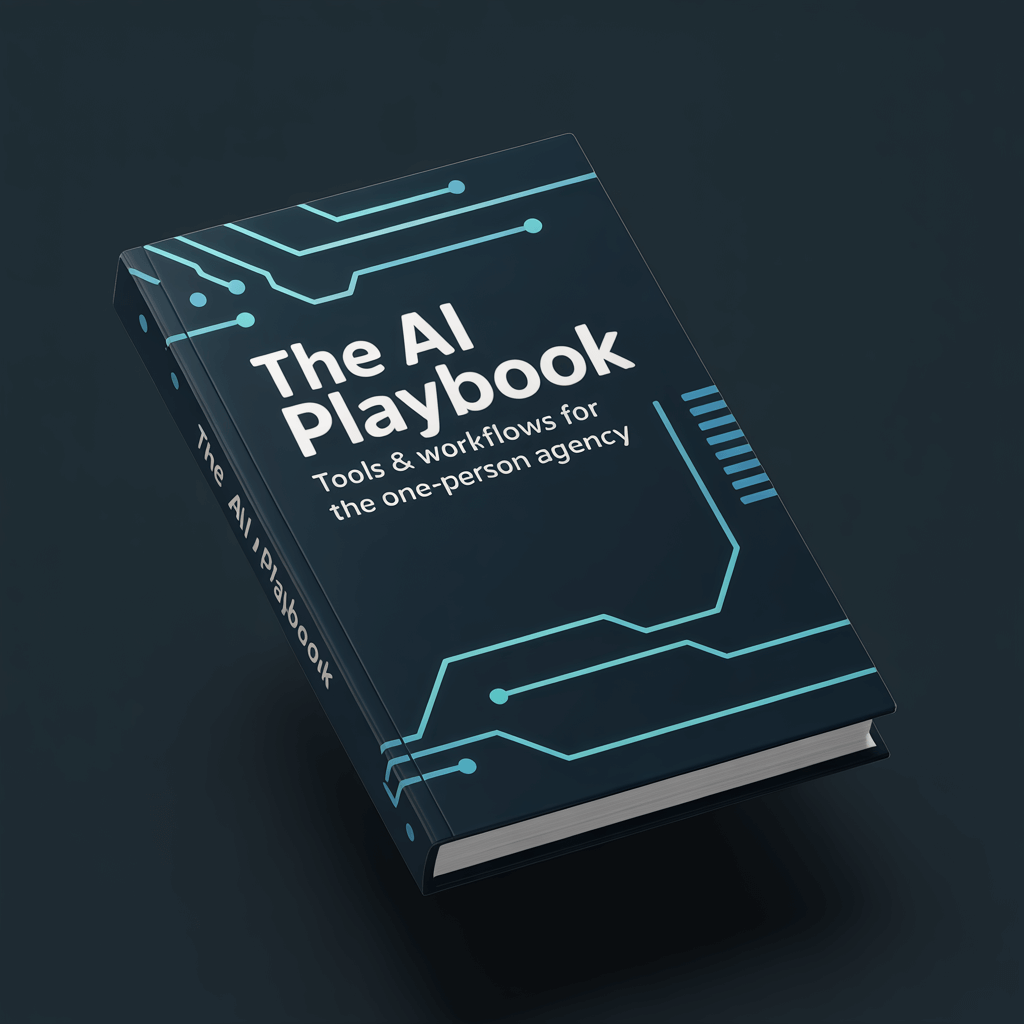
📥 免費:《人工智慧劇本》
我用來經營一人代理公司的所有工具和工作流程。 25 年的行銷經驗濃縮成一份實用指南。免費贈送。.

人工智慧與數位行銷策略師
Jon Jones擁有超過25年的數位行銷、電子商務、銷售和國際商務經驗,是一位資深企業家,致力於透過創新的人工智慧解決方案賦能小型企業。他的職業生涯始於華爾街的投資銀行,曾指導企業完成資本募集和應對複雜的市場環境。如今,他的專業領域已拓展至網站開發、品牌設計、產品開發以及課程培訓。.
Jon精通普通話,並在金融和科技領域擁有深厚的功底。他創立了JonJones.ai,旨在為小型企業提供易於使用且具有變革意義的工具,幫助他們簡化營運、拓展客戶並實現永續成長。他對人工智慧、自動化和數位化策略的精通,已幫助許多企業彌合了傳統模式與現代技術之間的鴻溝,確保它們在當今的數位化環境中蓬勃發展。.