Most businesses don’t need a $50,000 ai strategy consulting engagement. They need a clear plan, the right tools, and someone to tell them where to start.
Every consulting firm from McKinsey to your neighbor’s nephew now offers AI strategy services. But most of it is designed for Fortune 500 companies with seven-figure budgets. If you’re running a small business, the advice doesn’t translate.
This guide breaks down what AI strategy consulting actually involves, what it costs at every level, and how to figure out if you need professional help — or can build your own AI strategy from scratch.

What AI Strategy Consulting Actually Means
AI strategy consulting is the process of working with an expert to figure out where artificial intelligence fits into your business operations, what tools to use, and how to implement them without wasting money or time.
That’s it. No mystical transformation framework. No twelve-phase digital evolution roadmap.
A good AI strategy consultant does three things:
- Audits your current workflows to find where you’re spending time on repetitive tasks that AI can handle
- Recommends specific tools and implementations that match your budget and technical ability
- Builds a roadmap so you’re not just buying subscriptions — you’re building systems that actually work together
The big consulting firms package this into fancy frameworks with acronyms. But the core value is the same whether you’re paying BCG $500K or a solo consultant $5K — someone who understands AI capabilities looks at your specific business and tells you exactly what to do.
The 5 Components of an AI Strategy (With Real Examples)
Every AI strategy — whether built by a consultant or by you — covers these five areas:
1. Workflow Audit
Before touching any AI tool, you map out every repeatable process in your business. Email responses, content creation, lead qualification, data entry, scheduling, customer support — all of it.
Real example: A local real estate agency discovered they were spending 15 hours per week on email follow-ups. An AI email responder cut that to 2 hours.
2. Tool Selection
Not every AI tool is worth your money. A consultant (or a good guide) helps you pick tools based on:
- What you actually need vs. what’s trending on Twitter
- Integration capability — does it work with your existing stack?
- Total cost including setup time, learning curve, and monthly fees
- Reliability — will it still work in six months?
Popular tools for small businesses include ChatGPT for content and customer communication, Claude for complex reasoning tasks, and n8n or Zapier for workflow automation. But the specific combination depends entirely on your business.
3. Implementation Roadmap
This is where most DIY attempts fail. People buy five AI tools, set up none of them properly, and declare that “AI doesn’t work for my business.”
A solid implementation roadmap:
- Starts with one high-impact automation — usually the task eating the most hours
- Sets measurable goals — save X hours, generate Y leads, cut Z costs
- Defines a 30-60-90 day timeline with specific milestones
- Includes training for anyone on your team who’ll use the tools
4. Data Strategy
AI is only as good as the data you feed it. For small businesses, this usually means:
- Getting your customer data organized — CRM cleanup is step one
- Creating templates and SOPs that AI tools can reference
- Setting up proper tracking so you can measure what’s working
- Protecting sensitive data — don’t feed customer info into public AI models
You don’t need a data lake. You need clean spreadsheets and documented processes.
5. Governance and Ethics
Even small businesses need basic AI guardrails:
- Disclosure: When are customers interacting with AI vs. humans?
- Quality control: Who reviews AI-generated content before it goes live?
- Data privacy: Where is your customer data going when you use AI tools?
- Bias checking: Is your AI treating all customers fairly?
This doesn’t require a 50-page policy document. A one-page AI usage guide for your team covers it.
What AI Strategy Consulting Costs (Real Numbers)
Here’s what nobody in the consulting world wants to tell you — the actual price ranges:
Enterprise consulting (BCG, McKinsey, Deloitte): $200K – $2M+ per engagement. Teams of 5-15 consultants over 3-12 months. Best for companies with 500+ employees and complex legacy systems.
Mid-market consulting firms: $50K – $200K per engagement. Teams of 2-5 over 1-6 months. Best for companies with 50-500 employees ready for organization-wide AI adoption.
Boutique consultants and solo experts: $5K – $50K per engagement. 1-2 consultants over 2 weeks to 3 months. Best for small businesses wanting hands-on implementation, not just strategy decks.
DIY with expert guidance: $500 – $5K for courses, coaching, and tools. Self-paced. Best for solopreneurs and tiny teams who want to learn and build themselves.
The sweet spot for most small businesses is boutique consulting — someone who’ll actually build the systems with you, not just hand you a PowerPoint and disappear. If you’re curious about what AI consulting costs for small businesses, we break down the numbers in detail.

⚡ GET THE AI EDGE
Weekly AI tips that actually save you time and money. No fluff, no hype — just what works.
When You Actually Need a Consultant (and When You Don’t)
You probably need a consultant if:
- You’ve tried and failed — you’ve implemented AI tools yourself and keep hitting walls
- Your workflows are complex — tool selection isn’t obvious without expertise
- You need team training — not just setup, but adoption across your organization
- The ROI justifies it — if saving 20 hours/week, a $10K consultant pays for itself fast
- You’re in a regulated industry where AI compliance actually matters
You probably don’t need a consultant if:
- You’re a solopreneur with straightforward workflows
- Your main need is content creation — just learn to use ChatGPT or Claude well
- You haven’t tried anything yet — start free, learn what you actually need first
- Your budget is under $2K — invest in courses and DIY tools instead
- You just want a website chatbot — most platforms make this plug-and-play
The honest truth: most small businesses can get 80% of the value of AI strategy consulting by following a structured approach on their own. The other 20% — custom integrations, complex workflow automation, team training — is where professional help makes a real difference.
How to Build Your Own AI Strategy (Without a Consultant)
If you’ve decided to go the DIY route, here’s the exact process:
Step 1: List Every Repetitive Task (30 Minutes)
Open a spreadsheet. Write down every task you or your team does more than once a week. Include how long it takes, how often it happens, how important accuracy is, and whether it requires creativity or just execution.
Sort by time spent. The tasks at the top are your AI automation candidates.
Step 2: Match Tasks to Tools (1-2 Hours)
For each high-priority task, identify the right AI approach:
- Text-based tasks (emails, content, reports): ChatGPT, Claude, or Jasper
- Workflow automation (moving data between apps): n8n, Zapier, or Make
- Customer communication (chat, FAQ): Intercom, Drift, or custom chatbot
- Data analysis (reports, forecasting): ChatGPT with Code Interpreter
- Image and design work: Midjourney, DALL-E, or Canva AI
Step 3: Start With One Automation (1 Week)
Pick the task that saves the most time with the least complexity. Set it up. Use it for a week. Measure the results. Don’t try to automate everything at once. One working automation builds confidence and reveals patterns you’ll use for the next one.
Step 4: Document and Expand (Ongoing)
After your first automation works, document what you did. Then move to the next task on your list. Build your AI toolkit systematically, not all at once.
How to Choose the Right AI Consultant
If you’ve determined you need professional help, here’s how to avoid wasting money:
Look for implementation experience, not just strategy. The best consultants have actually built AI systems — not just advised other people to build them. Ask for demos of systems they’ve created, not case studies.
Ask about their tech stack. Consultants who recommend only one platform are selling you their partnership, not the best solution. Good consultants are tool-agnostic.
Demand specific deliverables. “AI strategy roadmap” is vague. Push for specifics: “We’ll implement an automated email follow-up system, integrate it with your CRM, train your team, and measure results over 60 days.”
Check their small business experience. Enterprise consultants often struggle with small business constraints. You need someone who understands limited budgets, small teams, and scrappy resources. We wrote about why AI consulting rates are high and what you’re actually paying for.
Set clear success metrics upfront. Before signing anything, agree on what success looks like. Hours saved per week? Leads generated? Revenue impact? If a consultant won’t commit to measurable outcomes, they’re selling hope, not results.
The AI Strategy Mistakes That Waste the Most Money
Buying tools before understanding the problem. Businesses sign up for five AI subscriptions because they “sound useful,” then use none of them effectively. Always start with the workflow audit.
Over-engineering the solution. You don’t need a custom machine learning model. You probably need ChatGPT connected to your email. Start simple, get results, then add complexity only when simple isn’t enough.
Ignoring the human element. The best AI strategy in the world fails if your team won’t use the tools. Budget time and money for training, not just software.
Chasing trends instead of solving problems. Just because everyone’s talking about AI agents doesn’t mean you need one. Focus on your actual bottlenecks, not what’s trending on LinkedIn.
Treating AI as a one-time project. AI tools evolve every few months. Your strategy needs regular review — quarterly at minimum. The automation you set up today might have a better, cheaper alternative next quarter.
Your AI Strategy Starts Now
You don’t need permission from a consulting firm to start using AI in your business. You don’t need a six-figure budget or a team of data scientists.
You need a list of your repetitive tasks, a willingness to experiment with one tool, and the discipline to measure results.
If you want expert help with implementation — not just strategy decks — that’s exactly what we do. We build AI automation systems for small businesses that actually work, with hands-on support and real accountability.
Start with the workflow audit. Pick one task. Automate it this week. That’s your AI strategy.
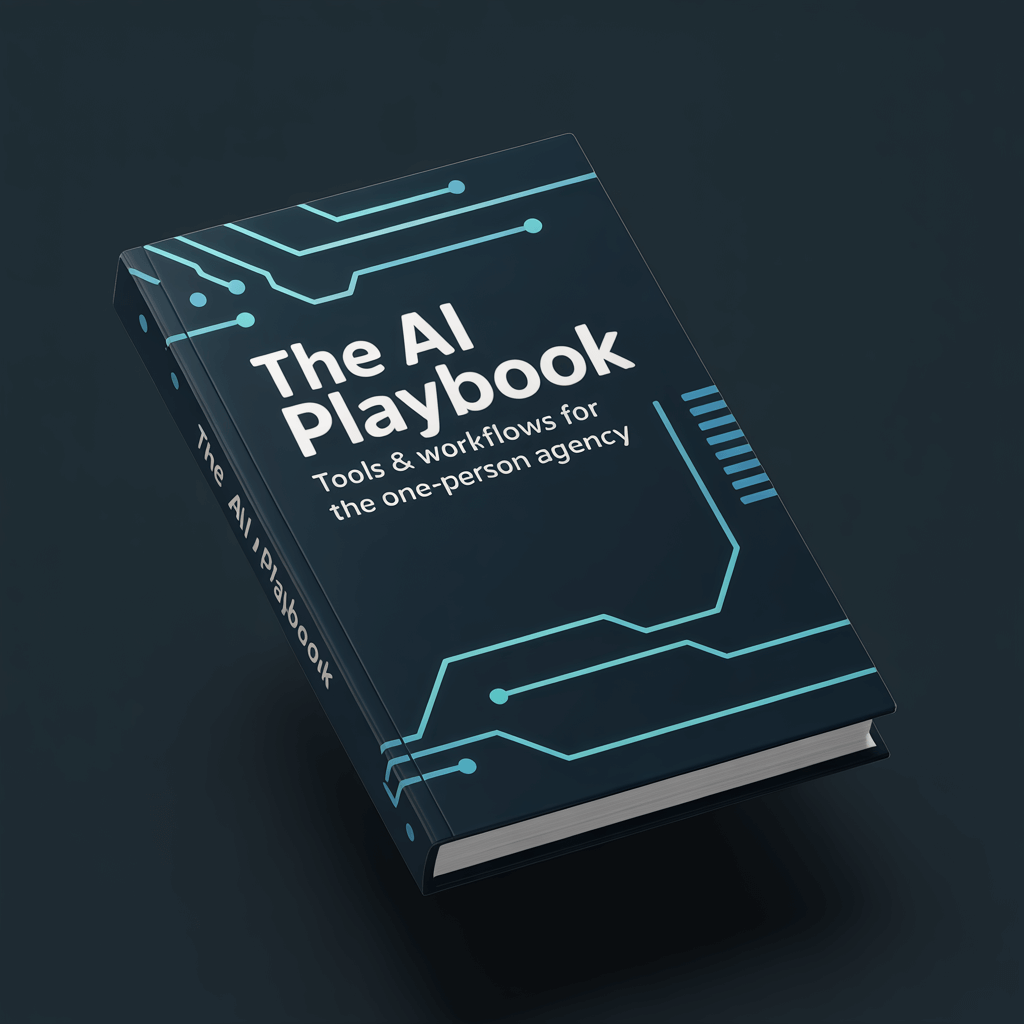
📥 FREE: THE AI PLAYBOOK
The exact tools and workflows I use to run a one-person agency. 25 years of marketing experience distilled into an actionable guide. Yours free.

AI & Digital Marketing Strategist
With over 25 years in digital marketing, e-commerce, sales, and international business, Jon Jones is a seasoned entrepreneur dedicated to empowering small businesses through innovative AI solutions. His journey began in investment banking on Wall Street, guiding companies through capital acquisition and complex markets, and has expanded to include expertise in web development, brand design, product development, and courses and training.
Fluent in Mandarin and with a rich foundation in both finance and tech, Jon launched JonJones.ai to provide accessible, transformative tools for small businesses to streamline operations, generate leads, and build sustainable growth. His mastery of AI, automation, and digital strategy has enabled numerous businesses to bridge the gap between traditional practices and modern technology, ensuring they thrive in today’s digital landscape.