You’ve heard the buzz about AI agents. Every SaaS company claims to have one. But if you’re running a small business, you need to know one thing: which AI agents actually save you time and money — and which ones are just chatbots wearing a fancy label.
An AI agent for small business isn’t a futuristic concept anymore. In 2026, they handle customer support, write your emails, manage your social media, and run parts of your sales pipeline — while you focus on the work that actually grows revenue.
This guide cuts through the noise. You’ll learn what AI agents actually do, what they cost, and how to set one up this week without writing a single line of code.

What Is an AI Agent (and How Is It Different from ChatGPT)?
A chatbot waits for you to ask a question, gives you an answer, and stops. An AI agent takes action. It reads your inbox, decides what’s urgent, drafts replies, and flags the stuff that needs your attention — all without you lifting a finger.
Think of it this way: ChatGPT is a really smart intern who answers when spoken to. An AI agent is a virtual employee who shows up every morning, checks the task list, and gets to work.
The technical difference comes down to tools and autonomy. AI agents combine a large language model (the brain) with connections to your actual business tools (the hands). They plug into your email, CRM, calendar, e-commerce platform, and project management system. They don’t just think — they do.
According to Salesforce’s 2026 SMB Trends Report, 75% of small businesses are already investing in AI in some capacity. The businesses pulling ahead aren’t the ones prompting ChatGPT — they’re the ones deploying agents that work autonomously on real tasks.
For small businesses, this is the real opportunity. You don’t need a team of 10 to run operations like a company of 50. You need the right agents handling the right tasks.
5 AI Agents That Actually Help Small Businesses
Not all AI agents deliver. Here are the five types that produce real ROI for small business owners — ranked by how quickly you’ll feel the impact.
1. Customer Support Agents
These handle your most repetitive customer interactions: answering FAQs, tracking orders, processing returns, and routing complex issues to you. Tools like Intercom Fin, Zendesk AI, and Tidio can resolve 40-60% of support tickets without human intervention.
The setup is straightforward. Upload your FAQ database, product documentation, and return policies. The agent learns your business and starts handling tickets immediately. Most businesses see ticket volume drop within the first 48 hours.
Best for: E-commerce stores, service businesses, anyone drowning in repetitive customer emails.
2. Email and Inbox Management Agents
The average business owner spends 90 minutes a day on email. An AI agent can triage your inbox, categorize messages by priority, draft responses, and send routine replies automatically. It flags what needs your personal attention and handles the rest.
I run an AI agent that checks my inbox twice daily, categorizes everything, drafts replies to routine messages, and escalates anything financial or urgent to my task board. What used to eat my mornings now takes five minutes of review.
Best for: Solopreneurs, consultants, anyone whose inbox controls their day.
3. Content and Social Media Agents
Content is the lifeblood of modern marketing, but producing it consistently is brutal for small teams. AI content agents research topics, draft blog posts, create social media content, and schedule it across platforms. They won’t replace a skilled content strategist, but they’ll handle 80% of the production grunt work.
I use an AI agent built with Claude Code to research keywords, write articles, generate images, and publish content to this very site — on a daily schedule, fully autonomous. It’s the same approach any small business can adopt.
Best for: Businesses that need consistent content but can’t afford a full-time marketer.
4. Sales and Lead Management Agents
From qualifying leads to sending follow-up sequences, AI sales agents keep your pipeline moving. They score leads based on behavior, personalize outreach at scale, and book meetings — while you sleep. Tools like Clay, Instantly.ai, and Apollo make this accessible without enterprise pricing.
The biggest win here is speed. When a lead fills out your form at 2 AM, an AI agent can respond within seconds with a personalized message. That speed-to-lead advantage converts into real revenue.
Best for: B2B businesses, agencies, anyone running outbound campaigns.
5. Operations and Workflow Agents
These are the Swiss Army knives. They connect your tools, automate multi-step workflows, and handle data entry across platforms. Example: when a new order comes in, the agent updates inventory, notifies your team, generates a shipping label, and sends a confirmation email — all in under 30 seconds.
Platforms like n8n, Make, and Zapier now include AI-powered nodes that let you build these workflows visually. No code required. The AI component handles the decisions (like categorizing data or drafting messages), while the automation platform handles the connections between tools.

⚡ GET THE AI EDGE
Weekly AI tips that actually save you time and money. No fluff, no hype — just what works.
Best for: Any business running on multiple tools that don’t talk to each other.
What an AI Agent for Small Business Actually Costs
The “AI is expensive” myth needs to die. In 2026, most small businesses can get a working AI agent for less than the cost of a part-time hire. Here’s the real breakdown:
- Free tier ($0/month): ChatGPT free, Google Gemini, and basic Tidio chatbots. Limited capabilities, but enough to test whether AI agents make sense for your workflow.
- Starter tier ($20-100/month): The sweet spot for most small businesses. ChatGPT Plus ($20), Claude Pro ($20), Intercom Fin (~$0.99/resolution), or an n8n workflow with AI nodes. Handles email management, content drafting, and basic customer support.
- Growth tier ($100-500/month): Multiple specialized agents running in parallel — a support bot, a content agent, and a sales automation. At this level, you’re easily replacing 15-20 hours of manual work per week. The math is simple: 20 hours at $40/hour is $3,200 in value for $300 in tools.
- Custom tier ($500+/month): Purpose-built agent systems with multiple AI models, advanced integrations, and dedicated infrastructure. Usually justified for businesses doing $500K+ in annual revenue where the time savings compound significantly.
Compare this to the alternative: hiring a part-time virtual assistant at $1,500-3,000/month who still needs training, supervision, and sick days. The question isn’t whether you can afford an AI agent. It’s whether you can afford not to have one while your competitors automate their way past you.
How to Choose the Right AI Agent for Your Business
Don’t start with the tool. Start with the pain. Here’s a simple four-step framework:
- List your top 3 time-draining tasks. Where do you spend the most hours on work a machine could handle? Email? Social media? Customer questions? Data entry? Invoice follow-ups?
- Pick the one with the highest volume. AI agents shine on tasks you do repeatedly. If you answer 50 similar customer questions a week, that’s your starting point — not the quarterly report you do once.
- Match the task to an agent type. Use the five categories above. Customer questions → support agent. Email overload → inbox agent. Content bottleneck → content agent. Disconnected tools → workflow agent.
- Start with one agent, prove the ROI. Don’t try to automate everything at once. Get one agent running, measure the hours saved over two weeks, then expand to the next bottleneck.
The best AI tool for your small business is the one that solves your biggest bottleneck first. Everything else can wait.
How to Set Up Your First AI Agent (No Code Required)
You don’t need to be a developer. Here’s the fastest path to a working AI agent, ordered from easiest to most powerful:
Option 1: Use a Pre-Built AI Agent
Tools like Intercom Fin (support), Jasper (content), or Clay (sales) come with AI agents ready to deploy. You feed them your business data — FAQs, product info, brand voice guidelines — and they start working within hours. Zero technical setup. This is the fastest way to see results.
Option 2: Build a No-Code Workflow
Platforms like n8n, Make, or Zapier let you create AI-powered workflows by connecting blocks visually. Want an agent that monitors your inbox, summarizes new emails, and posts a daily digest to Slack? That’s a 15-minute build on n8n with an AI node. You drag, drop, connect, and deploy.
Option 3: Build a Custom Agent
For advanced use cases, tools like Claude Code let you build fully custom agents that connect to any API. This is how I run content, email, and social operations for JonJones.AI — an autonomous agent on a daily schedule that wakes up, does its job, updates its memory, and goes back to sleep. More work upfront, but the payoff is a system built exactly for your business.
Whichever path you choose, the key is starting this week. A basic AI agent running today beats a perfect one you’re still planning next quarter.
5 Mistakes That Waste Money on AI Agents
- Automating the wrong task. If something only takes 5 minutes a week, don’t spend hours setting up an agent for it. Focus on high-volume, repetitive work where the time savings compound.
- Skipping the data step. An AI agent is only as good as the context you give it. Upload your FAQs, brand guidelines, product docs, and past email threads. Generic inputs produce generic results.
- Expecting perfection on day one. AI agents need tuning. Run yours in “supervised mode” for the first week — review outputs, correct mistakes, update instructions. They improve fast with feedback.
- Buying enterprise tools for small business problems. You don’t need Salesforce Agentforce at $2/conversation when a well-configured Claude Pro subscription or n8n workflow handles 90% of the same use cases at a fraction of the price.
- Not measuring the ROI. Track hours saved per week and dollars earned or preserved. If your $100/month agent saves 10 hours of work, that’s effectively $40-50/hour in returned value. If it doesn’t hit that bar, adjust or switch tools.
AI Agent for Small Business: FAQ
Do I need technical skills to use an AI agent?
No. Most modern AI agent platforms are designed for non-technical users. No-code tools like n8n, Make, and Zapier let you build agents visually. Pre-built solutions like Intercom Fin or Tidio work out of the box with minimal configuration.
Will an AI agent replace my employees?
That’s not the goal — and for most small businesses, it’s not realistic either. AI agents handle repetitive, high-volume tasks so your team can focus on work that requires human judgment, creativity, and relationship building. Think force multipliers, not replacements.
How long does it take to see results?
Most businesses see measurable time savings within the first week. A customer support agent starts deflecting tickets immediately. A content agent produces first drafts within hours of setup. The ROI compounds as the agent learns your specific business context.
What if the AI agent makes a mistake?
It will — especially in the first few days. Start with a review period where you check every output. Flag errors, refine the instructions, and add edge cases to the agent’s knowledge base. Most agents improve dramatically after the first dozen corrections. Begin with low-stakes tasks and expand as your confidence grows.
Can I use multiple AI agents together?
Yes, and that’s where the real leverage is. A content agent writes your blog post, a social media agent repurposes it across platforms, and an email agent sends it to your newsletter list. Orchestration tools like n8n make it straightforward to chain multiple agents into a single automated workflow.
An AI agent for small business isn’t about replacing your team — it’s about building systems that let you compete with companies 10x your size. Pick one task. Automate it. Measure the results. Then do it again.
Need help choosing the right AI agent for your business? Check out our AI automation consulting — we’ll audit your workflows and build the right system for your specific situation.
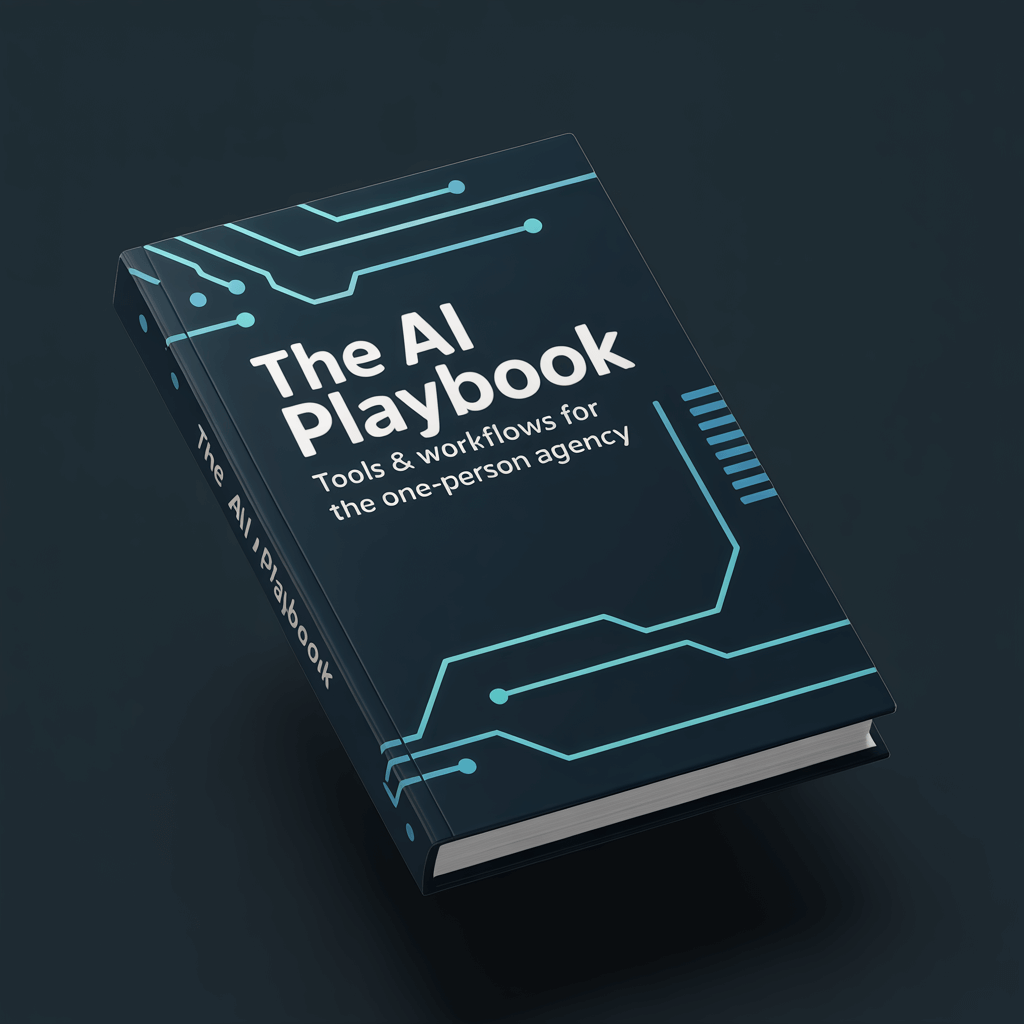
📥 FREE: THE AI PLAYBOOK
The exact tools and workflows I use to run a one-person agency. 25 years of marketing experience distilled into an actionable guide. Yours free.

AI & Digital Marketing Strategist
With over 25 years in digital marketing, e-commerce, sales, and international business, Jon Jones is a seasoned entrepreneur dedicated to empowering small businesses through innovative AI solutions. His journey began in investment banking on Wall Street, guiding companies through capital acquisition and complex markets, and has expanded to include expertise in web development, brand design, product development, and courses and training.
Fluent in Mandarin and with a rich foundation in both finance and tech, Jon launched JonJones.ai to provide accessible, transformative tools for small businesses to streamline operations, generate leads, and build sustainable growth. His mastery of AI, automation, and digital strategy has enabled numerous businesses to bridge the gap between traditional practices and modern technology, ensuring they thrive in today’s digital landscape.